






Early Oak Throne Chair
An early oak throne chair is a heavy, panelled seat built for status, and this selection ranges from Jacobean wainscot forms to later revivals.
Early Oak Throne Chair
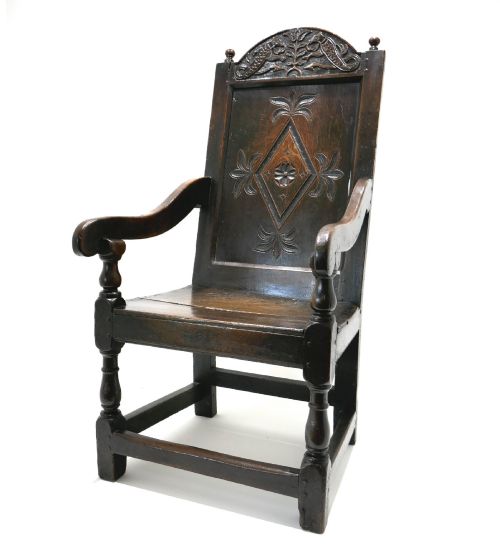
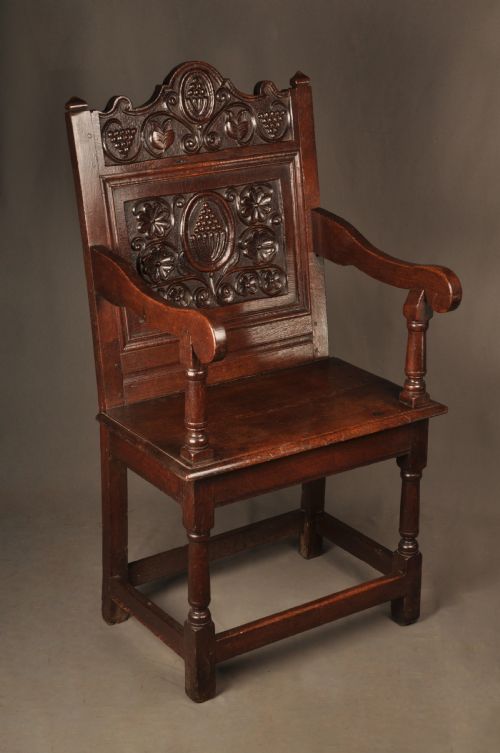
An early oak throne chair is primarily represented here by wainscot and great chairs spanning the seventeenth to the nineteenth centuries. These sturdy armchairs served as commanding seats of authority in domestic and regional interiors.
The versions you are most likely to meet on this page hail from the seventeenth century and the Jacobean period, featuring solid construction and panelled backs. Regional variations such as Welsh country, Lancashire, and Yorkshire pieces also appear frequently.
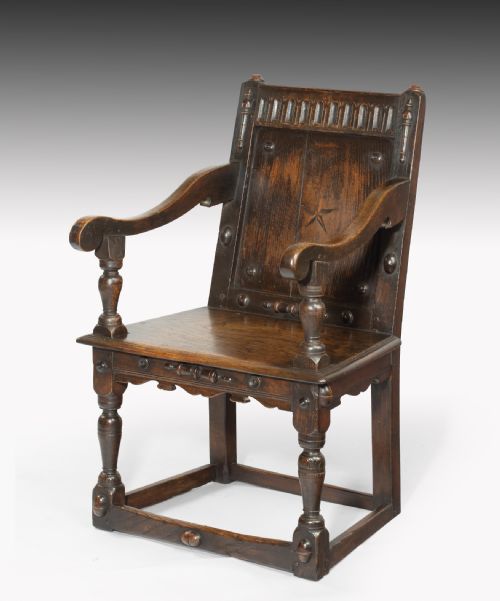
Makers shaped these heavy timber seats from solid oak, sometimes incorporating wood inlay to enhance the visual weight. Later examples include Jacobean revival interpretations alongside pieces dated around seventeen-forty and the nineteenth century.
How they were made
The construction of an early oak throne chair relies on heavy solid oak timbers joined with traditional framing methods. Master craftsmen built these sturdy armchairs to endure centuries of use without losing their architectural silhouette.
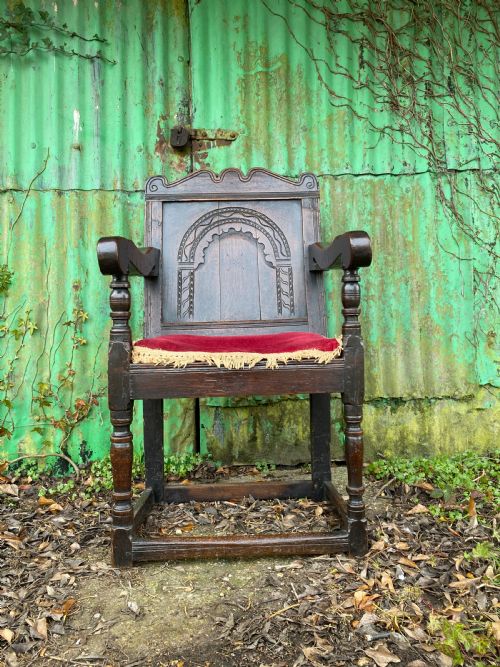
Detailing on these pieces often includes wood inlay to accent the panelled backrests and arms. Some examples are further enriched with upholstered pads in materials like velvet to soften the rigid timber frame.
Early Oak Throne Chair Retail Price Guide 2026
Typical asking prices for early oak throne chair among the pieces listed under this phrase on Sellingantiques today, from the lower quarter to the upper quarter. They describe what is for sale here now, not the wider market.
Solid oak dominates the material record across these listings, complemented by occasional wood inlay and velvet upholstery.
What varies in quality
The distinction between an ordinary regional seat and a superior early oak throne chair rests upon the crispness of the carved detail and the integrity of the original timber. Regional pieces from centres like Lancashire or Yorkshire demonstrate varying degrees of sculptural ambition in their crest rails and panel work.
Proportion and stance dictate the visual success of these heavy armchairs, where a well-balanced frame commands the room effectively. The presence of period wood inlay and untouched panel construction elevates the standing of an individual chair.
The Early Oak Throne Chair Glossary
- Wainscot chair
- A heavy wooden armchair characterised by a panelled back and solid wooden seat, typical of the sixteenth and seventeenth centuries. These seats were costly items of furniture reserved for the head of the household.
- Jacobean
- The period of English design spanning the reign of James the First, noted for solid construction and geometric carved decoration. Furniture from this era forms the bedrock of early oak seating.
- Great chair
- An archaic term for a large, imposing armchair used by the master of the house or important guests. They often stood in the hall or parlour as symbols of status.
- Wood inlay
- The technique of inserting contrasting pieces of wood into depressions within the primary timber surface to create decorative patterns. This ornamentation appears on select master armchairs.
- Joined armchair
- A chair constructed using traditional mortise and tenon joints secured with wooden pegs rather than metal nails. This method defined high-status cabinet making before the widespread adoption of glued joints.
Early Oak Throne Chair: Frequently Asked Questions
Where did they sit in the house?
An early oak throne chair typically occupied the high table in the great hall or the parlour of a substantial home. These commanding seats were reserved exclusively for the head of the household or honoured guests.
Positioned away from the drafts, the high panelled back of a wainscot chair offered protection and warmth while simultaneously asserting the occupant's status.
How do I date a wainscot chair?
Dating relies heavily on the construction methods, timber characteristics, and the style of the carved decoration on the panelled back. Seventeenth-century examples often display strict geometric carving and pegged joinery.
Later pieces from the eighteenth and nineteenth centuries frequently adopt looser proportions or stylistic revivals that echo earlier Jacobean motifs without matching the original age of the timber.
Are these chairs comfortable to use?
These rigid timber seats were built for authority rather than relaxed lounging. The upright panelled backs and solid wooden seats encourage an erect posture suited to formal dining or presiding over estate business.
Historic inventories sometimes note loose cushions or upholstered velvet pads added to soften the hard oak surface for daily use.
What distinguishes regional styles?
Regional pieces display distinct local preferences in their proportions and decorative carving. Lancashire and Yorkshire workshops often incorporated specific crest rail designs and panel layouts unique to northern cabinet makers.
Welsh country examples similarly show particular local carpentry traits, utilising accessible native oak to build robust armchairs with individual character.