
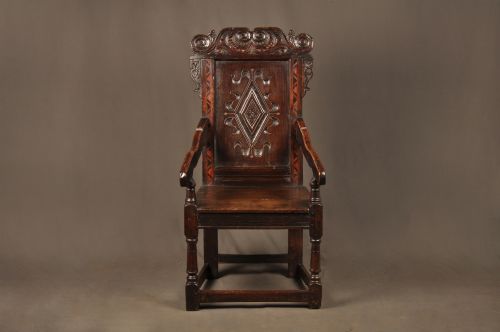
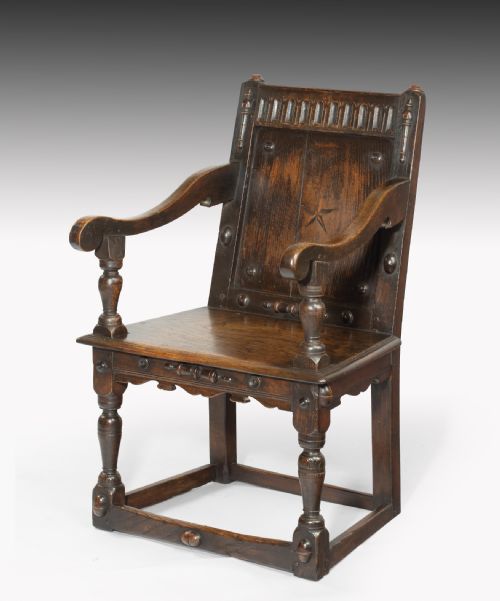
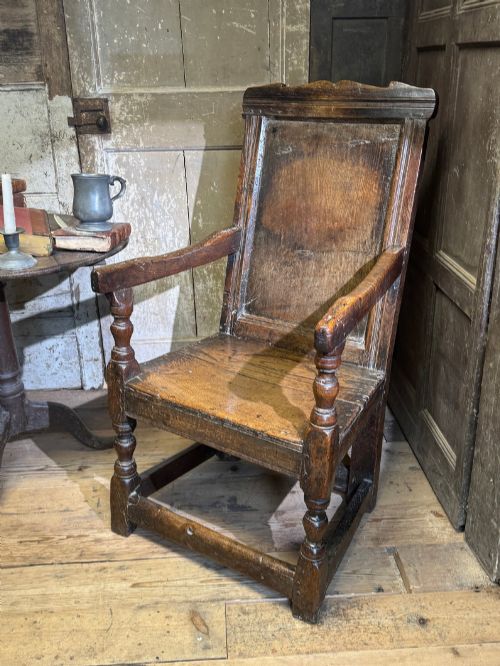

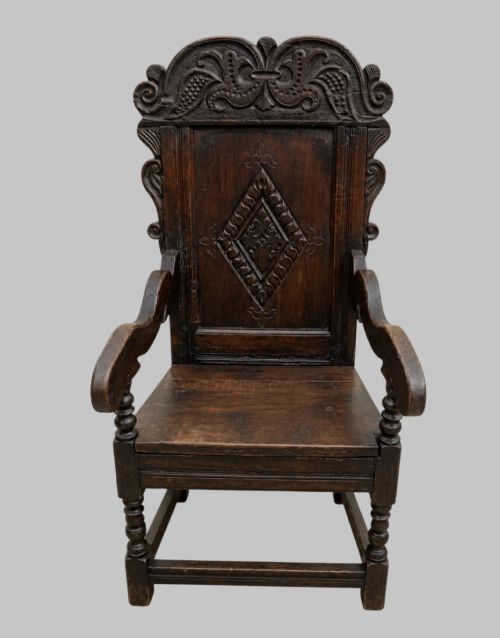


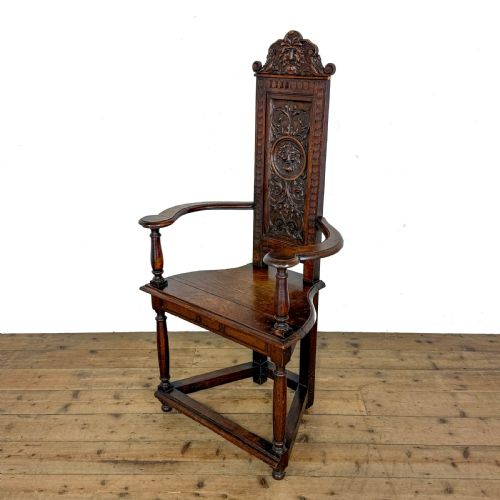
Jacobean Panel Back Chair
A jacobean panel back chair offers robust timber construction and historic character, grounding any room with seventeenth-century gravity.
Jacobean Panel Back Chair
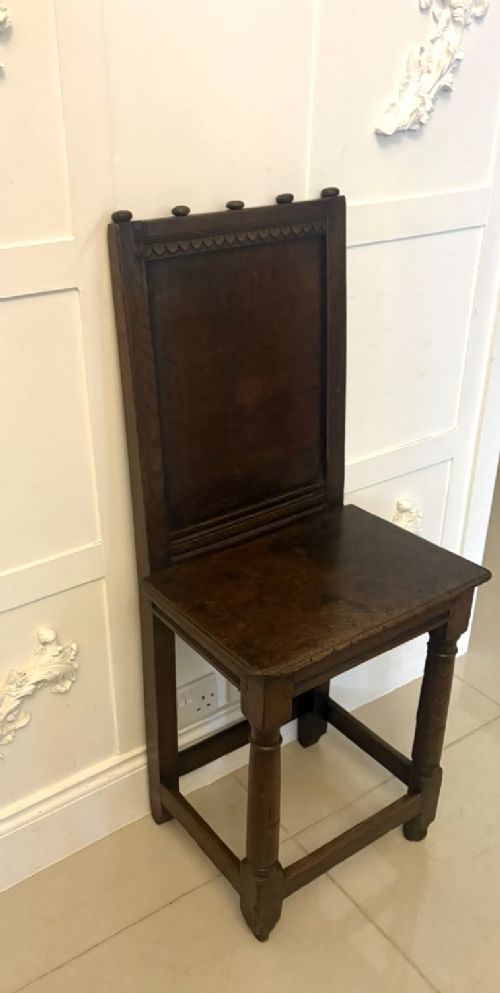
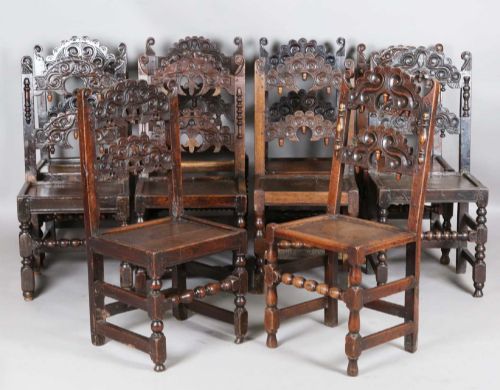
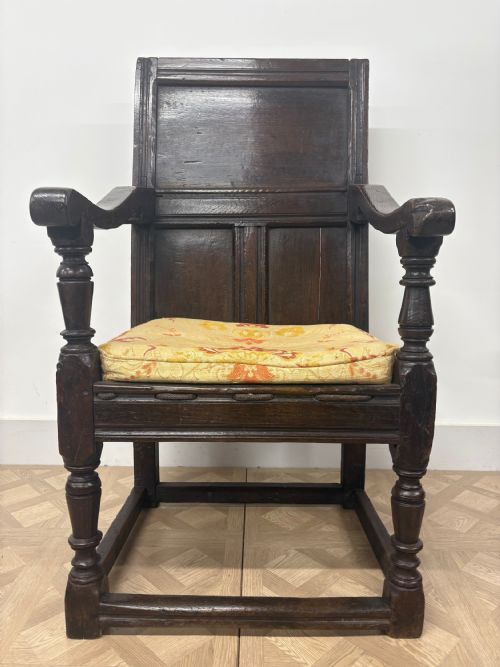
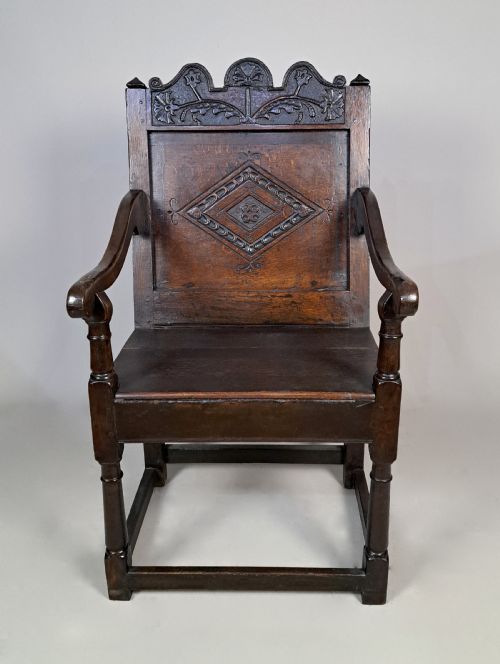
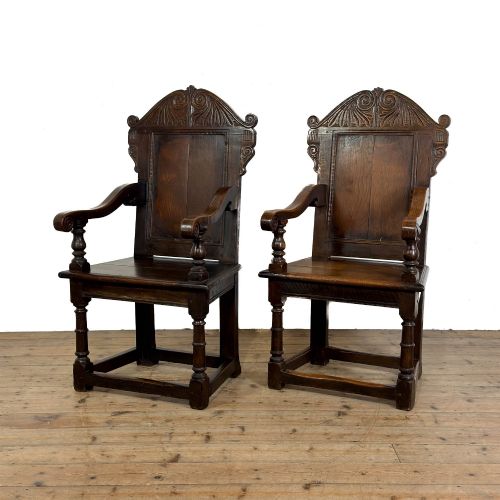
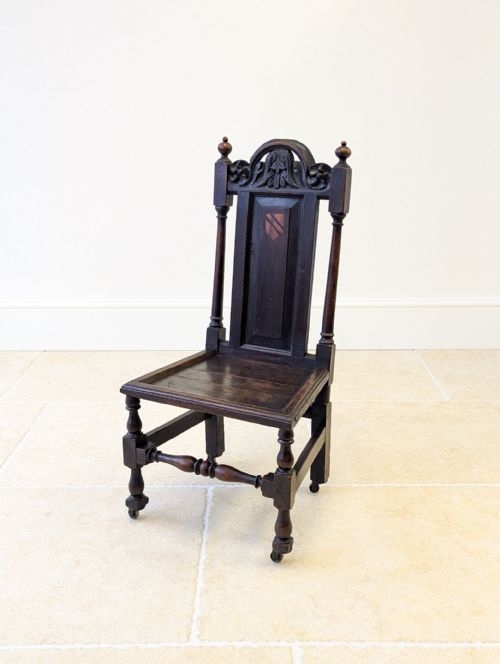
A jacobean panel back chair stands as a primary seat of authority and domestic use from the seventeenth century onward, encompassing sturdy wainscot armchairs, hall chairs, and side chairs. These forms include regional variations from Yorkshire and North Country workshops, alongside later nineteenth and twentieth-century revivals.
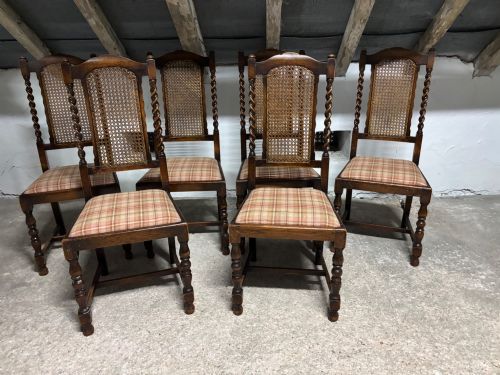
The selections span authentic seventeenth-century pieces dated across the reigns of James I and Charles I, through eighteenth-century adaptations, to Victorian and 1930s revivals. Buyers encounter solid timber armchairs, elbow chairs, and sets of dining chairs reflecting early English joinery traditions.
How they were made
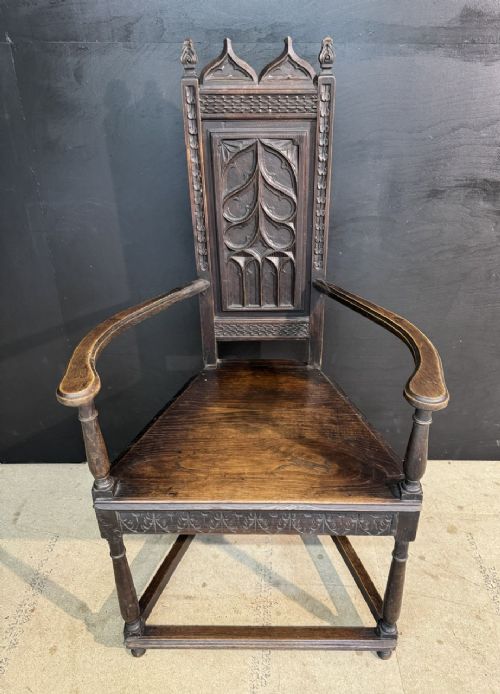
Makers utilised solid oak and timber frames joined with traditional pegged mortise and tenon construction to build these chairs for endurance. Surfaces frequently display intricate carved decoration on the flat wooden back panels and rails.
Certain examples incorporate upholstered elements such as velvet, cane, fabric, and brass details, though the foundational structure relies entirely on heavy wood framing.
What varies in quality
The depth and crispness of the hand carving on the wooden panel back separate standard interpretations from superior examples. Natural surface warmth, desirable colour, and timber preservation also distinguish seventeenth-century originals from later revivals.
The Jacobean Panel Back Chair Glossary
- Wainscot chair
- A heavy wooden armchair constructed primarily from oak with a panelled back, originating in the sixteenth and seventeenth centuries.
- Joint backstool
- An early side chair built using the mortise and tenon joinery techniques typical of joined furniture.
- Great chair
- A large, imposing armchair historically reserved for the head of a household.
- Jacobean revival
- A nineteenth or twentieth-century furniture style replicating the heavy forms and carved ornamentation of the early seventeenth century.
Jacobean Panel Back Chair: Frequently Asked Questions
How do I identify a period wainscot chair?
Examine the construction methods, timber patination, and joinery style. Seventeenth-century originals display hand-cut pegs and genuine age-related wear.
Later nineteenth-century revivals often show mechanical tool marks or timber treatments that differ from seventeenth-century workshop practices.
Where were these chairs placed originally?
These seats stood in the principal rooms of seventeenth-century homes, such as the hall or parlour, where a wainscot armchair denoted status.
Side chairs and dining chairs served around communal tables or lined the walls when not in active use.
Can I use these chairs daily?
Solid oak construction provides substantial strength for regular seating, provided the joints remain stable and secure over time.
Placing them away from direct heat sources helps preserve the ancient timber and prevent splitting.
What is a regional wainscot chair?
Regional examples, particularly those associated with Yorkshire or North Country makers, display distinct carving motifs and proportions peculiar to local craft traditions.
These variations help specialists attribute pieces to specific areas of Britain during the seventeenth century.