



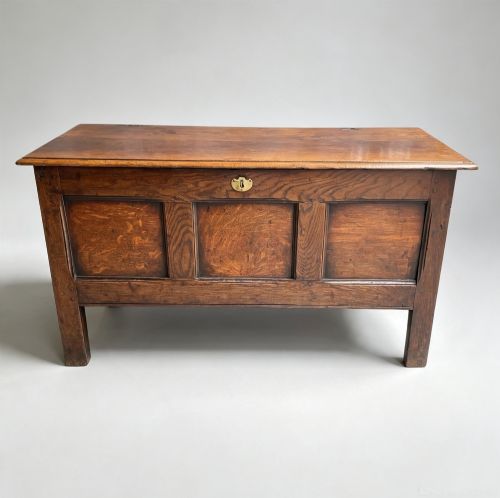
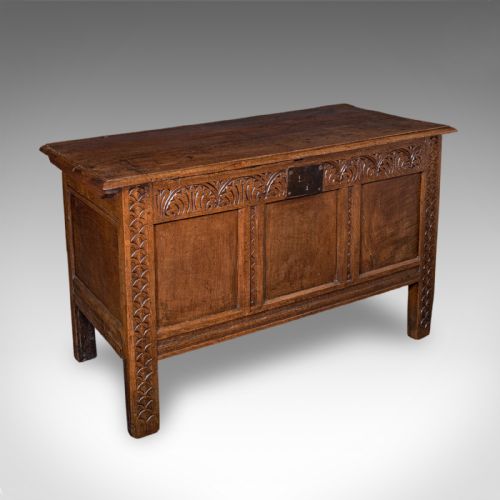
Early Oak Storage Box
An early oak storage box brings centuries of heavy timber and domestic utility directly into a modern room.
Early Oak Storage Box
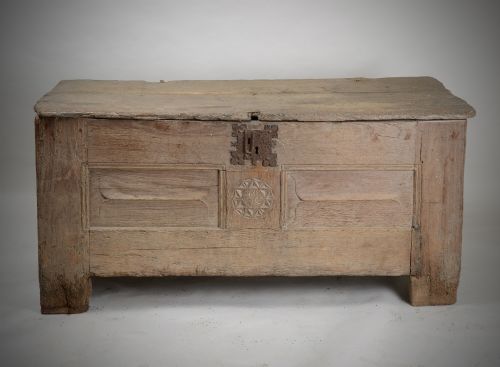
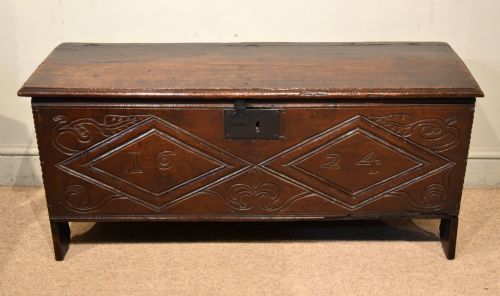
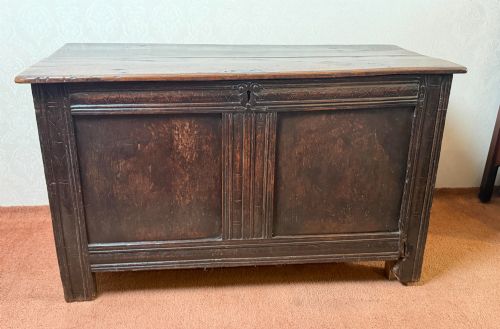
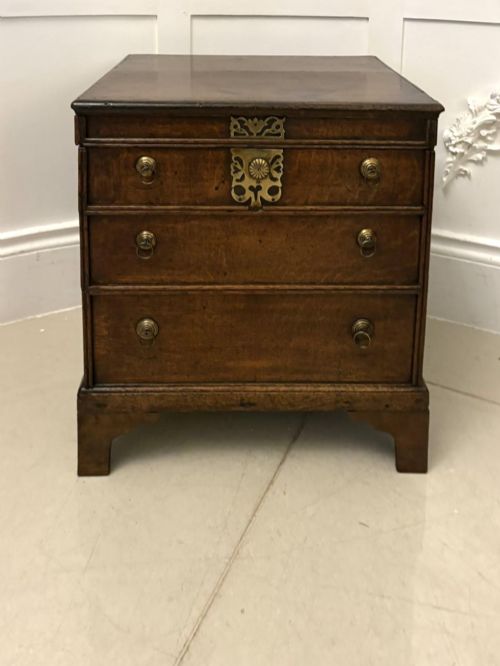
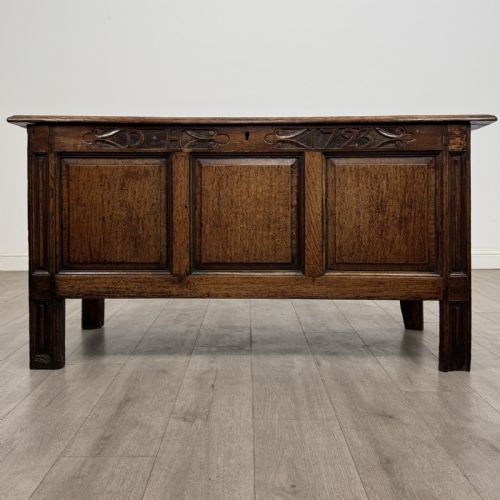
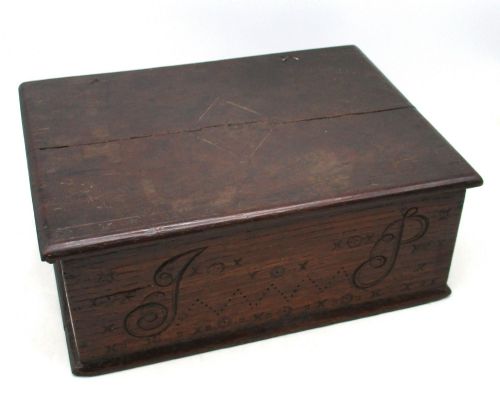
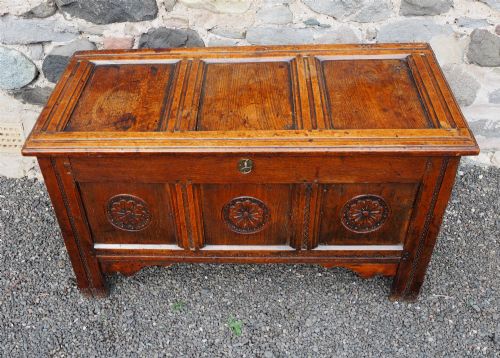
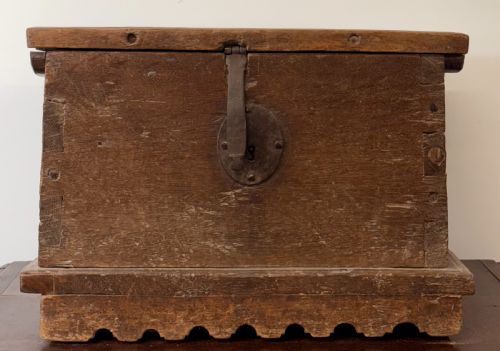
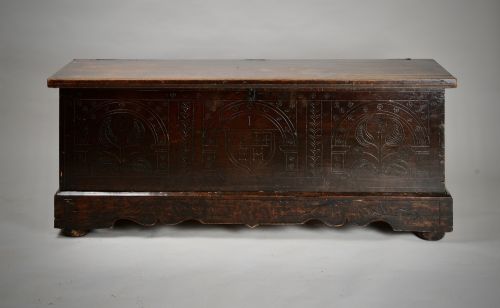
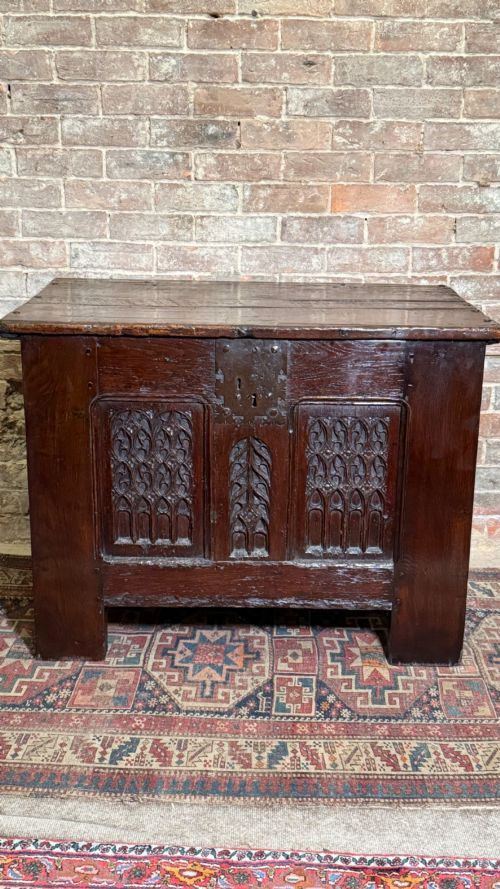
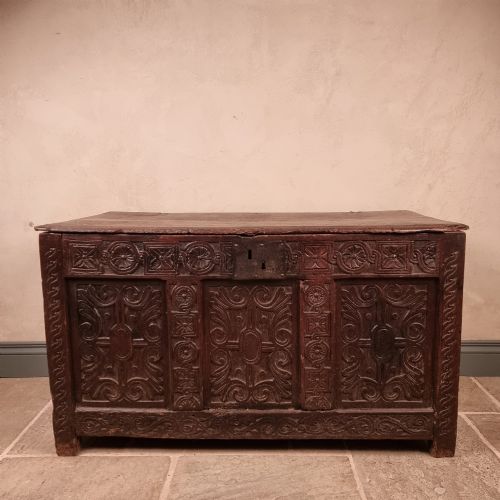
When you search for an early oak storage box, you encounter heavy timber vessels built for domestic security and storage across the sixteenth, seventeenth and eighteenth centuries. These pieces appear primarily as robust coffers, panelled chests and smaller document or bible boxes designed to hold valuables and textiles.
The items range from six-plank constructions to elaborately carved panelled coffers originating from English, Welsh, French and Flemish workshops. Smaller variations include miniature chests, coffer bachs and document boxes intended for tabletop or secure storage.
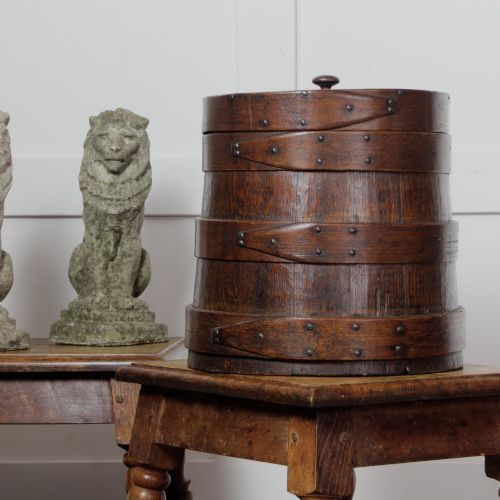
While most examples date from the seventeenth and eighteenth centuries, sixteenth-century medieval and Tudor pieces also surface alongside occasional nineteenth-century country utilities such as flour bins and coaching trunks.
What varies in quality
The standard of an early oak storage box rests on the integrity of its timber, the crispness of its carved detailing and the preservation of its original structure. Pieces retaining their initial boarded construction, hinges and authentic regional character command greater interest from collectors.
Proportion and scale also define the piece, as smaller formats like bible boxes, coffer bachs and miniature chests require finer joinery on a reduced scale compared to large regional coffers.
Early Oak Storage Box Retail Price Guide 2026
Typical asking prices for early oak storage box among the pieces listed under this phrase on Sellingantiques today, from the lower quarter to the upper quarter. They describe what is for sale here now, not the wider market.
Listings feature oak predominantly, supplemented by iron, brass, walnut, fruitwood and paint across periods spanning the sixteenth to the nineteenth century.
The Early Oak Storage Box Glossary
- Coffer
- A heavy wooden chest traditionally used for storing valuables, linen or documents. These objects form the core of early storage furniture.
- Six plank coffer
- A primitive chest constructed from just six boards joined at the edges. This represents one of the earliest and simplest methods of box construction.
- Linenfold
- A style of carved wooden panelling that resembles folded linen fabric. It appears frequently on Tudor and sixteenth-century pieces.
- Coffer bach
- A small Welsh chest traditionally used for holding valuables or small domestic items. These miniature forms often mirror the design of larger regional coffers.
- Bible box
- A small tabletop box with a sloping or flat lid made to hold a family bible or important documents. They often feature carved panels or simple hinged lids.
Early Oak Storage Box: Frequently Asked Questions
What did people store in an early oak storage box?
These vessels held domestic valuables, clothing, blankets and important household documents away from damp floors and pests. Smaller boxes specifically accommodated bibles, letters and loose valuables.
Over centuries, their contents shifted from functional textiles and currency to the preservation of heirlooms and historical documents inside domestic settings.
How do you date an early oak storage box?
Dating relies on construction methods, timber preparation marks, hinge types and stylistic decorative motifs like linenfold, arcading or carved panels. Sixteenth-century pieces often display medieval board construction, whereas seventeenth-century examples employ sophisticated frame and panel joinery.
Changes in regional styles, such as Welsh or Flemish characteristics, further help historians and collectors narrow down the decade of manufacture.
Where should you place an early oak storage box in a home?
These heavy timber pieces suit hallways, living spaces and bedrooms where they function as blanket chests, window seats or coffee tables. Their sturdy construction allows them to support weight while providing concealed internal storage.
Placing them away from direct heat sources and strong sunlight protects the historic oak from drying out or splitting.
What is the difference between a coffer and a chest?
The terms are often used interchangeably, though a coffer traditionally denotes a heavily constructed storage box with a flat lid used for travel or security. Chests frequently evolved with internal tills, drawers or more refined domestic joinery.
Both forms utilise robust oak planks and historic hardware designed to protect valuable contents in early households.