

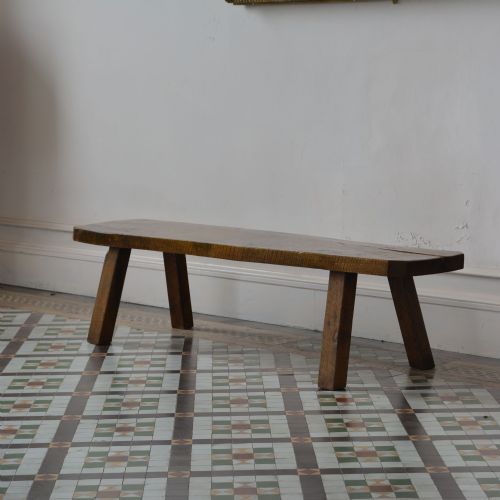


Early Oak Stool
An early oak stool brings centuries of solid craftsmanship and honest utility directly into a modern room.
Early Oak Stool
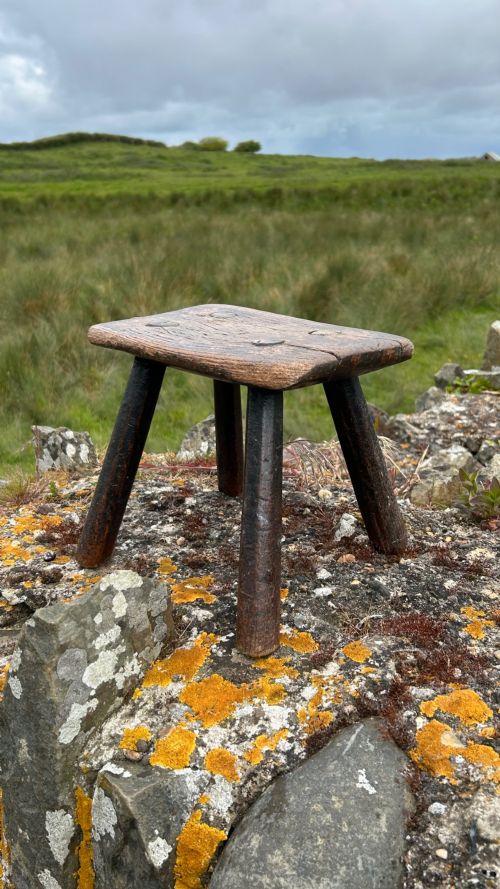
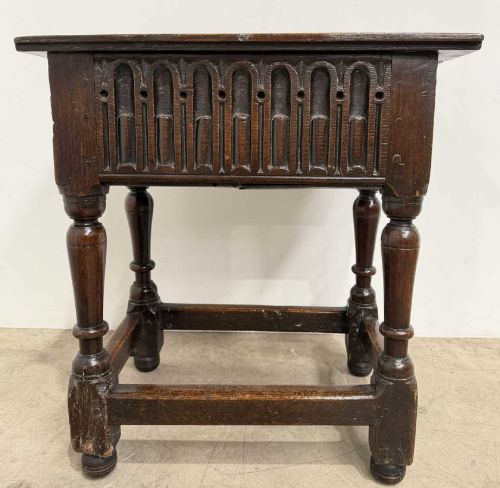
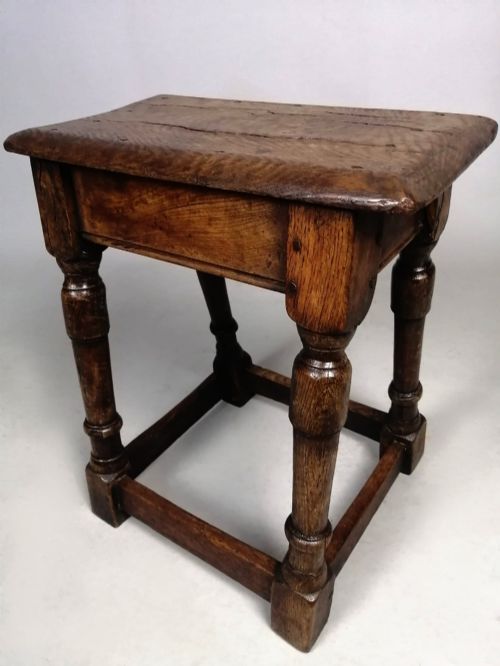
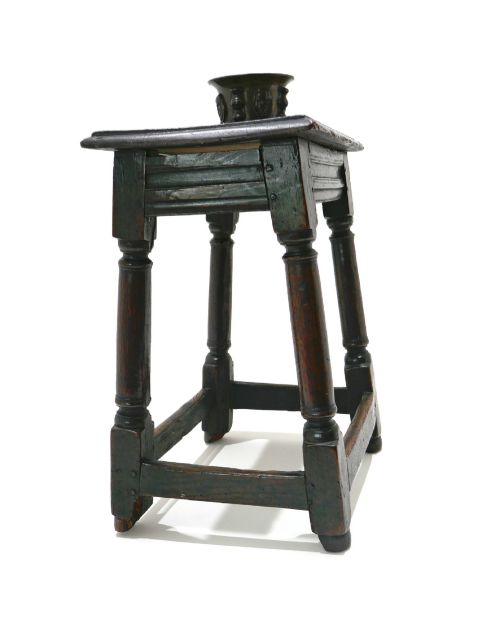
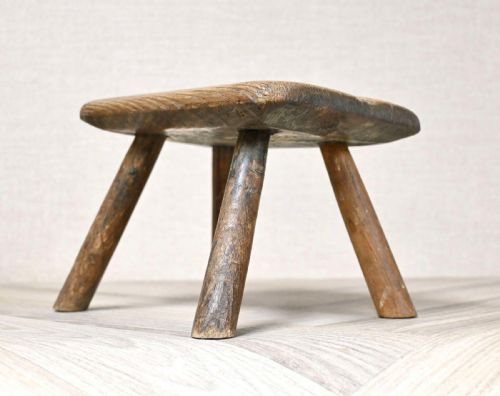
When searching for an early oak stool, buyers encounter heavy timber seating spanning from the seventeenth century through to later revivals and twentieth-century industrial forms. The most frequently met examples on this page are seventeenth-century joint stools, alongside eighteenth-century box stools, pig benches, and later period interpretations.
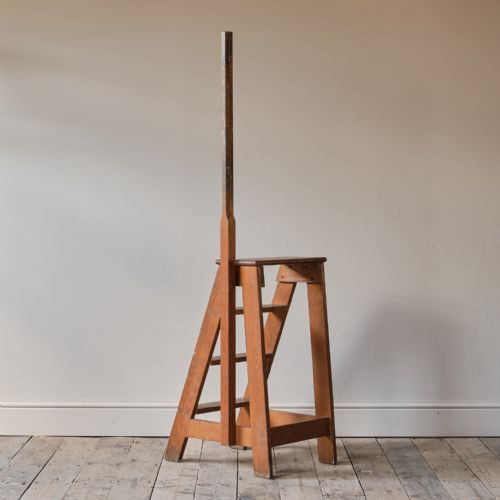
These items range from low hearth seats and footstools to sturdy work stools and metamorphic library steps. Styles shift from plain Jacobean and primitive country to early Georgian cabriole designs and Edwardian reproductions.
The timber varies between solid oak, elm, and walnut, often showing the marks of centuries of use in domestic settings, workshops, and communal spaces.
Construction and materials
Carpenters built these pieces using solid oak and secondary timbers like elm, relying on pegged mortise and tenon joints to secure uprights and stretchers. This heavy timber framework provided the rigid support necessary for daily domestic or workshop duties.
Secondary materials such as leather, steel, cast iron, and silk velvet appear on specific industrial workshop chairs, close stools, and upholstered footstools from later periods.
Early Oak Stool Retail Price Guide 2026
Typical asking prices for early oak stool among the pieces listed under this phrase on Sellingantiques today, from the lower quarter to the upper quarter. They describe what is for sale here now, not the wider market.
Several items double as laundry hampers, chamber pot holders, or folding steps, proving our ancestors loved multitasking furniture.
Judging character and survival
Quality in an early oak stool rests upon the survival of its original surface patination, timber thickness, and structural integrity. Untouched examples retaining their early pegging and unaltered feet command greater respect than those stripped, heavily restored, or structurally compromised.
Proportion and the clarity of turnings on legs and stretchers distinguish superior regional cabinet work from basic utility pieces. The harmony between the oak top and the supporting frame dictates the overall aesthetic balance.
Evertaut Industrial Workshop·Heals of London·Richard Hicks Bridgens·William Wheeler of Arncroach
The Early Oak Stool Glossary
- Joint stool
- A sturdy, pegged wooden seat constructed by a joiner using mortise and tenon joinery rather than simple nailing. These items served multiple household purposes, including seating at dining boards and supporting coffins during early funerals.
- Box stool
- A seat featuring a hollow compartment beneath the lid for storage. These versatile pieces held small household goods or writing materials.
- Pig bench
- A low, utilitarian wooden form utilised in rural settings for butchery or general farm work. They display heavy timber tops and robust legs.
- Close stool
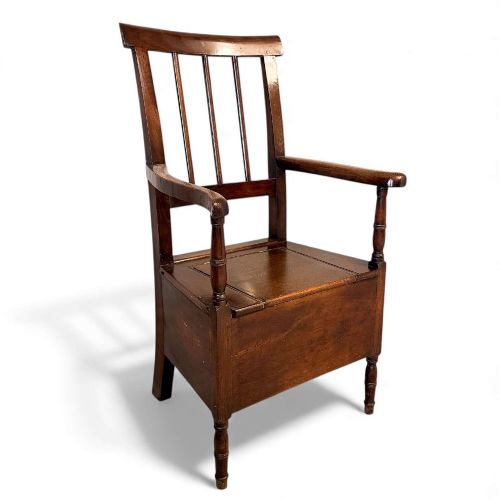
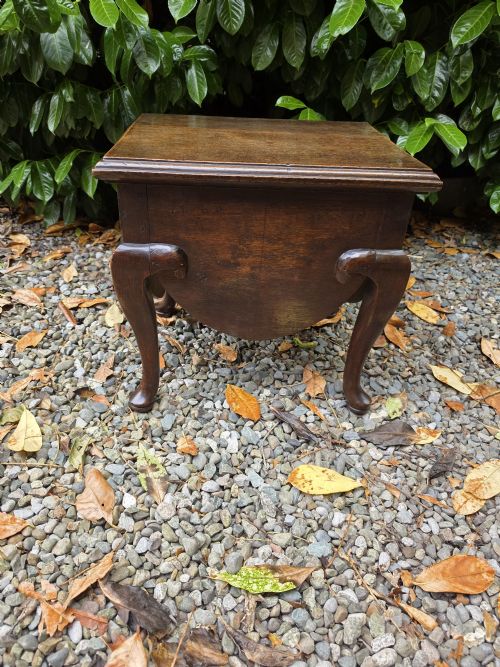
- An enclosed wooden seat housing a chamber pot for indoor sanitation. These items often resemble small cabinets or chairs with pierced tops.
- Backstool
- An early chair form featuring a wooden seat and an upright back, bridging the gap between a simple stool and an armchair.
Early Oak Stool: Frequently Asked Questions
What were early oak stools used for?
These items served primarily as flexible household seating around dining tables, near hearths, or for general domestic tasks. Sturdier variants also functioned as workbenches, platform steps, or temporary rests during agricultural labour.
In period settings, specialised forms accommodated personal sanitation or provided elevated seating for musicians and library users. Their portability allowed them to move easily around crowded rooms as household needs shifted.
How do I care for antique oak timber?
Maintain stable indoor humidity levels and keep wooden seating away from direct heat sources, radiators, and strong sunlight. Sudden environmental shifts can cause historic oak to split or warp.
Apply a microcrystalline wax sparingly when the surface appears dry, buffing gently with a soft cloth. Avoid modern liquid polishes that build up sticky residues on aged patination.
How can I tell a seventeenth-century stool from a later revival?
Examine the timber closely for tool marks, hand-cut peg holes, and natural shrinkage patterns consistent with age. Seventeenth-century examples typically display distinct hand-planing and wear around the lower stretchers where feet rested.
Revival pieces from the Edwardian era or the 1920s often show mechanical sawing marks, uniform timber colour, and machine-turned details lacking the irregularities of early handcraft.