



Early Needlework Art
Early needlework art brings centuries of hand-stitched craft to the wall, offering tactile historical scenes and samplers that anchor a room.
Early Needlework Art
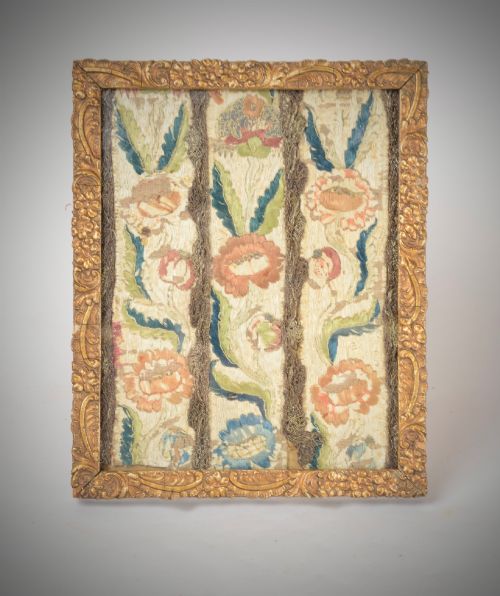
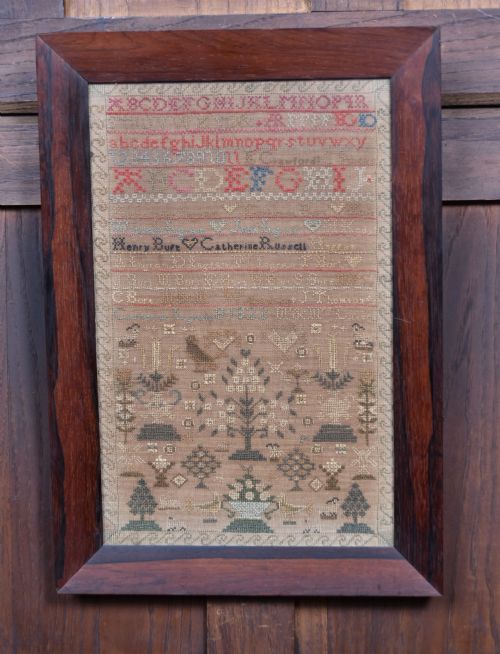
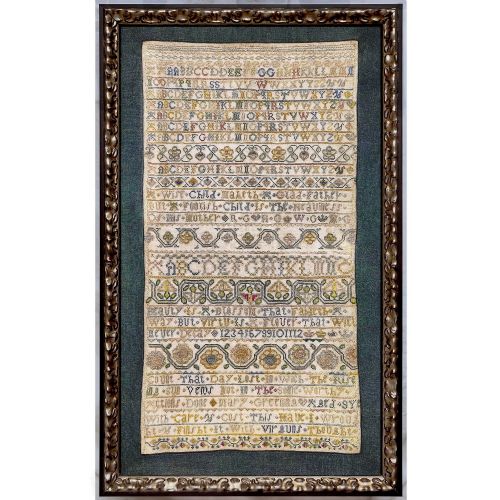
Early needlework art encompasses framed textile pieces, embroidered pictures, band samplers, and tapestry cushions spanning from the sixteenth to the early twentieth century. When exploring early needlework art, buyers encounter English band samplers, Scottish and French lace samplers, and pictorial needleworks depicting narratives such as Jack and the Beanstalk.
The selection ranges from seventeenth-century English and North German tapestries to Regency silkwork pictures, felt and wool work pictures, and maps of England and Wales. Central Asian tribal embroidery also appears through ceremonial horse and saddle covers from Uzbekistan.
Pieces take the form of textile art, framed wall art, and needlework panels mounted in wood and giltwood frames. Collectors find domestic works alongside continental embroidery dating back to seventeen hundred.
How they were made
Maker execution relies upon natural fibres including silk, wool, linen, and cotton stitched onto foundational fabrics. Many examples incorporate metal threads and fine yarn to build pictorial depth and texture.
Framing and mounting utilise wood and giltwood to protect fragile textile surfaces. Tapestry cushions and wall panels combine heavy weaving techniques with supportive backing structures to preserve structural integrity over centuries.
Early Needlework Art Retail Price Guide 2026
Typical asking prices for early needlework art among the pieces listed under this phrase on Sellingantiques today, from the lower quarter to the upper quarter. They describe what is for sale here now, not the wider market.
Materials documented across the inventory include silk, glass, linen, wood, wool, giltwood, cotton, and gold leaf.
What varies in quality
Quality rests upon the preservation of the delicate fibres and the precision of the stitching across silk, wool, and linen. Faded pigments and degraded ground fabrics distinguish heavily worn examples from pieces retaining their original tonal contrast.
The complexity of the composition and the clarity of narrative subjects separate standard domestic exercises from accomplished pictorial embroidery and cartographic works. Original period framing in wood or giltwood adds structural completeness to surviving panels.
The Early Needlework Art Glossary
- Sampler
- A piece of needlework produced as a demonstration or test of skill in various stitches. These often record alphabets, numerals, and the maker's name alongside dates.
- Crewel work
- Embroidery executed with fine wool yarn on a linen or cotton twill ground. This technique creates textured floral and pictorial designs.
- Silkwork
- Needlework created using silk thread to achieve a smooth, reflective surface finish. It appears frequently in pictorial embroidery from the Regency period.
- Tapestry
- A form of textile art woven by hand on a loom, incorporating pictorial scenes. Older examples often serve as cushion covers or wall panels.
- Giltwood
- Wood carved and covered with a thin layer of gold leaf. This material is standard for framing decorative panels and mirrors of the period.
Early Needlework Art: Frequently Asked Questions
How do I date an antique sampler?
Makers frequently stitched their names, ages, and completion dates directly into the fabric, providing a clear point of reference for the period of origin.
Material analysis of the underlying linen, silk thread types, and style of lettering helps confirm the manufacturing era when dates are absent.
How should I hang textile art?
Textile pieces require mounting behind conservation glass to protect delicate silk, wool, and cotton fibres from dust and physical damage.
Position framed works away from direct sunlight to prevent the fading of natural dyes across seventeenth and nineteenth-century surfaces.
What is the difference between a sampler and a needlework picture?
Samplers function primarily as repositories of stitch types, alphabets, and geometric motifs created to demonstrate the maker's technical proficiency.
Needlework pictures depict specific narrative scenes, landscapes, or maps using varied embroidery stitches to form a complete pictorial composition.
Are these pieces cleaned or restored?
Surviving textiles often show signs of age, including toned grounds and oxidised metal threads, which form part of their historical authenticity.
Intervention remains minimal among reputable examples to preserve the original structural integrity of the stitching and foundational fabric.