
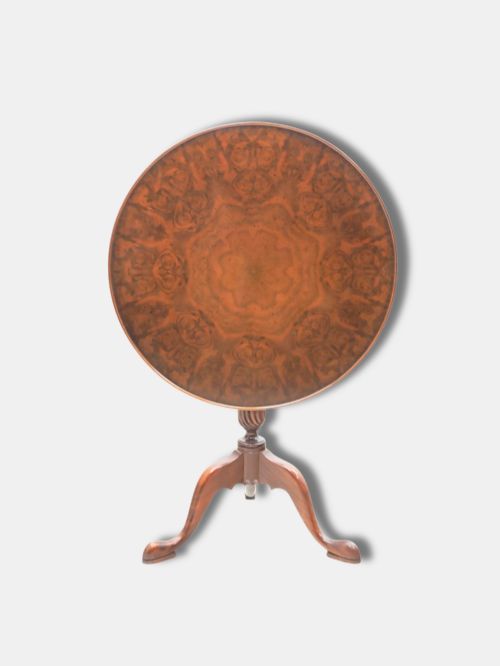
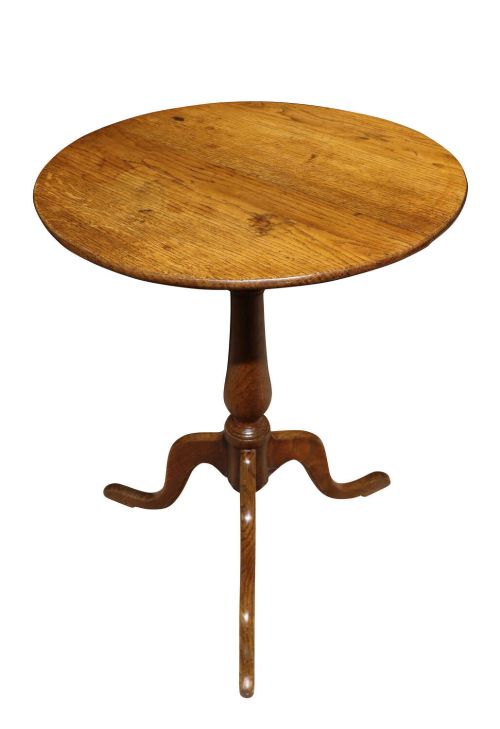
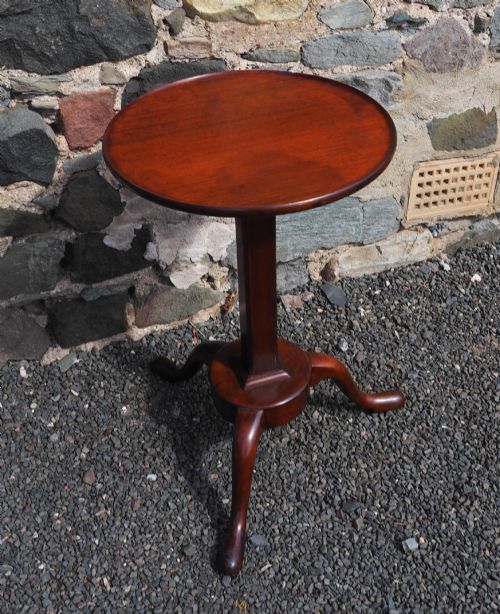
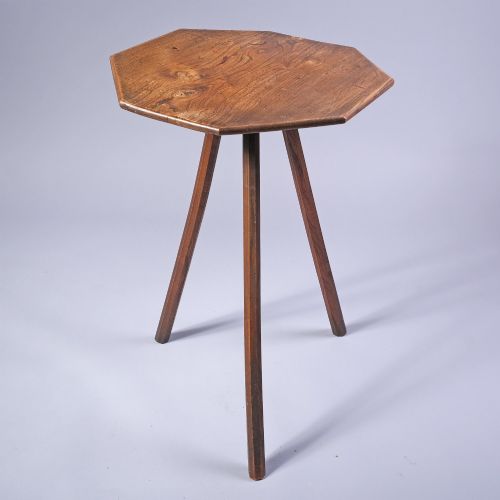
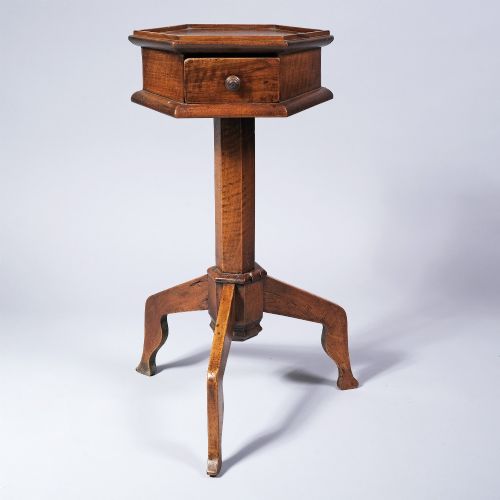
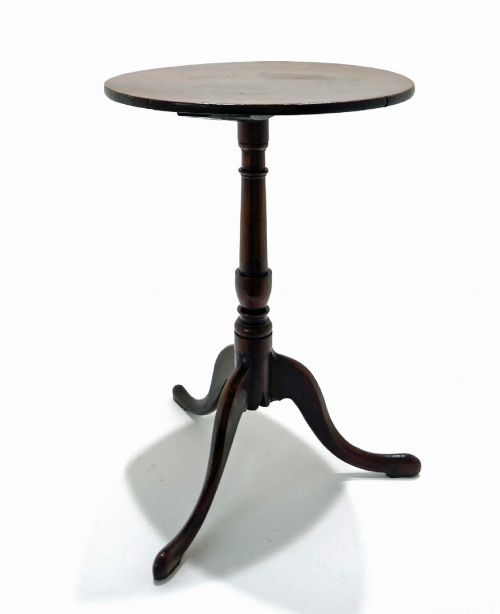


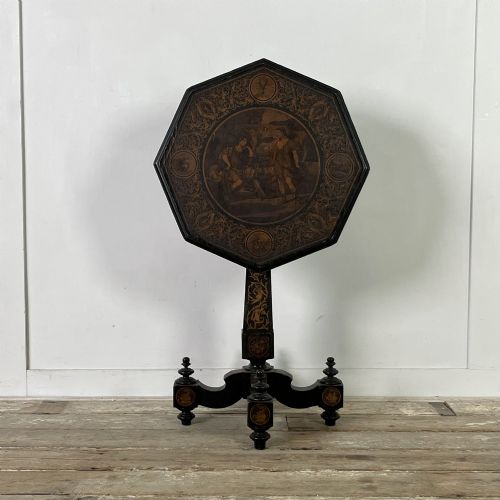


Early Georgian Wine Table
An early georgian wine table is a compact tripod piece designed for holding glassware, bringing centuries of skilled English cabinet-making to your room.
Early Georgian Wine Table
When you search for an early georgian wine table, you encounter compact tripod tables designed for holding glasses and small vessels. These pieces span the eighteenth century alongside later revivals, featuring central columns and three supporting legs.
The selections here most frequently include tilt-top mechanisms, occasional tables, and specific candle or urn stands. Walnut, mahogany, and fruitwoods predominate across the English regional and urban pieces gathered in this group.
Judging Quality
Quality separates simple utility furniture from finer urban cabinet-making through the crispness of the timber turning and the proportion of the tripod base. Superior examples display carefully chosen grain patterns on the top and well-balanced legs that meet the central column securely.
The sophistication of the mechanism also marks the grade of the piece, particularly in birdcage actions or tilt-top catches that operate smoothly without excessive play in the joints. Original surfaces and patination on woods like walnut or mahogany add significantly to the integrity of the object.
The listings here include timber varieties ranging from walnut and oak to mahogany, fruitwood, and rosewood.
The Early Georgian Wine Table Glossary
- Birdcage
- A wooden block and pivot construction beneath the table top that permits the surface to both rotate and tilt.
- Tripod base
- A three-legged support system radiating from a central turned column, providing stability on uneven floors.
- Tilt-top table
- An occasional table featuring a hinge mechanism allowing the top to stand vertically against the wall when stored.
- Dish top
- A circular table top carved with a raised concave rim designed to prevent rolling items from falling off.
- Boxwood-strung
- Inlaid with narrow strips of contrasting pale boxwood to create delicate decorative borders along table edges.
Early Georgian Wine Table: Frequently Asked Questions
What is an early georgian wine table used for?
These small tables served primarily for holding wine glasses, decanters, or candles beside seating areas during the eighteenth century.
Today, buyers utilise them as compact lamp tables or occasional display surfaces in living spaces.
What woods were commonly used?
Makers relied heavily on native hardwoods such as oak, elm, fruitwood, and walnut during earlier periods.
As the eighteenth century progressed, imported mahogany became the predominant choice for finer urban cabinet-makers.
Are these tables sturdy enough for daily use?
The three-legged tripod design provides natural stability on traditional uneven flooring without rocking.
Care should be taken with older tilt mechanisms and slender columns when moving or placing heavy objects on the surface.
What does birdcage action mean?
A birdcage action incorporates a small wooden framework beneath the table top that enables independent rotation alongside the tilting function.
This sophisticated joinery detail is usually found on superior quality examples from the period.