

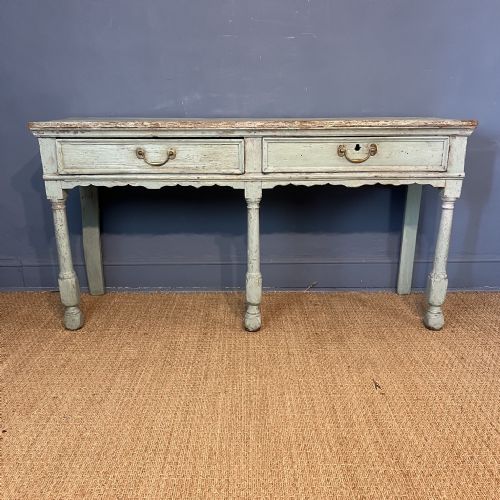
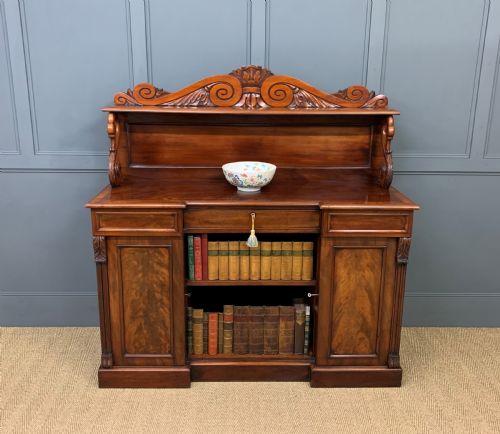
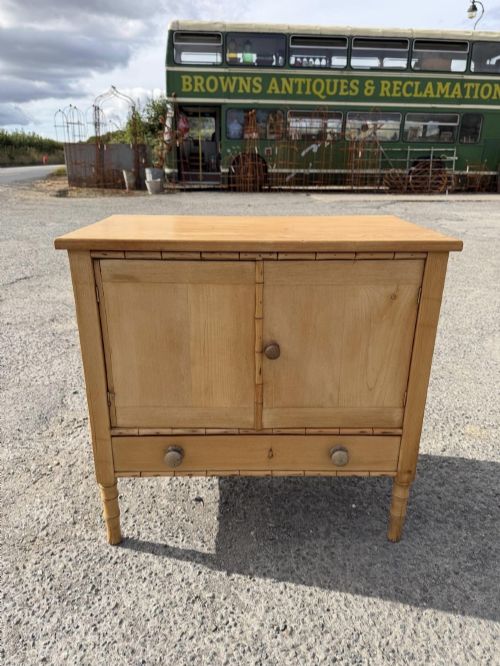
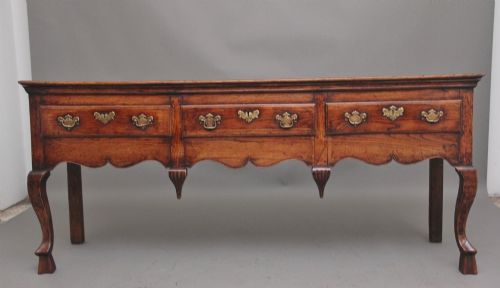

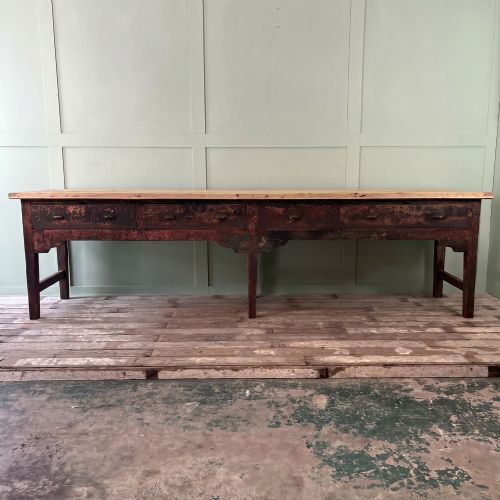
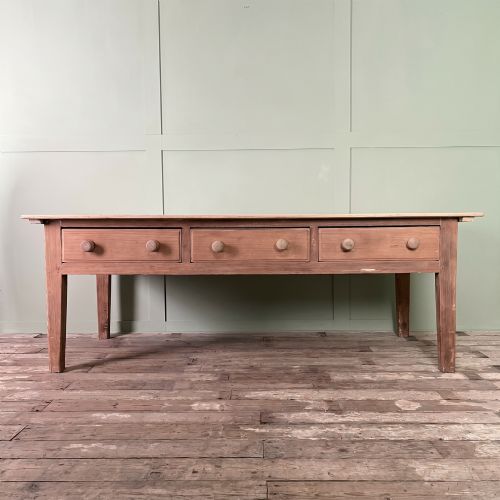

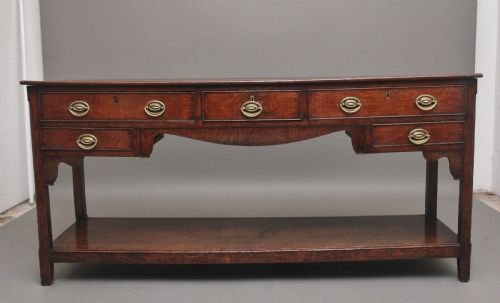


Early Georgian Sideboard
An early georgian sideboard brings substantial timber and historic utility into a room, offering surface space and storage shaped by centuries of domestic life.
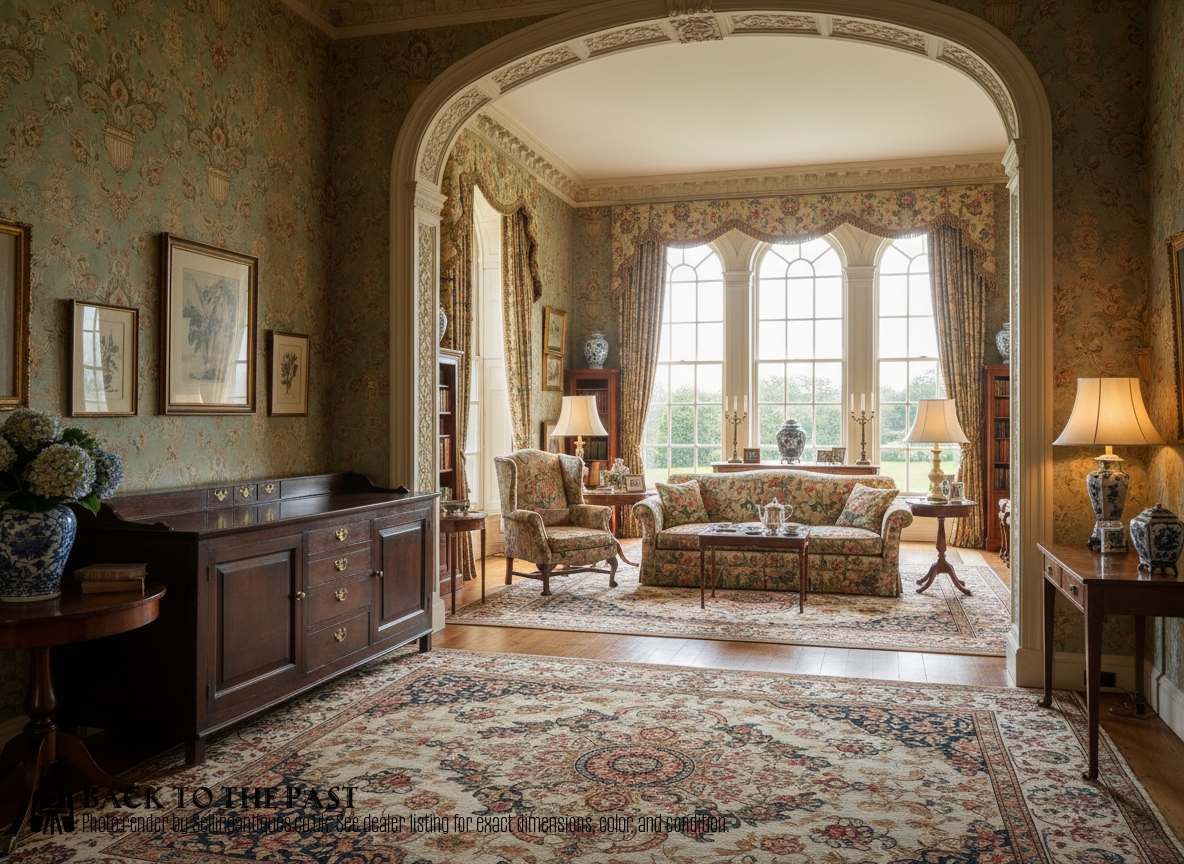
Early Georgian Sideboard
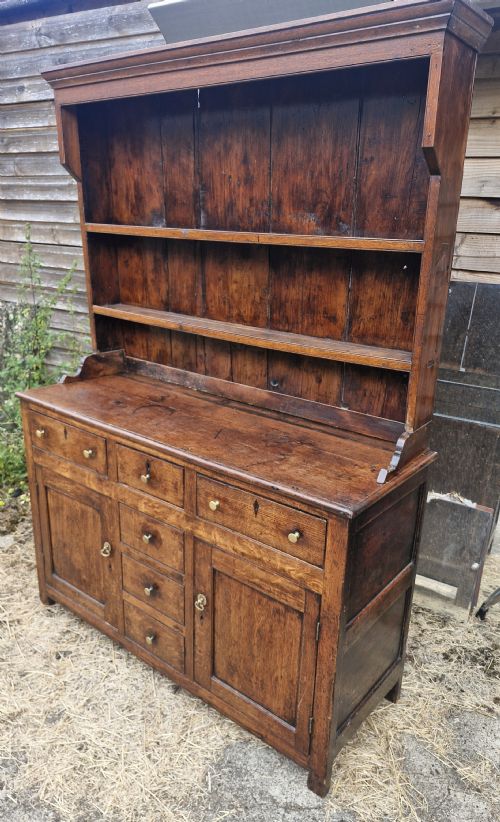
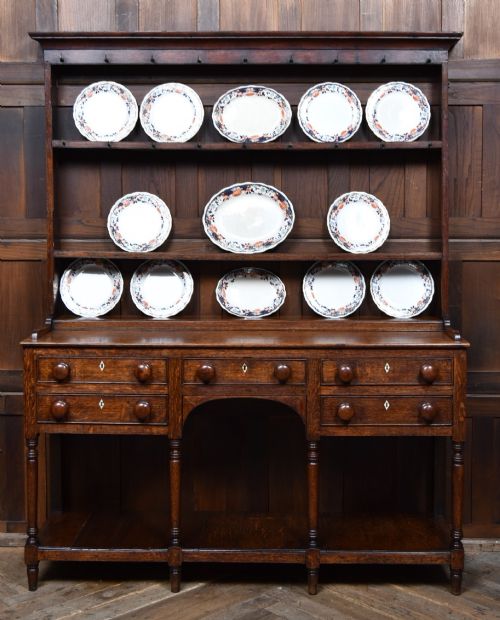
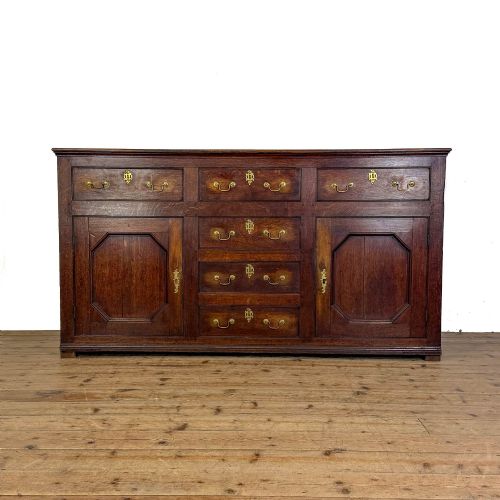
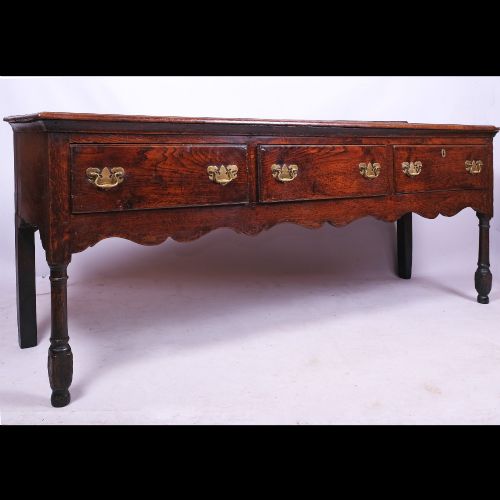
When you search for an early georgian sideboard, you encounter heavy oak and mahogany forms designed for serving and storage in domestic spaces. These pieces cross paths with dresser bases, serving tables, and chiffoniers from the eighteenth and nineteenth centuries.
The version you meet most frequently on this page is the oak dresser base or the mahogany serving table, often originating from Welsh or English workshops. Such forms reflect the utilitarian needs of earlier centuries, combining drawers and surface tops in robust proportions.
Makers utilised native timbers to construct these low boards, building surfaces intended for constant family use. Over time, these pieces migrated from provincial dining rooms and dairies into contemporary living spaces.
How they were made
Cabinet makers constructed these pieces primarily from solid oak, mahogany, walnut, and pine, selecting timber for strength and grain pattern. Joinery relied on pegged mortise and tenon frames, dovetail joints for drawer construction, and hand-cut panels.
Surfaces received simple wax or oil finishes to protect the wood while allowing the natural figure of the oak and mahogany to show. Secondary timbers such as pine appeared inside drawers and on backboards, keeping heavier primary woods stable.
Listings span oak, mahogany, walnut, and pine, covering styles from Queen Anne through to Regency and George III.
What varies in quality
The distinction between ordinary and superior examples rests on timber selection and structural integrity. Pieces featuring figured mahogany or dense eighteenth-century oak display richer colour and greater resilience.
Proportion and restrained detail separate better workshops from provincial utility work. Well-balanced proportions, original brass hardware, and minimal timber replacement elevate an early board above standard regional output.
The Early Georgian Sideboard Glossary
- Dresser base
- A low wooden unit with drawers and sometimes a potboard shelf beneath, designed for kitchen or dining room use. It forms the lower section of a larger two-part dresser.
- Chiffonier
- A compact sideboard or cabinet featuring a raised shelf or small bookcase superstructure on top. This form emerged strongly during the Regency period.
- Potboard
- An open slatted lower shelf fitted between the legs of an eighteenth-century dresser, originally intended for storing heavy pots and pans.
- Bow front
- A convex curved cabinet front that projects outward in a smooth arc. This shape appears on select mahogany and walnut serving pieces.
- Kneehole
- A recessed central space beneath a desk or dressing table designed to accommodate the user's legs. It often includes a small concealed drawer above the opening.
Early Georgian Sideboard: Frequently Asked Questions
What is an early georgian sideboard used for today?
These boards function well as serving surfaces in dining rooms or as low credenzas in hallways and living areas. Their drawers accommodate modern tableware, linens, or household items while the top surface holds lamps and decorative objects.
Their sturdy construction allows them to endure daily domestic use just as they did centuries ago. Placing one against a wall anchors a room with historic timber warmth.
How do I tell an oak piece from mahogany?
Oak displays a pronounced grain with visible medullary rays and a lighter brown tone that deepens with age and wax polishing. Mahogany presents a tighter, reddish-brown grain that can range from straight lines to dramatic flame figures.
Examining the underside and drawer interiors reveals the true timber species used by the original cabinet maker.
Where were most of these pieces made?
A significant portion of these boards originated in English and Welsh workshops, reflecting regional furniture traditions. Welsh pieces frequently utilise local oak, whereas English urban workshops often favoured imported mahogany and walnut.
Provincial makers built for local domestic demand, leading to robust, straightforward vernacular designs.
Are these boards suitable for small rooms?
Many examples, particularly dwarf linen cupboards and small Regency chiffoniers, feature compact scales suited to modest spaces. Their low profiles prevent them from dominating a room visually.
Checking the exact depth and length in the listing ensures the piece fits comfortably against your wall space.