


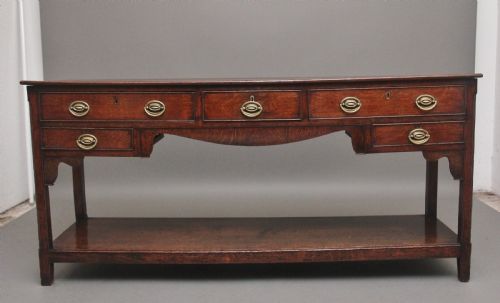


Early Georgian Oak Sideboard
An early georgian oak sideboard brings solid country timber and regional tradition into a room.
Early Georgian Oak Sideboard
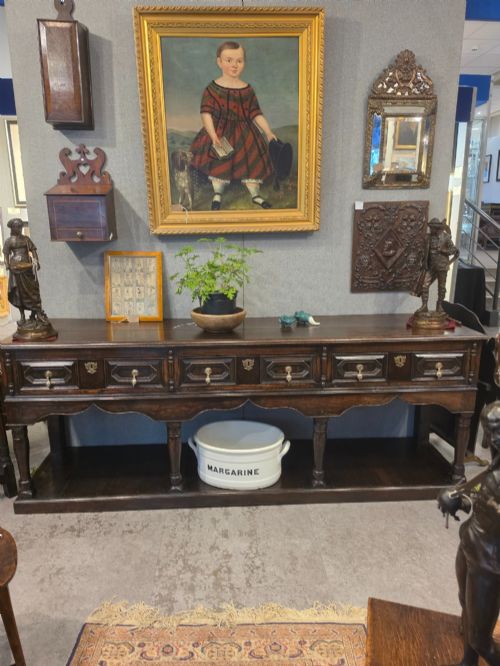
Buyers seeking an early georgian oak sideboard generally encounter sturdy dresser bases, potboard dressers and regional Welsh forms across this selection. These sturdy timbers reflect the vernacular craftsmanship of eighteenth and early nineteenth century workshops, spanning the Georgian, Queen Anne and Regency eras.
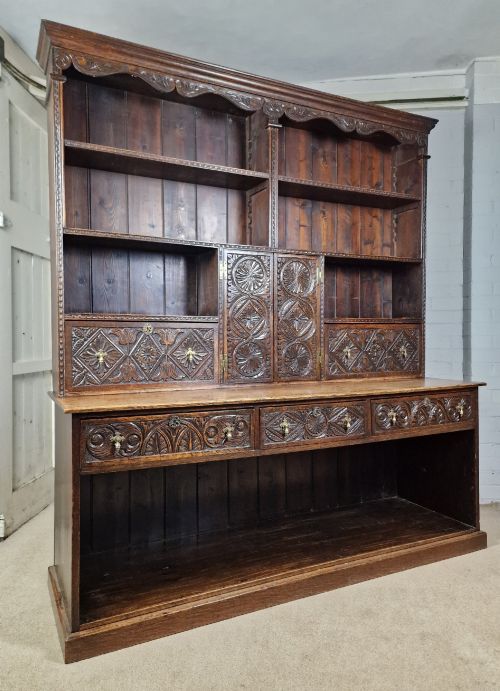
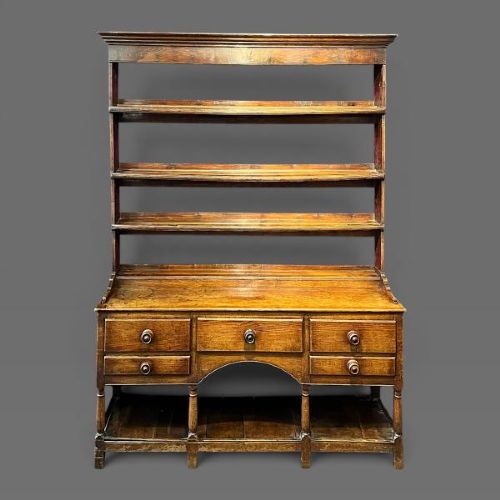
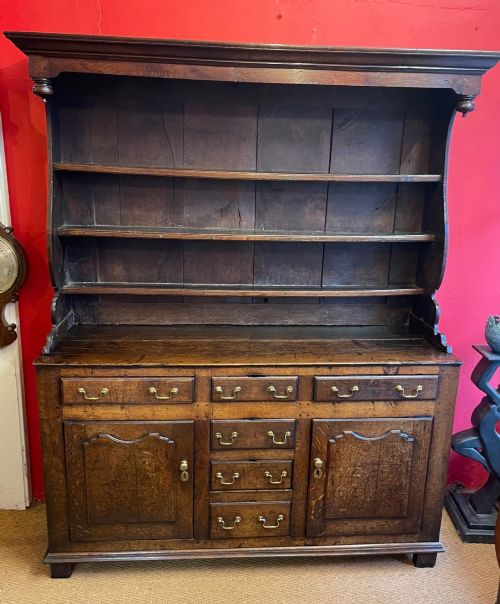
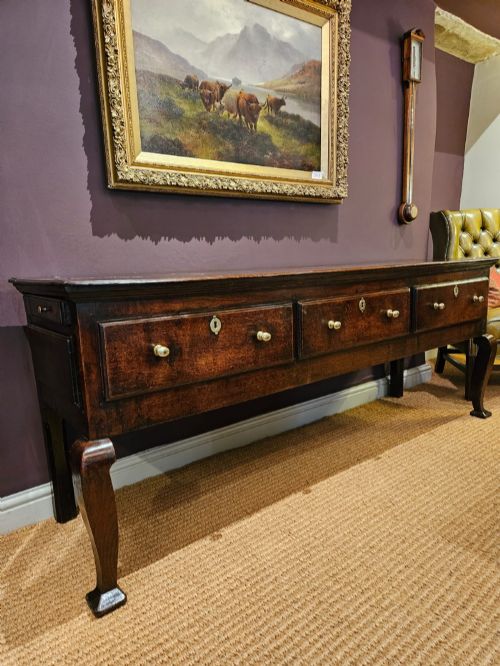
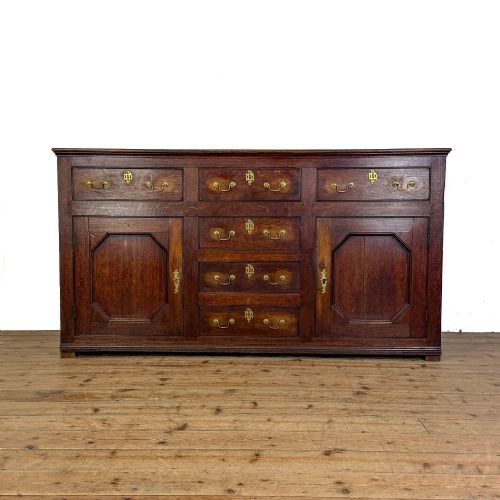
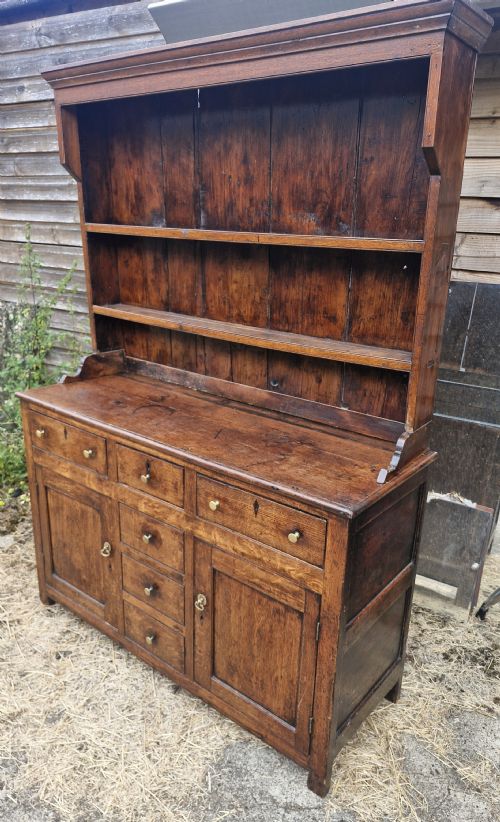
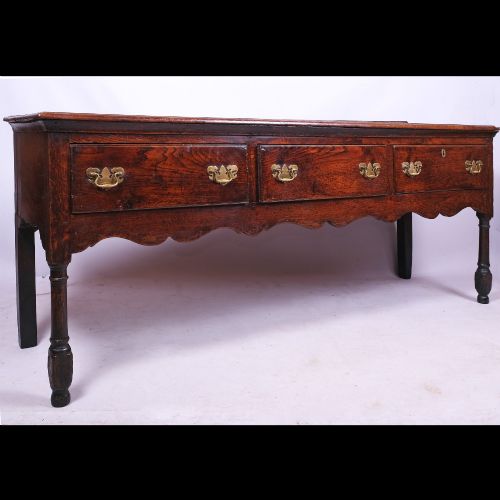
The dominant forms include low dresser bases and tall two-part dressers complete with plate racks. Oak predominates, frequently complemented by burr elm details and brass hardware, presenting the characteristic utilitarian styles of Welsh and English country houses.
Materials and construction
Makers built these pieces using solid oak planks, often framing them with pegged joints and incorporating regional timbers like burr elm for decorative marquetry panels. Iron and brass hardware completed the construction, securing drawers and doors designed for heavy domestic use.
Surfaces received hand planing and traditional wax finishes that highlighted the natural grain of the wood without heavy staining. Structural integrity relied on thick timbers and straightforward joinery rather than delicate veneers.
Early Georgian Oak Sideboard Retail Price Guide 2026
Typical asking prices for early georgian oak sideboard among the pieces listed under this phrase on Sellingantiques today, from the lower quarter to the upper quarter. They describe what is for sale here now, not the wider market.
Listings span the eighteenth and nineteenth centuries, combining oak, burr elm, brass, bone and iron across Welsh and English vernacular styles.
Evaluating craftsmanship and proportion
Quality separates pieces through the retention of original timber patination, crispness of carved details, and the survival of period brasses or wooden knobs. Pieces of higher standing often display more refined proportions, such as smaller overall dimensions or sophisticated cabriole legs.
The degree of alteration to the original boards, replacement timber in the base, and stability of the joints influence the character of each piece. Superior examples maintain their structural honesty with minimal timber replacement across the top and drawer linings.
The Early Georgian Oak Sideboard Glossary
- Potboard dresser
- A dresser featuring an open lower shelf beneath the drawers, historically used for storing heavy pots and pans. This lower platform sits raised above the floor on feet or stile extensions.
- Dresser base
- The lower cabinet portion of a dresser, standing alone without the upper plate rack. These pieces function much like sideboards or serving tables.
- Marquetry
- Inlaid patterns of contrasting wood veneers, such as burr elm set into oak grounds. This decorative technique appears on select drawer fronts and panels.
- Cabriole leg
- A furniture leg that curves outward at the knee and tapers inward toward the foot, often ending in a pad or club shape. This style was popular during the early eighteenth century.
- Vernacular furniture
- Domestic pieces made by regional craftsmen following local traditions rather than metropolitan academic designs. These items prioritise utility and local timber availability.
Early Georgian Oak Sideboard: Frequently Asked Questions
What is a potboard dresser?
A potboard dresser is a form featuring an open low shelf beneath the main bank of drawers, providing sturdy storage space close to the floor.
This open lower tier distinguishes many regional pieces from standard enclosed cupboards and sideboards.
How do I care for antique oak?
Antique oak benefits from occasional applications of traditional beeswax to nourish the timber and maintain a soft lustre.
Keep these pieces away from direct heat sources and strong sunlight to prevent the dry wood from splitting or warping over time.
Where were these dressers made?
These pieces originate primarily from Welsh and English provincial workshops, reflecting distinct regional cabinetmaking traditions.
Rural makers utilised locally sourced oak and fruitwoods to construct durable furniture for everyday country house use.
What is the difference between a dresser base and a full dresser?
A dresser base consists solely of the lower cabinet section containing drawers and sometimes cupboards, functioning much like a sideboard.
A full dresser includes both this lower base and an upper plate rack attached for displaying ceramics and treen.