

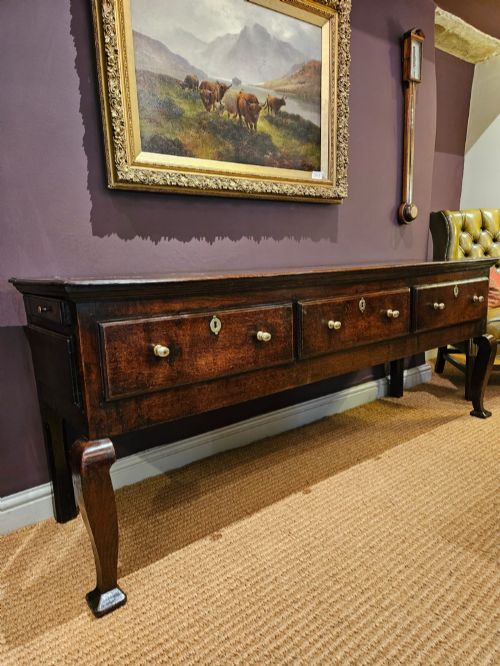
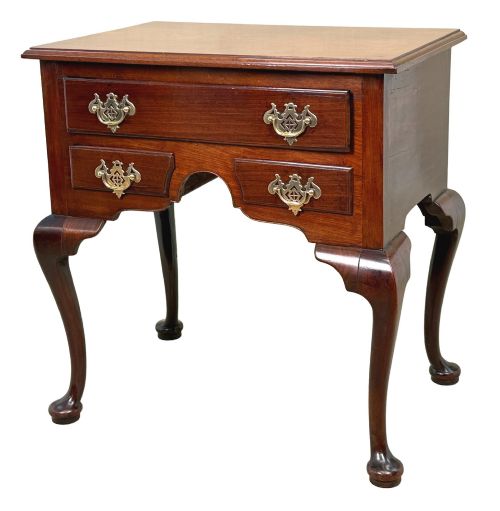
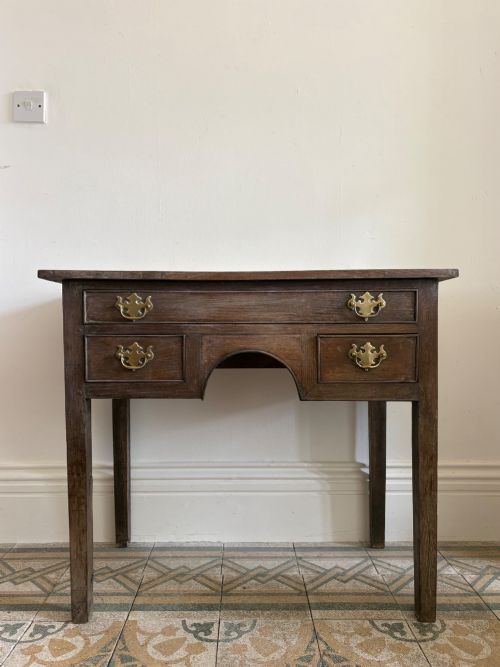
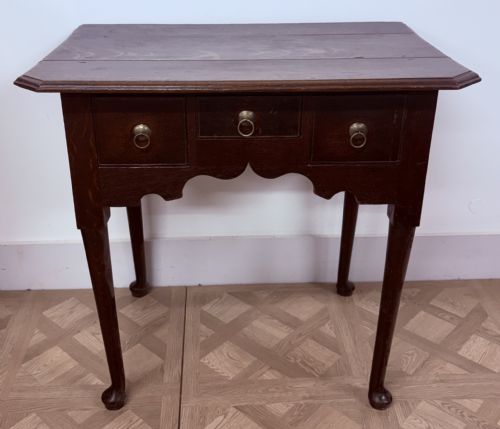
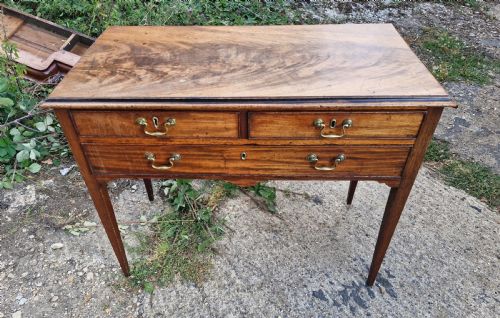
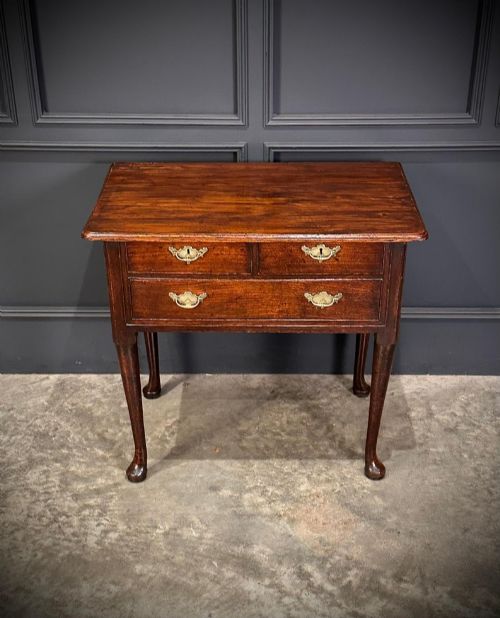
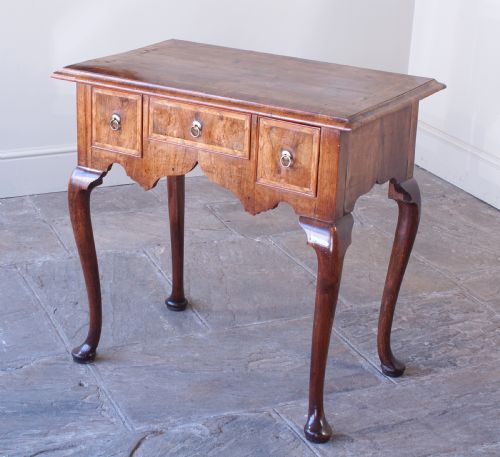
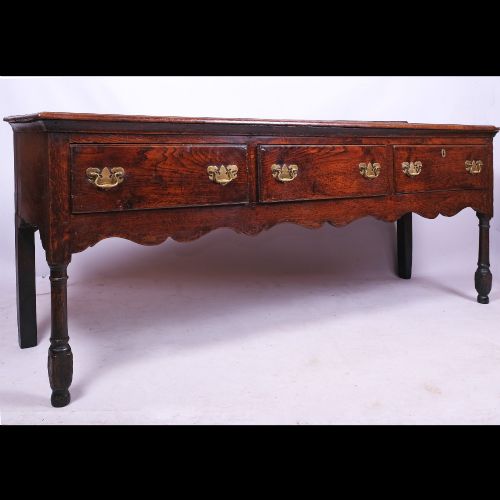
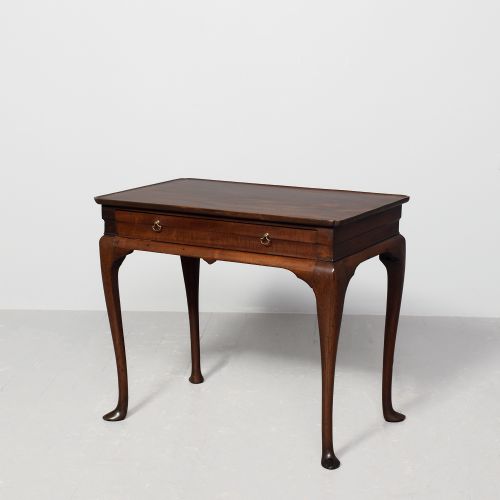
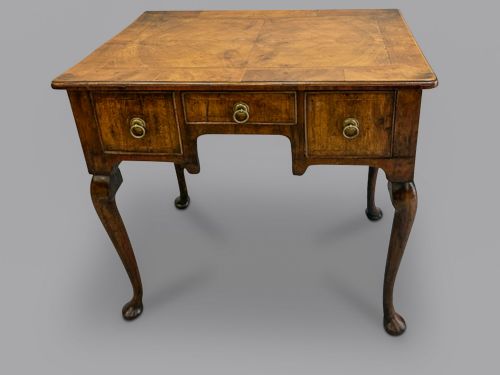
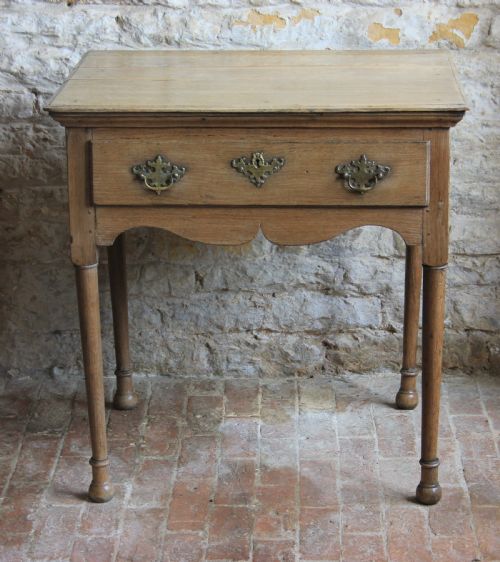


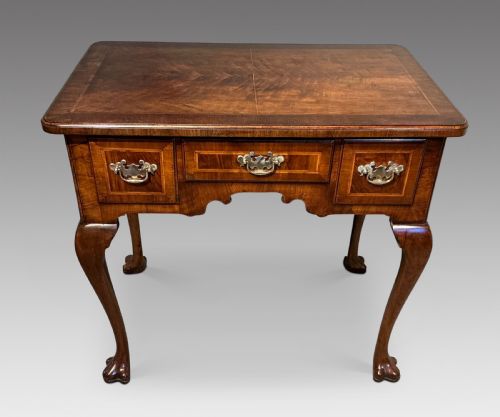

Early Georgian Lowboy Table
An early georgian lowboy table is a compact domestic table with drawers, prized for graceful cabriole legs and fine timber.
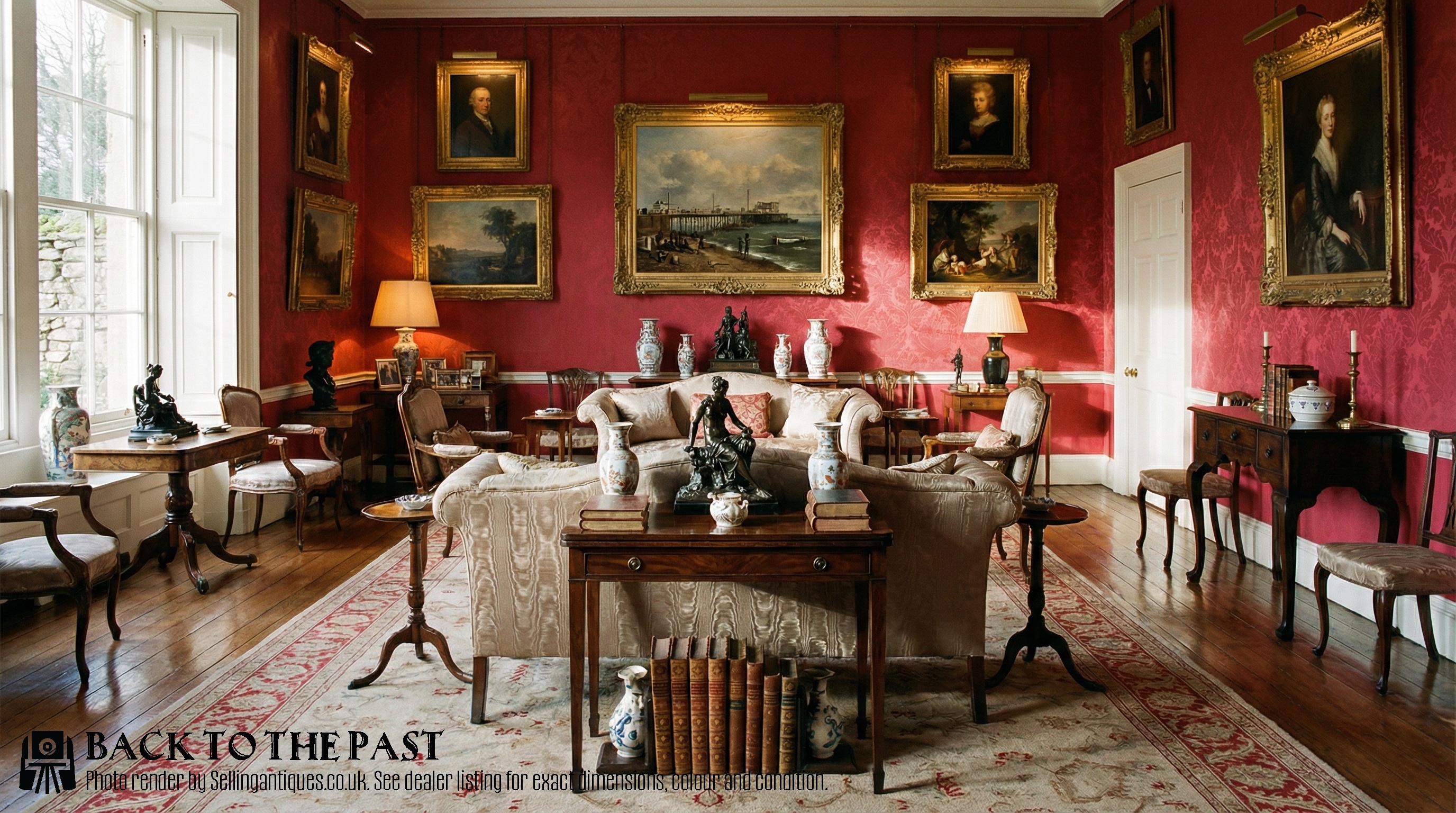
Early Georgian Lowboy Table
The early georgian lowboy table search phrase brings together low dressing and writing tables from the eighteenth century. These pieces appear primarily from the early eighteenth century, George I, and George II periods, with occasional later mahogany examples.
Most specimens on this page are constructed from oak, walnut, or mahogany, often taking the form of side tables or dressing tables. They serve well as compact writing desks or hallway tables in modern homes.
Makers designed these low tables with single or multiple drawers set beneath a polished top. The domestic function centres on personal grooming, correspondence, or storing small household items.
Materials and Construction
Cabinetmakers utilised native English oak, figured walnut, and imported mahogany to build these tables. Walnut and red walnut frequently feature decorative banding, while oak pieces display robust pegged joints.
Tables incorporate brass handles and escutcheons on the drawer fronts. Cabriole legs, occasionally terminating in pad feet, shape the lower framework of walnut and mahogany models.
Early Georgian Lowboy Table Retail Price Guide 2026
Typical asking prices for early georgian lowboy table among the pieces listed under this phrase on Sellingantiques today, from the lower quarter to the upper quarter. They describe what is for sale here now, not the wider market.
Current listings feature oak, walnut, mahogany, and burr walnut across the eighteenth and nineteenth centuries.
Evaluating Quality
Quality rests upon the choice of timber and the preservation of original surfaces. Figured walnut veneers and rich red walnut display greater visual depth than plain secondary woods.
The integrity of the structural frame and the retention of period brassware distinguish finer examples. Original cabriole leg profiles without excessive timber replacement hold higher regard among collectors.
The Early Georgian Lowboy Table Glossary
- Lowboy
- A small low table with drawers, commonly used as a dressing table or side table during the eighteenth century.
- Cabriole leg
- A furniture leg that curves out and then narrows inward, typical of Queen Anne and early Georgian styles.
- Bandings
- Thin strips of contrasting wood inlaid around the edges of drawer fronts or table tops for decorative effect.
- Escutcheon
- A protective metal plate surrounding the keyhole of a drawer or cabinet door.
- Dresser base
- A heavy low wooden table fitted with drawers, originating from the same period as the lowboy.
Early Georgian Lowboy Table: Frequently Asked Questions
What was a lowboy used for?
These tables functioned primarily for personal grooming and correspondence in private bedchambers. Drawers held powders, brushes, and writing materials.
Today, they adapt easily as compact side tables, hall tables, or small desks in smaller rooms.
Are all lowboys from the eighteenth century?
The majority date from the early eighteenth century, spanning the reigns of Queen Anne, George I, and George II. These periods define the classic proportions and construction methods of the form.
Later nineteenth-century interpretations also exist, reflecting revivals of earlier eighteenth-century furniture styles.
How do I care for an antique wooden table?
Keep the timber away from direct heat sources and strong sunlight to prevent the wood from drying out or splitting. Dust regularly with a soft, dry cloth and apply natural wax polish sparingly.
Avoid placing damp items or heavy liquids directly onto the polished wooden surface.