

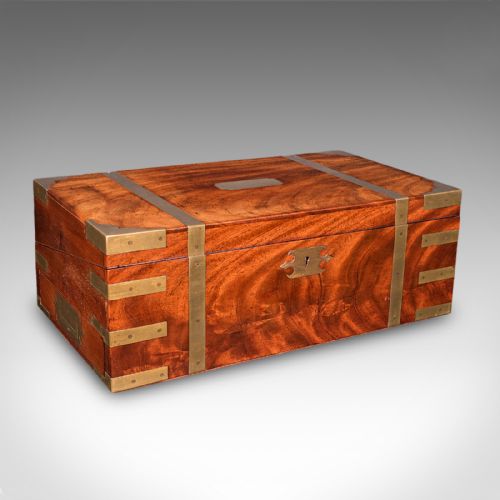
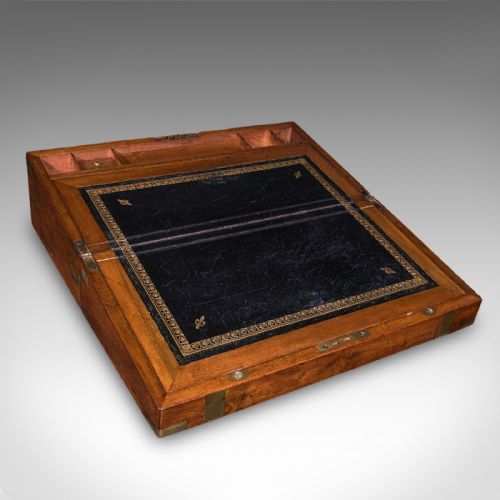


Antique Correspondence Desk
An antique correspondence desk is a specialised repository for letters and writing tools, designed to keep personal correspondence orderly.
Antique Correspondence Desk
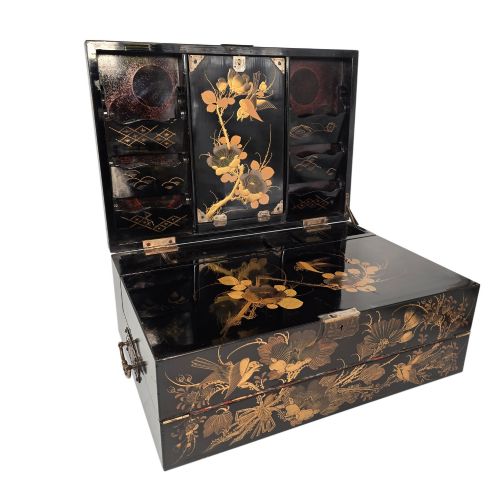
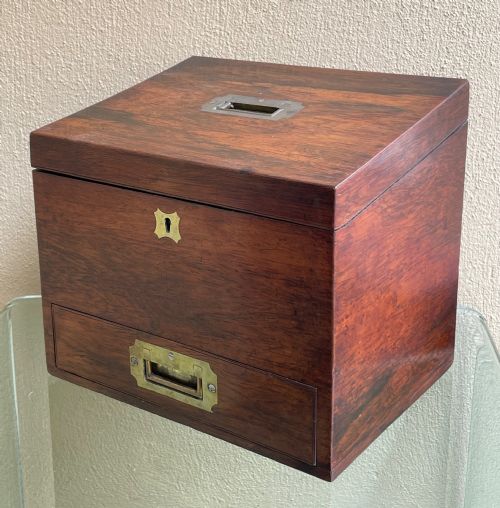
An antique correspondence desk encompasses varied forms designed for managing post, ranging from tabletop stationery boxes and writing slopes to full writing tables and lowboys. These pieces span the Georgian, Regency, and Victorian periods, reflecting shifting domestic habits in letter writing.
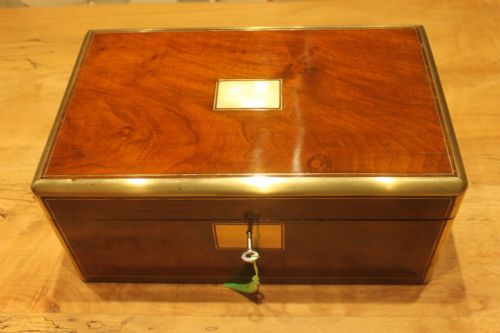
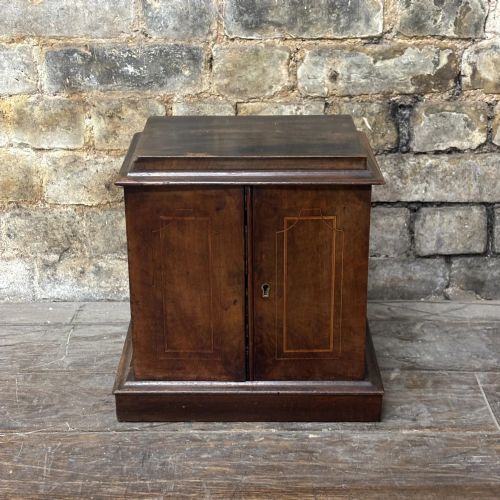
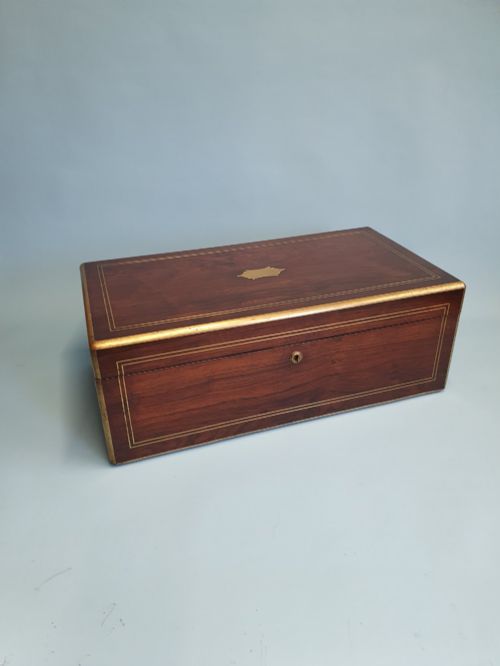
The most common formats met on this page are compact desktop correspondence boxes and stationery cabinets alongside larger writing desks and lowboys. Makers utilised domestic timbers like mahogany, oak, and walnut, alongside exotic woods and specialised decorative techniques.
Pieces frequently incorporate compartments for paper, envelopes, and inkwells, sometimes combining a writing slope with letter slots. Their origins stretch across English workshops, Scottish makers, and continental European ateliers.
How they were made
Cabinetmakers constructed these pieces using dense hardwoods such as mahogany, walnut, rosewood, and oak, often applying veneers of burr walnut or satinwood over sound structural timbers. Brass mounts, campaign handles, and lock escutcheons reinforced corners and added secure closures.
Interiors combined solid wood partitions with leather writing surfaces, bone or ivory details, and concealed secret drawers. Specialised decorative methods such as Tunbridge ware, Japanese lacquer, marquetry, and ormolu adorn the exterior surfaces of finer boxes.
Antique Correspondence Desk Retail Price Guide 2026
Typical asking prices for correspondence desk among the pieces listed under this phrase on Sellingantiques today, from the lower quarter to the upper quarter. They describe what is for sale here now, not the wider market.
Listings feature portable writing slopes alongside large oak and mahogany writing tables spanning the Georgian and Victorian periods.
What varies in quality
Construction standards depend on the choice of timber and the precision of the joinery, with solid hardwoods and figured veneers marking out superior examples. The complexity of internal fittings, such as secret drawers, spring-released compartments, and original brass hardware, elevates the standing of a piece.
Decoration distinguishes standard utilitarian boxes from exceptional ones, particularly where hand-applied marquetry, fine Tunbridge ware mosaics, or quality ormolu mounts are present. The survival of original leather inserts, inkwells, and fitted stationery dividers further separates utilitarian items from high-status examples.
Edmund Nye·William IV·Austin·W & J Milne·Asprey London
The Antique Correspondence Desk Glossary
- Writing slope
- A portable or table-standing box with an angled, hinged lid designed to provide a firm surface for writing letters. It typically opens to reveal compartments for pens, ink, and stationery.
- Lowboy
- A small side table with one or more rows of drawers beneath the work surface, frequently utilised as a compact writing desk or correspondence table. These tables often date from the Georgian period.
- Tunbridge ware
- A meticulous form of woodworking originating in Kent, consisting of small mosaic tiles assembled from numerous pieces of naturally coloured woods to create pictorial or geometric designs. This technique decorates the exterior of specialised boxes.
- Campaign
- Described as items designed for portability and travel, featuring recessed brass handles, reinforced corners, and robust construction suited to officers on the move. These pieces pack down or secure securely for transit.
- Escritoire
- A writing cabinet or desk fitted with drawers, pigeonholes, and a drop-front writing surface. These pieces provide concealed storage for correspondence and writing materials.
Antique Correspondence Desk: Frequently Asked Questions
How were writing slopes used?
Writing slopes were placed upon tables or desks and opened to provide an inclined writing surface covered in leather or velvet. The sloping lid allowed for a comfortable posture when writing letters by hand.
Beneath the hinged writing surface, compartments held stationery, while concealed secret drawers often secured valuables or private documents. Many examples include spaces for glass ink bottles and sanders.
How do I identify a Victorian correspondence box?
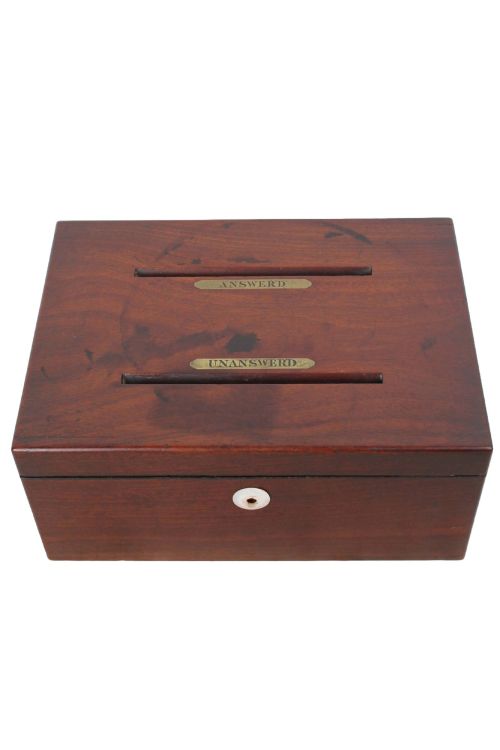
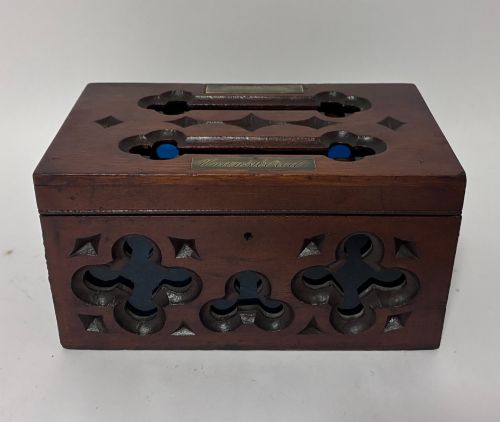
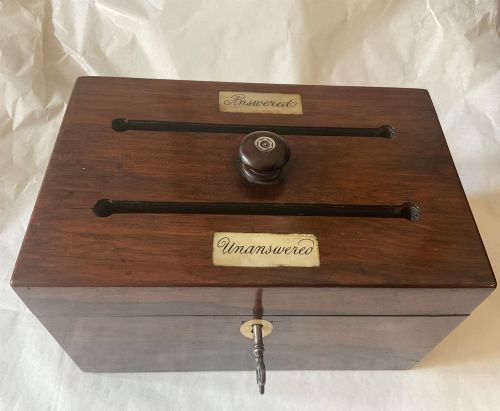
Victorian correspondence boxes typically utilise dense timbers like walnut, oak, and coromandel, often embellished with brass mounts and campaign-style hardware. Their interior layouts reflect the expansion of postal systems in the nineteenth century, featuring dedicated slots for answered and unanswered letters.
Stylistic influences range from plain utilitarian oak to ornate Gothic Revival designs and Tunbridge ware mosaics. Dating is often confirmed by construction methods, lock types, and secondary timbers used inside the drawers.
Where were stationery cabinets placed?
Stationery cabinets stood upon desks, sideboards, or dedicated tables in country houses, libraries, and offices. Their fall-front doors or lifting lids provided quick access to writing paper, envelopes, and ledgers.
These pieces kept desktop clutter to a minimum by housing all writing necessities within fitted internal divisions. They remain practical for organising modern correspondence and desk accessories.