

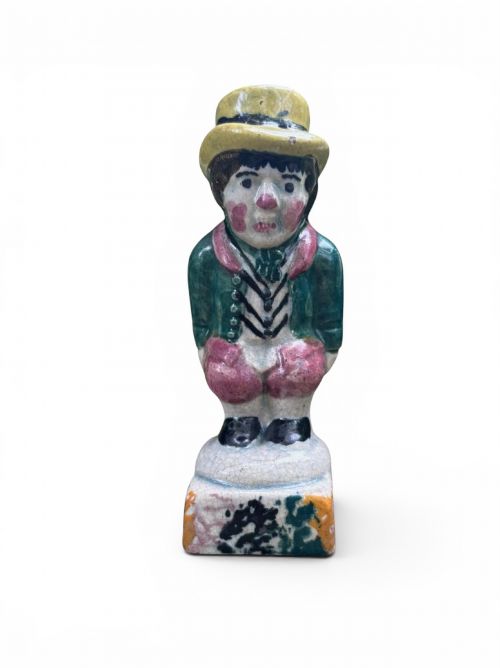


Early English Ceramic Figure
An early english ceramic figure captures the charm of past centuries through modelled earthenware and porcelain.
Early English Ceramic Figure
An early english ceramic figure represents domestic animals, mythological subjects, and pastoral scenes modelled in clay and porcelain. These objects reflect the decorative tastes of the eighteenth and nineteenth centuries, spanning Georgian and Regency periods. You will encounter figures ranging from small pepper pots and pugs to large mythological figure groups.
How they were made
Factories utilised moulds to form the figures before hand-painting the fine details in pastel hues and stronger enamels. Marks such as the gold anchor indicate specific factory origins, while patch marks reveal manufacturing methods from the eighteenth century.
Father Time clips Cupid's wings in several robust ceramic groups, proving that even mythological figures faced domestic interference.
What varies in quality
Quality rests upon the crispness of the modelling and the skill of the hand-painting across the surface. Early Derby and Bow pieces display delicate facial expressions and detailed drapery, whereas mass-produced factory work shows simpler execution. The finesse of the enamel application and the application of gold leaf distinguish superior examples from standard production.
The sophistication of the subject matter, such as multi-figure groups depicting classical narratives, separates standard figurines from ambitious sculptural works. Preservation of original enamels and glaze surfaces maintains the visual integrity of each ceramic piece.
Derby porcelain·Bow porcelain·Minton·Walton·Prattware·William Duesbury and Co
The Early English Ceramic Figure Glossary
- Pearlware
- A refined earthenware developed by Josiah Wedgwood and adopted by other potteries, featuring a bluish glaze that pooled in recesses. This material became standard for Staffordshire figures during the late eighteenth and early nineteenth centuries.
- Soft-paste porcelain
- A ceramic composition containing glass frit and white clay, fired at lower temperatures than hard-paste porcelain. It exhibits a warm tone and interacts richly with early enamel colours.
- Biscuit figure
- An unglazed porcelain body fired to a matte finish, resembling marble. This technique allowed makers to showcase intricate sculptural details without obscuring them beneath a glossy glaze.
- Patch period
- A phase in eighteenth-century Derby production identified by kiln marks left on the underside of figures from supports. These distinct marks help date early porcelain pieces.
- Gold anchor mark
- A factory symbol used by Bow porcelain during the mid-eighteenth century to denote wares of quality. It appears painted in red, gold, or brown on the base of figures.
Early English Ceramic Figure: Frequently Asked Questions
What are early english ceramic figures?
These objects are decorative figurines and sculptural groups made from earthenware, pearlware, and porcelain in Britain during the eighteenth and nineteenth centuries.
They depict animals, classical figures, and pastoral characters designed for interior display in period interiors.
How were these figures used?
Owners placed them on mantelpieces, sideboards, and brackets within formal rooms as decorative ornaments and conversation pieces.
Peculiar forms like pepper pots combined domestic utility with modelled sculptural designs.
How do I identify porcelain from earthenware?
Porcelain bodies are vitrified and often translucent when held to light, whereas earthenware is opaque and porous beneath its glaze.
Pearlware carries a characteristic blueish tint in the glaze pooling around the base and crevices.
How can I tell the period?
Stylistic shifts from Rococo curves to Neoclassical restraint provide initial clues to the date of manufacture.
Factory marks, materials such as pearlware versus soft-paste porcelain, and manufacturing methods like patch marks narrow down the production era.