






Early Embroidery Art
Early embroidery art brings centuries of needlework into modern rooms, offering rare glimpses of domestic skill from past centuries.
Early Embroidery Art
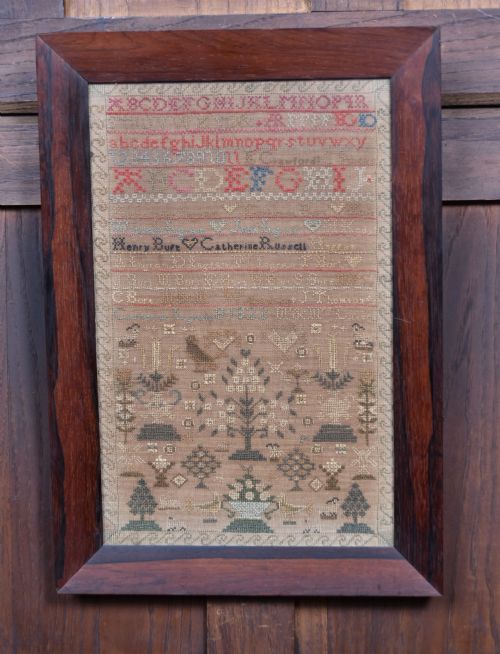
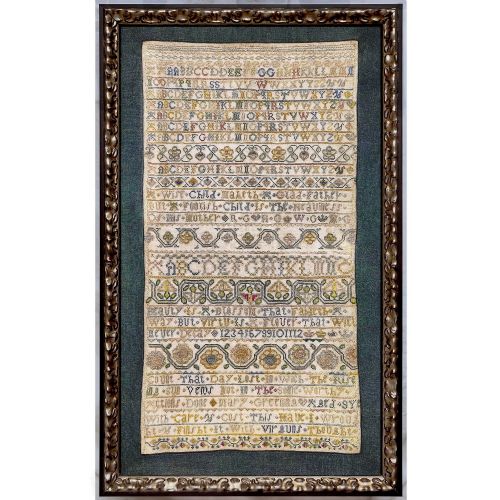
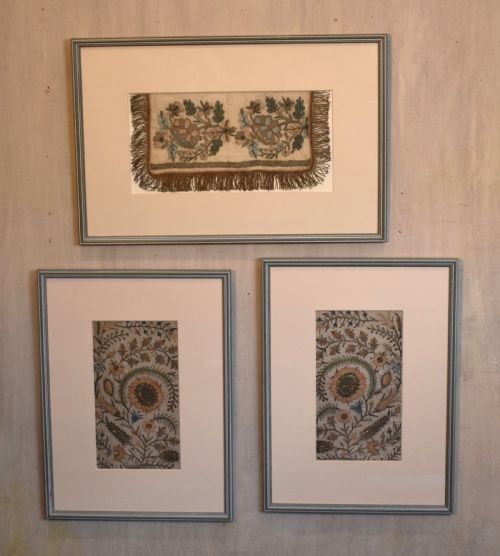
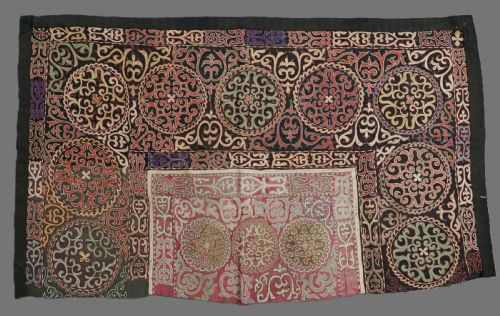
Early embroidery art encompasses historic needlework pictures, samplers, wall hangings, and textile pieces created across the seventeenth, eighteenth, and nineteenth centuries. These works range from English band samplers and narrative silkwork pictures to Central Asian tribal horse covers and yurt wall hangings.
Buyers most frequently encounter nineteenth-century samplers and silkwork pictures alongside earlier Stuart and Georgian framed needleworks. Regional examples such as Scottish and French samplers also appear, providing diverse forms of historic textile art.
Materials and technique
These pieces rely on natural foundations like linen, cotton, and wool as the base fabric for intricate stitching. Artisans utilised silk, wool, and gold thread to build pictorial depth and texture across the surface.
Framing often involves period surrounds such as giltwood or timber frames that protect the delicate textiles. Techniques span precise sampler alphabets, crewel work, felt appliqué, and elaborate pictorial embroidery.
Early Embroidery Art Retail Price Guide 2026
Typical asking prices for early embroidery art among the pieces listed under this phrase on Sellingantiques today, from the lower quarter to the upper quarter. They describe what is for sale here now, not the wider market.
One exceptional textile record preserves a detailed map of England and Wales stitched entirely in early Regency silk work.
Judging quality
Quality rests on the precision of the stitching, the complexity of the design, and the survival of the original materials. A well-executed pictorial narrative or a finely balanced sampler demonstrates superior handwork compared to simpler schoolroom exercises.
The preservation of the ground fabric and the vibrancy of the remaining silks or wools dictate the visual impact of the piece. Contemporary framing in keeping with the period also enhances the overall coherence of the artwork.
Mary Greening·Jane Wettmore·Susan Mary Williams·Mary Pinfold
The Early Embroidery Art Glossary
- Sampler
- A piece of needlework produced as a demonstration or test of skill in various stitches. These often feature alphabets, numbers, and pious motifs.
- Crewel work
- Embroidery executed using wool yarn on a heavy linen or cotton twill fabric. This technique creates textured surface designs popular in historic wall hangings.
- Silkwork picture
- A decorative textile artwork stitched primarily in silk threads to depict landscapes, figures, or literary scenes. They frequently appear in period frames.
- Band sampler
- An early form of sampler featuring horizontal bands of diverse patterned stitches arranged in rows. They showcase the stitcher's repertoire of intricate patterns.
Early Embroidery Art: Frequently Asked Questions
How do I hang antique embroidery?
Keep framed textile art away from direct sunlight to prevent the silk and wool threads from fading. Glass protection is essential to shield the delicate fibres from dust and atmospheric moisture.
Ensure the hanging wall remains dry and stable in temperature. Professional framing with acid-free backing materials helps preserve the textile for decades to come.
What is a band sampler?
A band sampler is an early style of needlework where rows of distinct geometric or floral patterns run horizontally across the fabric. These were created to record stitch variations.
Common in the seventeenth century, they represent a maker's compendium of techniques. They precede the pictorial samplers that became popular in later periods.
How do I date a sampler?
Many samplers include stitched dates, maker names, and ages which provide a direct indicator of their origin. Stylistic markers like typography, border motifs, and colour palettes offer further clues.
Comparison with documented schoolgirl samplers helps narrow down the decade. The nature of the linen ground and thread types also assists in confirming the correct period.
What are tribal embroidered wall hangings?
Tribal embroideries like Kyrgyz Tush Kyiz or Lakai horse covers are large, highly decorative textiles created by Central Asian communities. They celebrate milestones through rich ornamentation.
These pieces utilise vibrant felt and wool work to form bold geometric patterns. They bring distinct cultural history and texture to interior wall displays.