


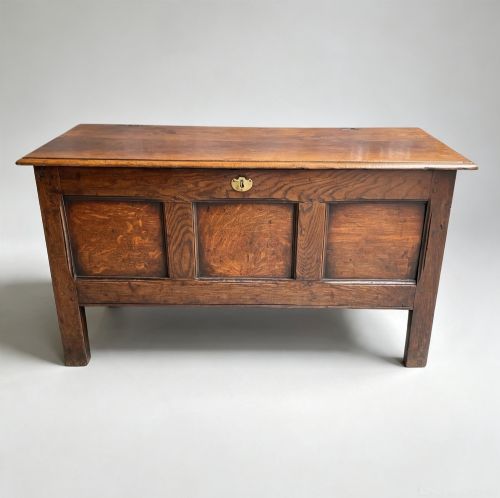
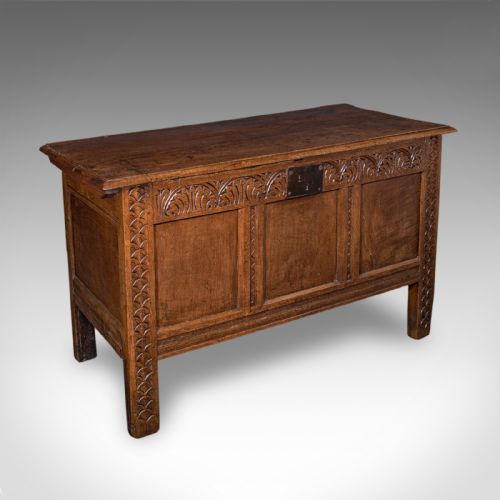
Early Carved Oak Coffer
An early carved oak coffer is a robust domestic storage chest holding centuries of utility, sought for its honest carpentry and rich timber grain.
Early Carved Oak Coffer
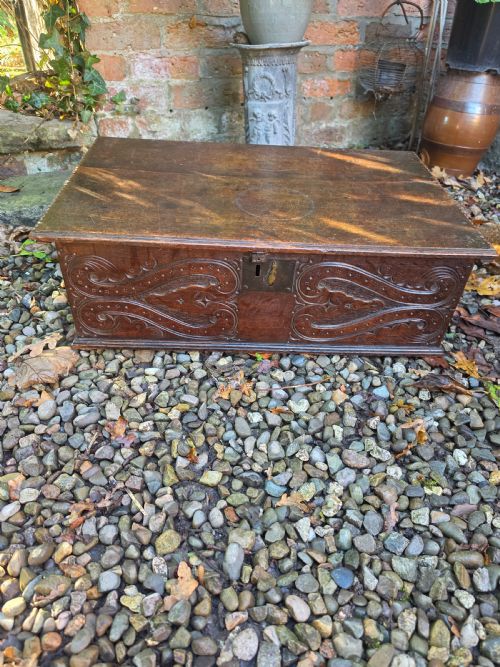
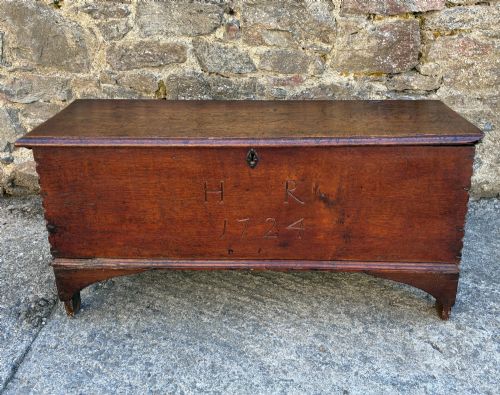
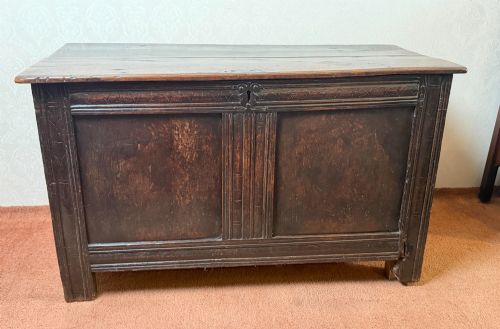
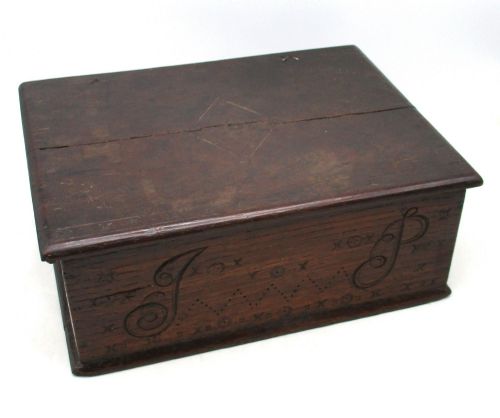
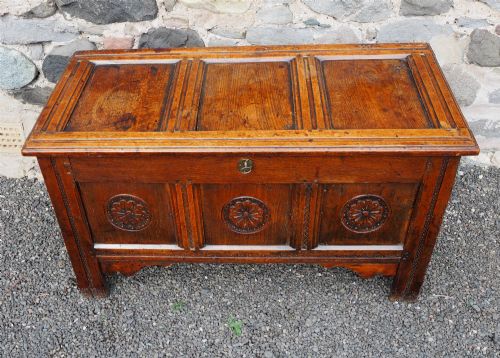
When searching for an early carved oak coffer, collectors examine sturdy domestic containers that served families for generations as blanket boxes, linen stores, and church receptacles. The pieces appearing most frequently on this page originate from the sixteenth, seventeenth, and eighteenth centuries, reflecting long periods of British and European cabinet-making.
Beyond standard coffers, related forms like sword chests, bible boxes, and mule chests share the same heavy timber construction and utilitarian purpose. These objects often display regional characteristics, from West Country workshops to Welsh farmhouses, connecting domestic history directly to the material culture of the period.
Materials and construction
Carpenters built these boxes primarily from solid oak, sometimes incorporating walnut, fruitwood, and secondary woods for internal panels or smaller deed boxes. Iron and brass hardware, including strap hinges and locks, secured the heavy lids and reinforced the structural joints.
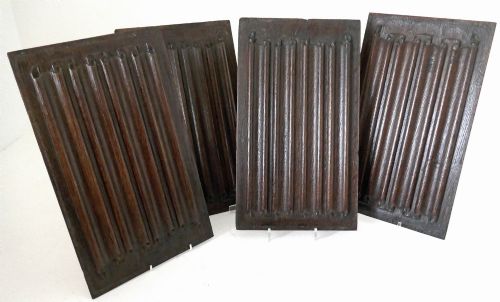
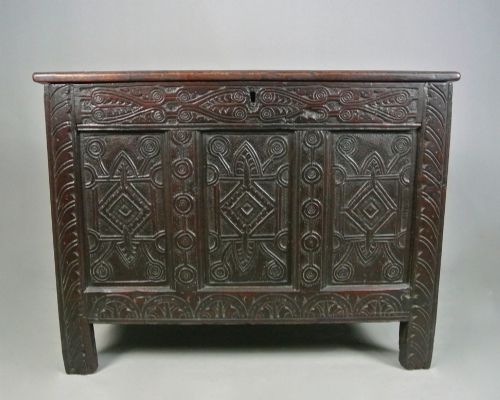
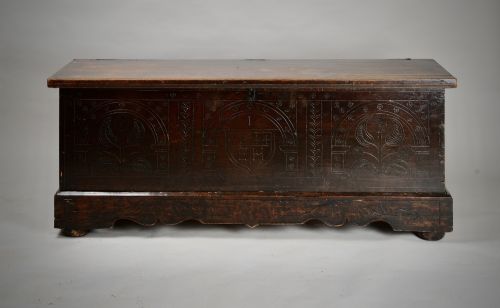
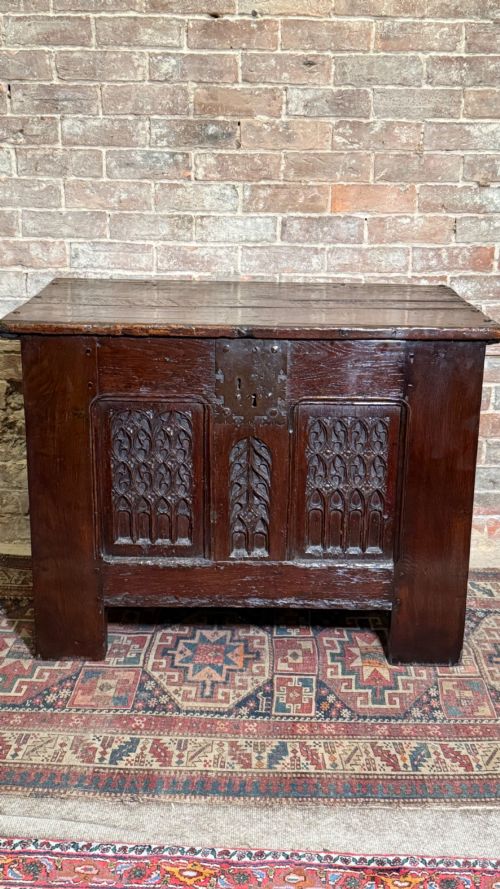
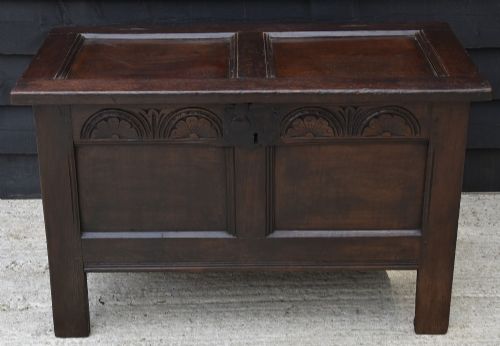
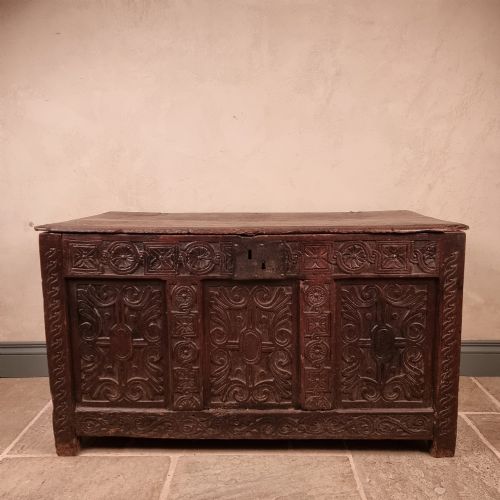
Construction techniques relied on heavy planking, frame-and-panel assemblies, and pegged mortise and tenon joints to withstand decades of heavy use. Surface decoration involved hand carving, linenfold motifs, arcading, and geometric patterns executed with chisels and gouges directly into the dense timber.
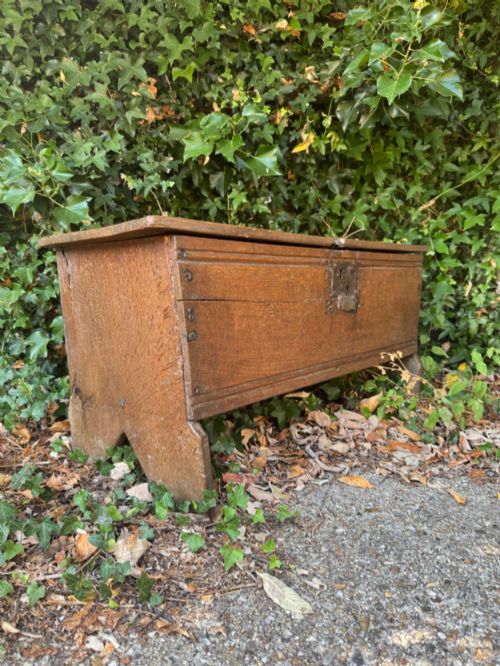
Listings feature oak, walnut, and fruitwood pieces spanning the sixteenth to the nineteenth century, including plank construction, bible boxes, and panelled coffers.
Evaluating quality and authenticity
Quality in these chests rests upon the integrity of the original timber and the crispness of the hand-carved panels. Pieces retaining their original floor boards, hinges, and patinated surfaces command greater regard from purists.
The sophistication of the joinery and the depth of the carving distinguish standard utilitarian boxes from finer commissioned pieces. Alterations to lids, replaced feet, or extensive timber replacement alter the historical standing of an artefact.
The Early Carved Oak Coffer Glossary
- Linenfold
- A carved wooden panel motif imitating folded linen cloth, popular during the Tudor and Elizabethan periods.
- Arcading
- A decorative series of arches supported by piers, frequently carved across the top rails of seventeenth-century panels.
- Mule chest
- A storage chest fitted with one or more drawers beneath the main internal compartment, combining coffer and drawer storage.
- Plank coffer
- A primitive chest constructed from thick boards joined at the edges without a separate frame, representing early box-making techniques.
- Cassone
- A large Italian chest intended for valuables and marriage goods, though the term occasionally describes continental European coffers.
Early Carved Oak Coffer: Frequently Asked Questions
What did people store inside a coffer?
These receptacles held valuable household goods, including woollen blankets, fine table linen, family bibles, and legal deeds. Because houses lacked fitted closets, families relied on them to protect textiles from dampness and pests.
Smaller boxes functioned as portable desks for documents or safe storage for silver and coinage. Their heavy lids provided security before built-in furniture became common in domestic interiors.
How can I tell a sixteenth-century coffer from a seventeenth-century one?
Sixteenth-century examples frequently feature heavy plank construction or crisp linenfold panels associated with the Tudor period. Timber surfaces from this era often display the irregular marks of pit-sawing and hand adzing.
Seventeenth-century pieces introduce geometric mouldings, arcaded top rails, and framed panel construction reflecting Jacobean and later Stuart styles. Carving styles evolved from simple Gothic motifs toward more architectural and symmetrical ornament.
Are these chests suitable for daily use at home?
Their solid timber construction makes them durable enough to function as blanket boxes or window seats in modern rooms. The sturdy flat lids also allow them to serve as occasional side tables.
Placing them away from direct heat sources and sudden humidity changes protects the ancient oak from splitting. Regular waxing maintains the dry, historic patina acquired over centuries of handling.
Why do some chests feature drawers at the base?
Chests with drawers beneath the main compartment represent an evolution in furniture design known as mule chests. This configuration allowed easier access to frequently used items without lifting the heavy top lid.
Cabinet-makers began incorporating drawers during the later seventeenth and early eighteenth centuries to improve domestic organisation. This transitional form bridged the traditional coffer and the modern chest of drawers.