



Early 20th Century Metalwork
Early 20th century metalwork brings together utilitarian and decorative objects spanning the Arts and Crafts, Art Nouveau, and international trade styles.
Early 20th Century Metalwork
Early 20th century metalwork encompasses a diverse array of items designed for both ornamental and functional purposes within domestic and ritual spaces. The selection includes sculptural figures, vases, candlesticks, fireplace accessories, and wall plaques created across various global regions.
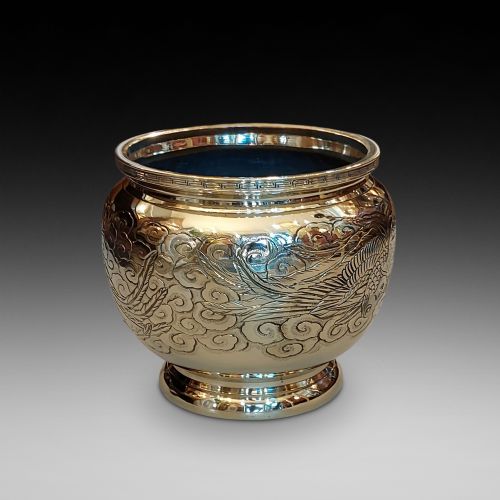
Buyers will encounter pieces representing distinct international aesthetic movements, from European Art Nouveau and the Amsterdam School to Japanese Meiji period works and Chinese export pieces. Forms range from practical household ironwork to highly decorative gilt bronze temple figures and cloisonné enamel vessels.
Materials and Techniques
Makers utilised a wide range of metals including brass, bronze, copper, wrought iron, and white metal, often combining them with vitreous enamel or hardwood components. Bronze and brass were frequently cast, while iron was forged into robust items such as log bins and fire accessories.
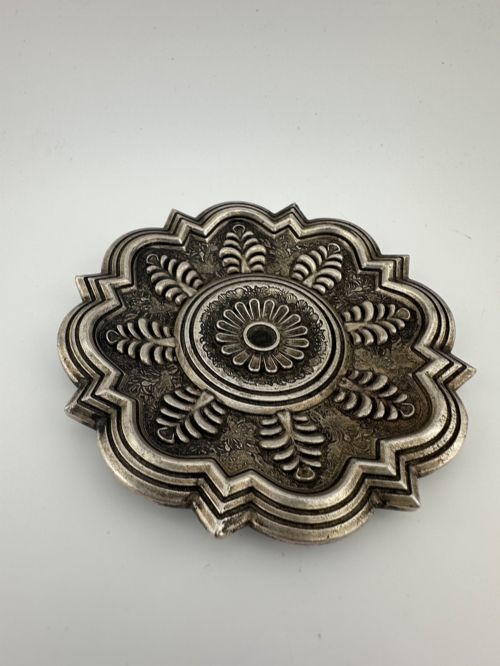
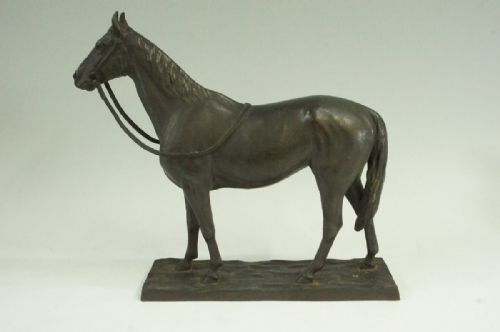
Specialised techniques defined specific regional outputs, such as the intricate wirework of cloisonné enamel, the contrasting metals of Bidri ware, and the detailed casting seen in African tribal busts and Japanese horse sculptures.
Early 20th Century Metalwork Retail Price Guide 2026
Typical asking prices for early 20th century metalwork among the pieces listed under this phrase on Sellingantiques today, from the lower quarter to the upper quarter. They describe what is for sale here now, not the wider market.
Snakes coil purposefully around Indian brass candlesticks while bronze frogs populate Art Nouveau vases.
Evaluating Quality and Execution
The standard of early 20th century metalwork largely depends on the precision of the casting, the crispness of chased or hammered surface details, and the integrity of applied finishes like enamel or gilding. Superior examples demonstrate a high degree of control over both the material and the decorative motifs.
Proportion and balance also distinguish finer works, particularly in sculptural forms and pairs of candlesticks or vases where symmetry and anatomical or architectural accuracy play a central role in the overall execution.
Kunio Itô·Jean Dunand
The Early 20th Century Metalwork Glossary
- Bidri ware
- A form of metal handicraft from India utilising blackened zinc or brass alloy inlaid with thin sheets of pure silver.
- Cloisonné enamel
- An ancient technique for decorating metalwork objects with coloured material held in place by thin metal strips welded to the base.
- Amsterdam School
- An architectural and design style of the early 20th century noted for rounded forms, traditional craftsmanship, and expressive use of brick and metal.
- Gilt bronze
- Metal objects cast in bronze and subsequently coated with a thin layer of gold or gold leaf to enhance appearance and durability.
Early 20th Century Metalwork: Frequently Asked Questions
What is early 20th century metalwork?
Early 20th century metalwork refers to decorative and functional objects fashioned from materials like bronze, brass, iron, and copper during the opening decades of the 1900s. These pieces reflect the dominant design movements and regional craft traditions of the era.
The category spans European domestic items, Asian export goods, and African sculptural pieces, showcasing a wide variety of manufacturing techniques and stylistic influences.
How do I care for antique metalwork?
Maintaining antique metalwork involves keeping pieces away from excessive moisture and dusting them gently with a soft cloth. Avoid using harsh chemical polishes that can strip original patinas or damage delicate enamel and inlaid surfaces.
Different metals require specific approaches; for instance, unlacquered bronze and brass develop natural patinas over time that many collectors prefer to preserve rather than buff away.
Are these metal items functional?
Many items in this category were created with a practical purpose in mind, such as candlesticks for lighting, log bins for hearth maintenance, and vessels for holding flowers or liquids. Others, including sculptural figures and wall plaques, were strictly ornamental.
While functional pieces can still be utilised today, their age and craftsmanship often mean they are handled with greater care than modern equivalents.
How are different regional styles identified?
Regional styles are typically identified through characteristic motifs, material combinations, and manufacturing techniques unique to a specific culture or school of design. For instance, Japanese Meiji period bronzes often feature naturalistic animal subjects, while Amsterdam School brasswork emphasises expressive, heavy geometric forms.
Reference to specific periods, export marks, and traditional artisan methods helps attribute pieces accurately to their geographic origin.