




Early 20th Century Marine Art
Early 20th century marine art captures coastal harbours, steamships and open seas through the brush of Edwardian and modernist painters.
Early 20th Century Marine Art
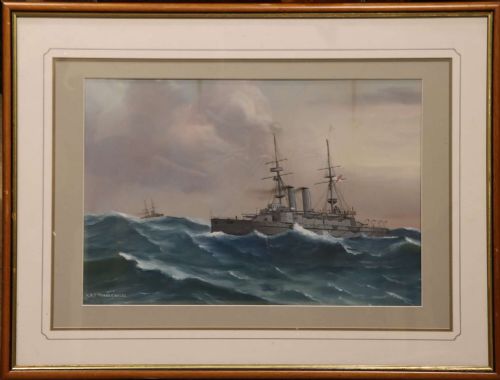
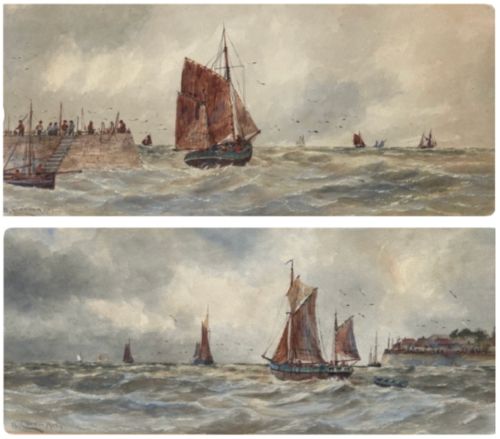
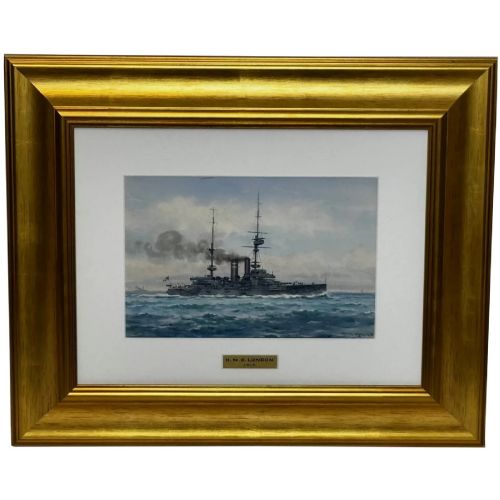
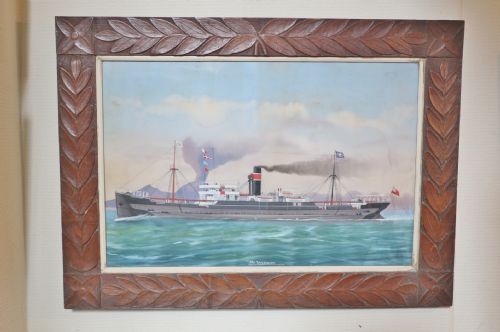
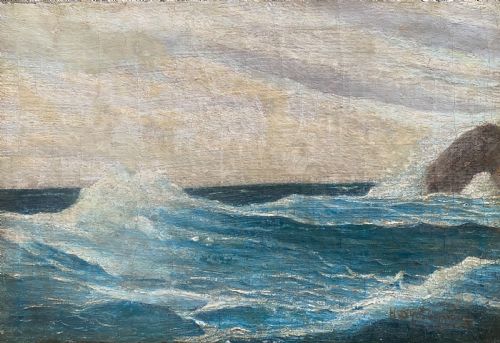
Early 20th century marine art includes original oil paintings, watercolours and gouaches depicting coastal scenes, fishing boats, naval vessels and bustling harbours.
The works span from the Edwardian era through the interwar years, reflecting British Impressionism, China Trade painting and Russian modernism.
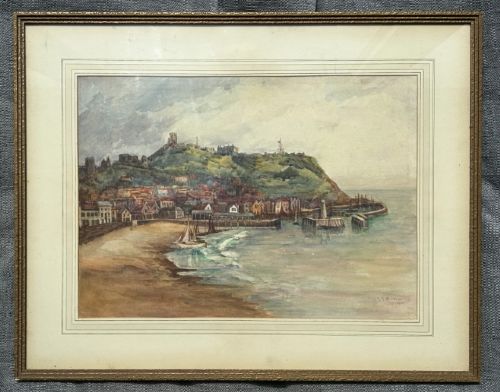
Buyers encounter framed artworks of varying scales, from detailed watercolours of Yorkshire bays to bold oil paintings of Mediterranean ports.
Materials and techniques
Artists worked primarily in oil paint on canvas, panel or board, alongside delicate watercolours and gouache on paper.
Makers applied pigments to capture light on water, utilising traditional brushwork and impressionist techniques to render maritime atmospheres.
Listings feature works spanning from the Edwardian period through the 1930s, executed in oil, watercolour and gouache.
Markers of quality
Quality rests upon the artist's ability to render movement in water and the play of light across coastal skies and hulls.
Works signed by known regional and international painters hold distinction over anonymous studio pieces through stronger composition and handling of medium.
William Cannon·Frank Watson Wood·Owen Bowen·Ernest F Hill·George Hamilton Constantine·Rowland Henry Hill
The Early 20th Century Marine Art Glossary
- Gouache
- An opaque water-based paint that dries to a matte finish. It allows artists to build dense, vibrant marine scenes on paper.
- Seascape
- A work of art depicting the sea, coastlines or maritime vessels. These compositions focus heavily on water, weather and light.
- China Trade painting
- Works produced in treaty ports such as Hong Kong for Western visitors and merchants. They often document local shipping and junks.
- Impressionism
- A style characterised by relatively small, thin yet visible brush strokes and open composition. It emphasises accurate depiction of light.
Early 20th Century Marine Art: Frequently Asked Questions
How do I date early 20th century marine art?
Dating relies on signatures, exhibition labels, artist registries and stylistic clues such as the transition from sail to steam vessels.
Clothing styles on figures and framing materials also offer reliable indicators for narrowing down the decade.
Where should I hang marine paintings?
These works suit spaces with stable humidity and indirect natural light to protect paper and canvas from fading.
Wall placement benefits from eye-level hanging where the details of coastal water and shipping can be appreciated up close.
What is the difference between watercolour and oil marine art?
Watercolour paintings on paper offer luminous, transparent qualities suited to atmospheric coastal light and delicate harbour scenes.
Oil paintings on canvas or board provide richer textures and deeper tones, often capturing the heavier churn of choppy seas.
Are signed marine paintings more desirable?
Signed works by documented painters carry stronger attribution and provenance, connecting the piece to a known hand and exhibition history.
Unsigned works still offer significant visual merit if the brushwork and composition demonstrate high skill.