



Early 19th Century Dining Table
An early 19th century dining table brings lasting craftsmanship and formal presence to a room, offering modular flexibility through period mechanisms.
Early 19th Century Dining Table
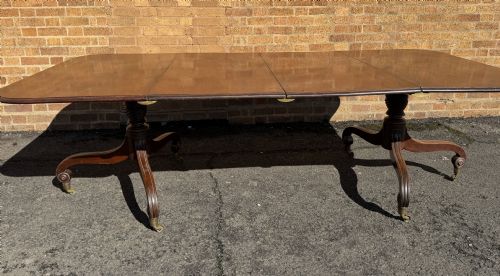
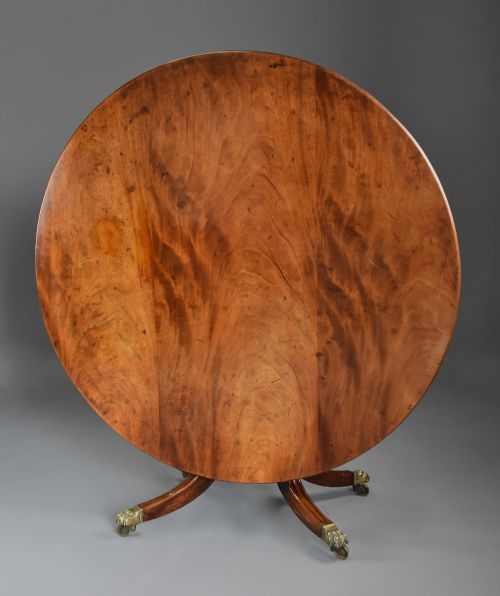
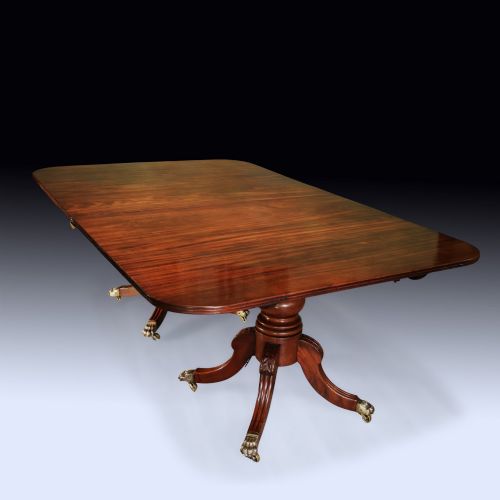
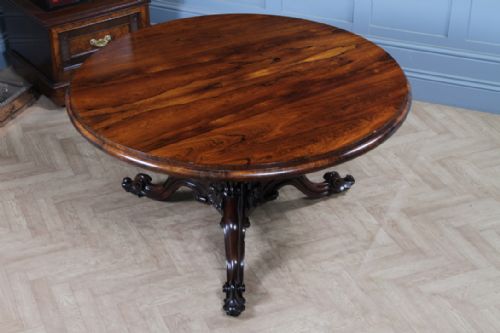
An early 19th century dining table spans the Georgian, Regency, and early Victorian periods, encompassing formal pedestal formats alongside vernacular farmhouse boards. Buyers searching for this phrase encounter twin-pillar and triple-pillar mahogany dining tables designed to expand with loose leaves, as well as tilt-top breakfast tables and rustic solid timber refectory formats.
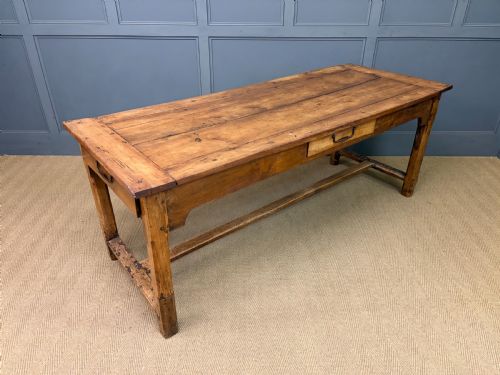
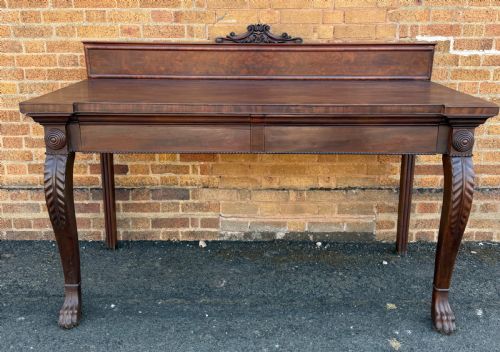
Formal examples showcase polished mahogany and rosewood veneers with pillar-and-claw supports, whereas regional and country variations rely on sycamore, oak, fruitwood, and pine. These pieces served diverse domestic functions, moving between grand dining rooms, informal kitchens, and central hall displays.
How They Were Made
Cabinet makers utilised dense imported hardwoods like Cuban mahogany and rosewood for formal dining tables, frequently applying fine timber veneers over secondary softwood foundations. Regional workshops constructed farmhouse and tavern tables from locally sourced British and European timbers such as oak, elm, sycamore, cherry, and fruitwood.
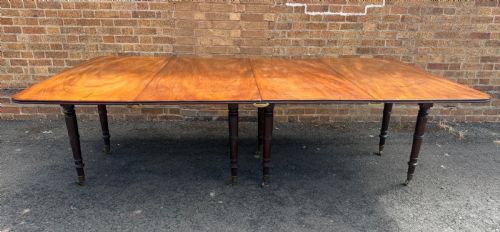
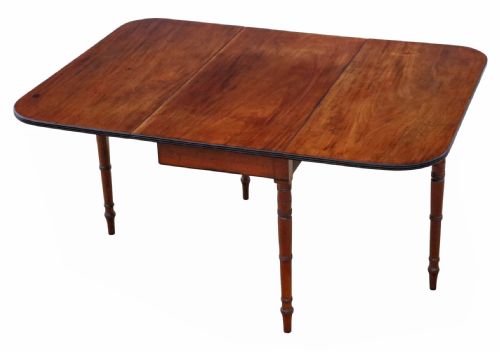
Structural integrity relied upon traditional joinery, including gateleg actions, drop-leaf hinges, and pull-out extending frames supported by concertina mechanisms. Brass castors were frequently fitted to pedestal feet, permitting heavy multi-pillar dining tables to glide across timber flooring.
Several dining tables include clever concertina frames that stretch out like accordions to host grand dinner parties.
What Varies in Quality
The degree of refinement in timber selection and cabinet work separates standard dining furniture from exceptional workshop output. High-tier pieces feature well-figured mahogany with matched grain across extension leaves, whereas lesser examples display simpler construction and mismatched secondary timbers.
Proportion and mechanical execution also dictate value, seen in the smooth operation of draw-out extension frames and the stability of multi-pedestal bases. Stamped makers' marks from established workshops provide documented evidence of superior construction and design provenance.
Gillows Lancaster
The Early 19th Century Dining Table Glossary
- Twin-pedestal
- A dining table construction featuring two central support columns mounted on splayed legs. This format allows comfortable seating around the perimeter without corner legs obstructing chairs.
- Tilt-top
- A mechanism allowing the table top to pivot into a vertical position when not in use. This design saved domestic floor space in smaller period parlours.
- Concertina action
- An expanding frame mechanism that stretches like a lattice to support multiple extension leaves. It enables a compact dining table to lengthen substantially for large gatherings.
- Breakfast table
- A smaller, circular or rectangular occasional table standing on a single pillar, popular during the Regency period. They frequently featured single-piece timber tops.
- Drop-leaf
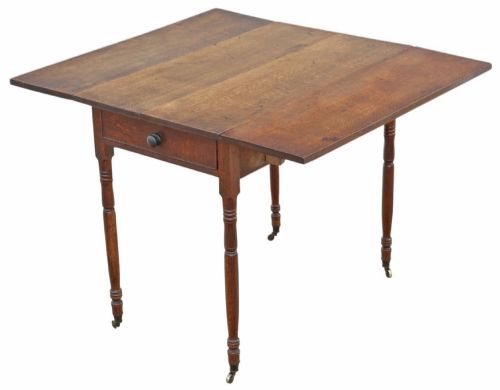
- A table design with hinged side flaps that fold down to reduce the footprint. Supporting swing legs pivot outward to hold the leaves level when raised.
Early 19th Century Dining Table: Frequently Asked Questions
How do I seat ten people?
Look for multi-pedestal dining tables or pull-out extending formats designed with removable leaves. These systems lengthen significantly to accommodate larger dining parties.
Verify the presence of original leaves and stable centre supports to ensure the extended table remains level and secure under weight.
What is a breakfast table?
A breakfast table is a compact pedestal table from the Regency or early Victorian eras, traditionally used for morning meals or light writing tasks. Many examples feature tilt-top mechanisms.
These pieces typically stand on a single central column with brass castors, making them easy to reposition near a window or hearth.
How do I tell Regency from Victorian?
Regency tables tend to feature restrained classical lines, rosewood or mahogany veneers, and delicate brass mounts. They date from the early decades of the century.
Victorian pieces from around 1840 onward often exhibit heavier proportions, bolder carved details, and darker walnut or rosewood timbers.
Are farmhouse tables period pieces?
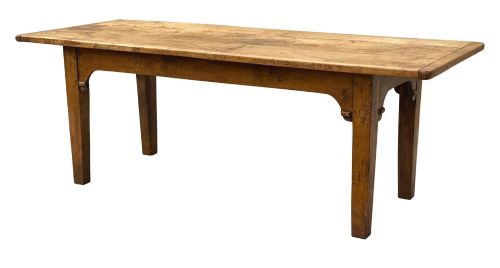
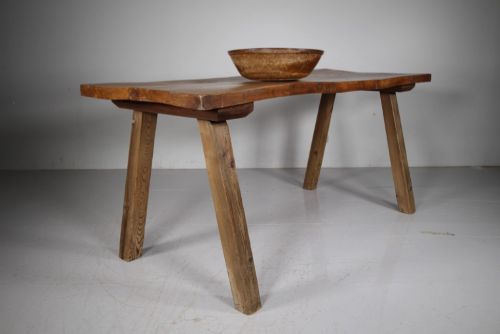
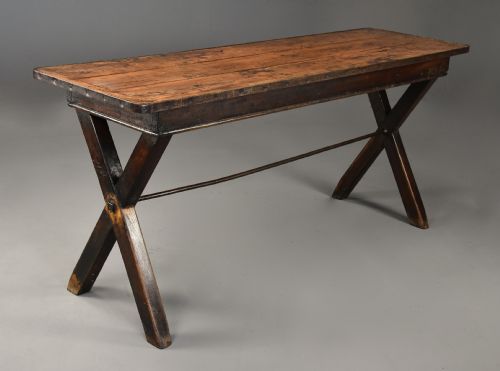
Yes, many farmhouse and tavern tables date from the same early 19th century timeframe as formal dining furniture. They are constructed from regional timbers like sycamore, oak, fruitwood, and pine.
These utilitarian tables were built for daily domestic labour in country kitchens, featuring trestle bases or sturdy four-leg frames rather than formal pedestals.