
Regency Extendable Dining Table
A regency extendable dining table is a dining table that expands with leaves or drops, built for hosting.
Regency Extendable Dining Table
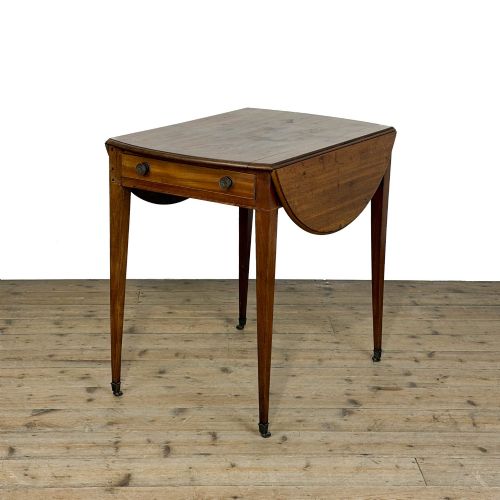
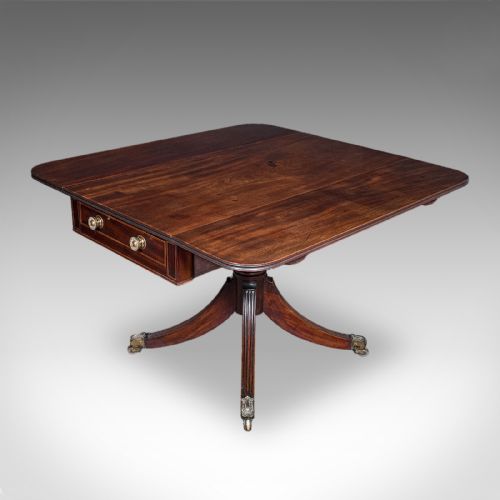
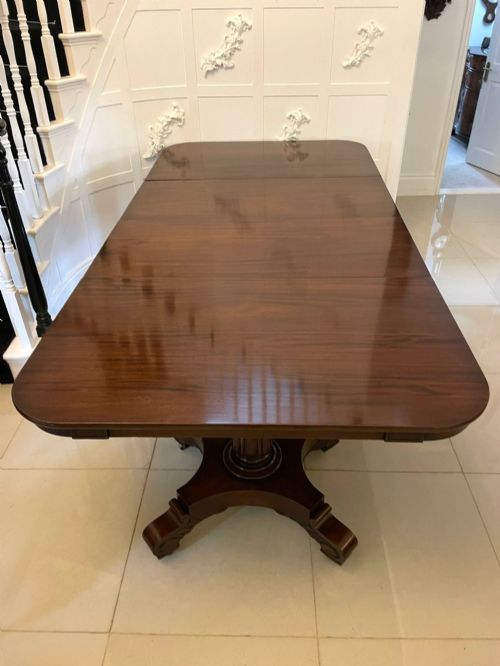
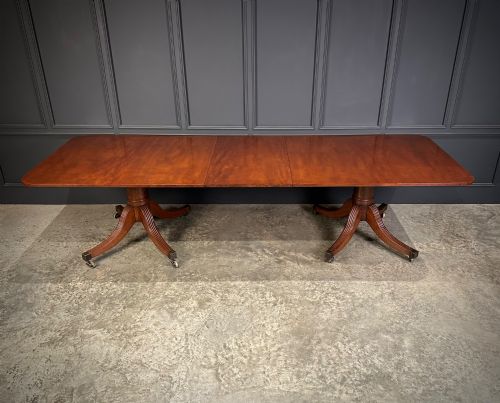
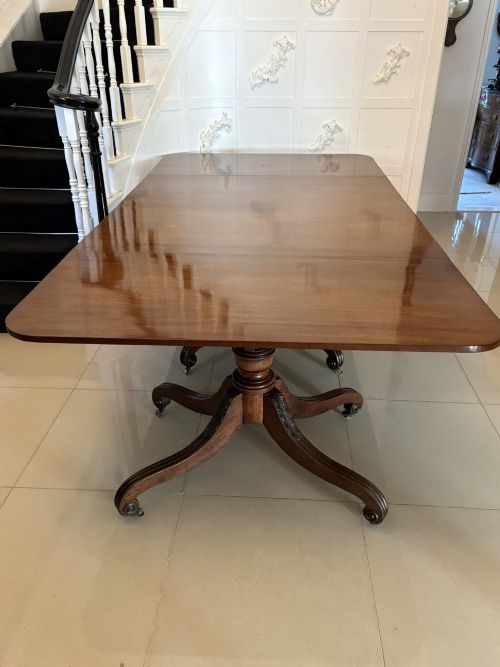
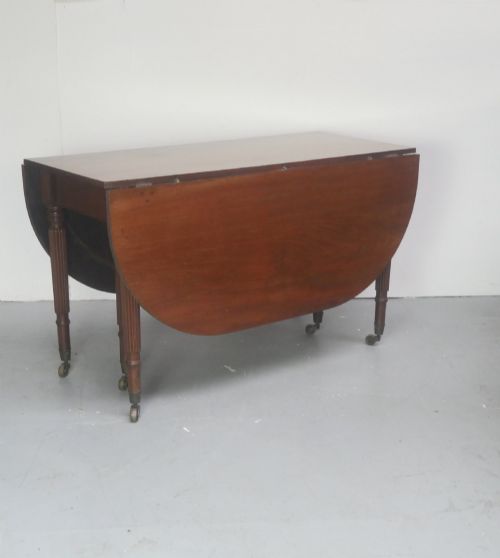
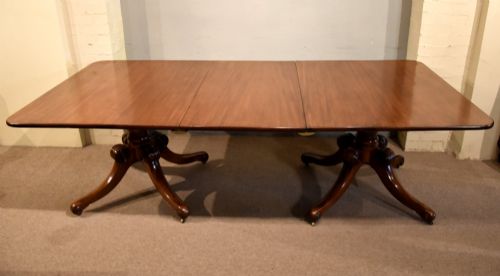
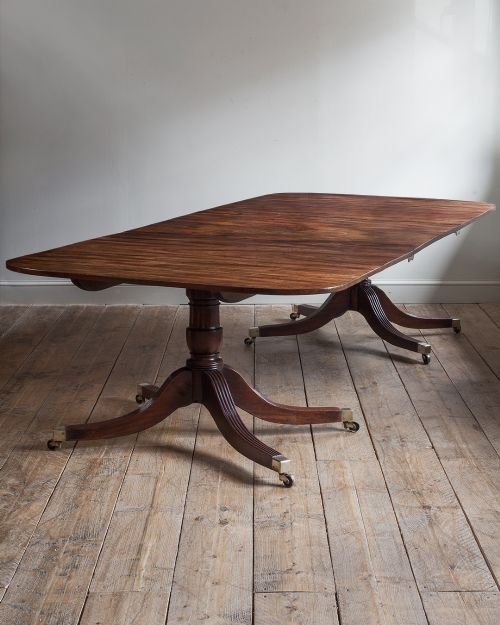
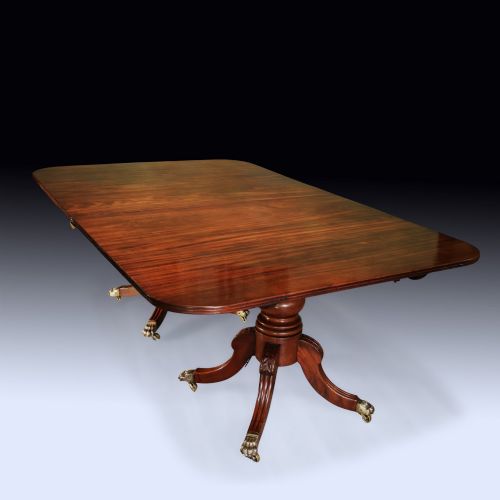
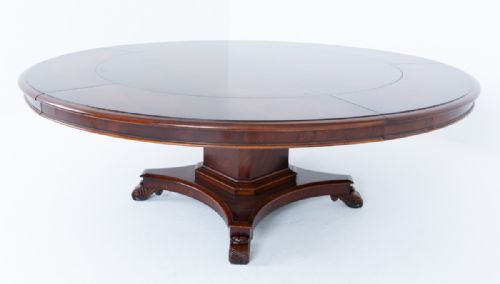
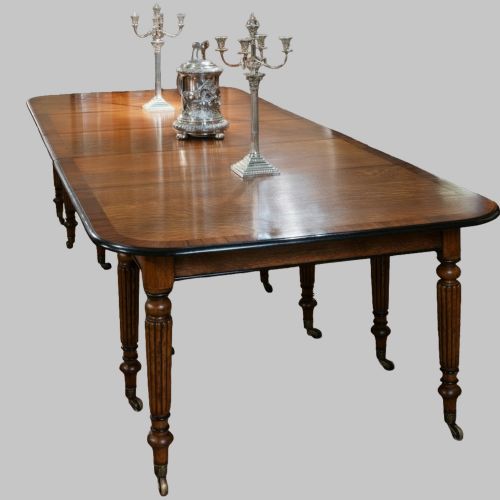
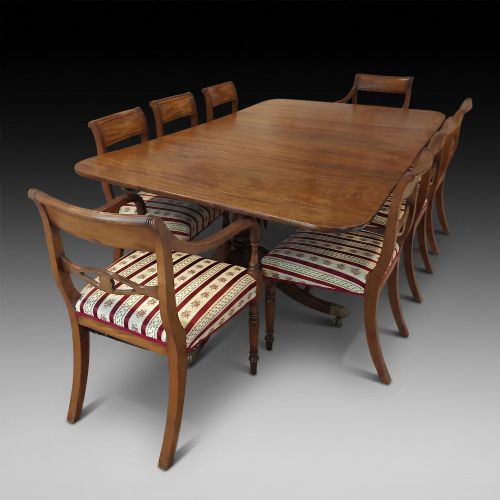
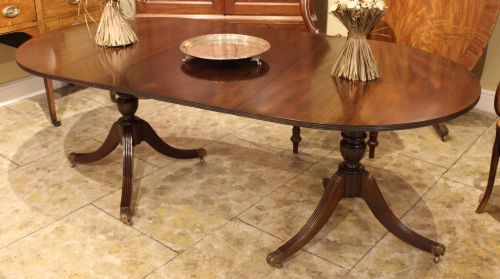
A regency extendable dining table is typically built from mahogany and comes in formats like twin pillar, triple pillar, or drop-leaf forms.
The pieces appearing on this page span the 19th century, Georgian, and Regency periods, alongside later revival pieces.
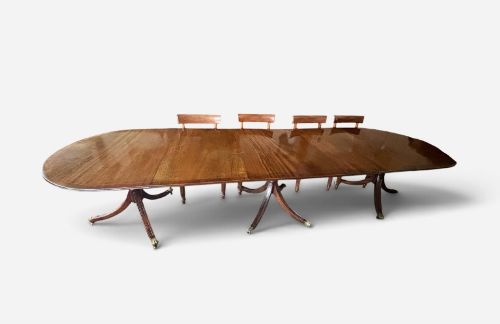
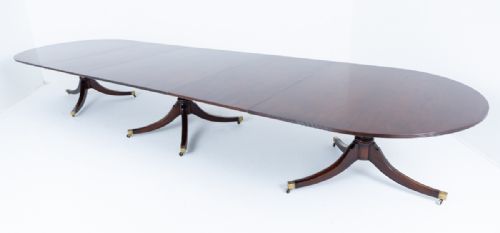
Tables range from smaller four-seat drop-leaf versions to grand multi-pedestal tables seating twenty or more guests.
How they were made
Makers utilised solid and figured mahogany, frequently incorporating Cuban mahogany, alongside oak for internal framing.
Brass castors and fittings appear frequently on pillar supports and table legs to facilitate movement.
Leaves are added or removed to alter the length of the dining surface.
Listings feature mahogany, oak, rosewood, and brass materials across Georgian, Regency, and nineteenth century periods.
What varies in quality
The grain of the mahogany timber and the depth of the figure distinguish standard examples from finer ones.
The engineering of the extending mechanism and the stability of the pillar supports dictate day-to-day utility.
Whytock And Reid·Gillows
The Regency Extendable Dining Table Glossary
- D-End
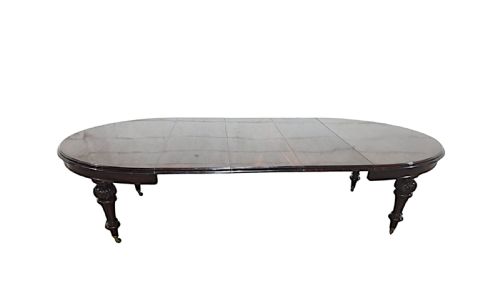
- A table end shaped like a semi-circle resembling the letter D. These sections often detach or serve as part of an extending sequence.
- Pedestal
- A central column supporting the tabletop, frequently standing on splayed legs with castors. Multiple pedestals support longer extending tables.
- Drop-leaf
- A table configuration with hinged flaps that fold down when not in use. This design allows the footprint to adjust according to room requirements.
- Extending table
- A table designed to accept extra leaves to increase seating capacity. Mechanism types vary across periods.
Regency Extendable Dining Table: Frequently Asked Questions
How do extra leaves work?
Extra leaves drop into the centre of the table when the pillars are pulled apart.
Mechanisms vary between periods, but most rely on timber runners or alignment pins.
How many people do they seat?
Seating capacity ranges from compact four-seat drop-leaf versions up to grand tables seating twenty or more.
Length increases according to the number of pillars and added leaves.
Are all these tables from the Regency period?
The selection includes authentic 19th-century and Georgian pieces alongside later revival models from around nineteen hundred to nineteen twenty.
Styles span Regency, William IV, and George III eras.
What woods were used?
Mahogany is the primary timber seen across these listings, including figured and Cuban varieties.
Oak also appears in structural elements alongside brass hardware.