


Early 19th Century Chiffonier
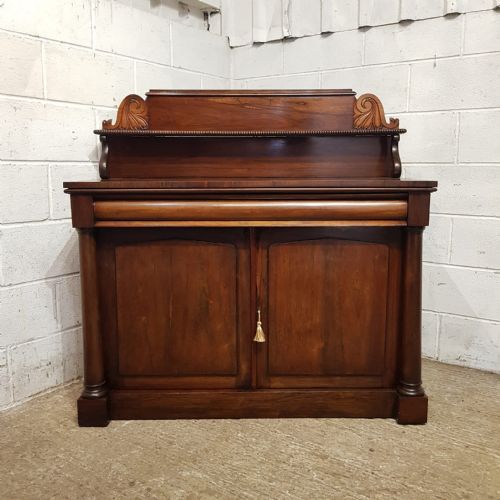
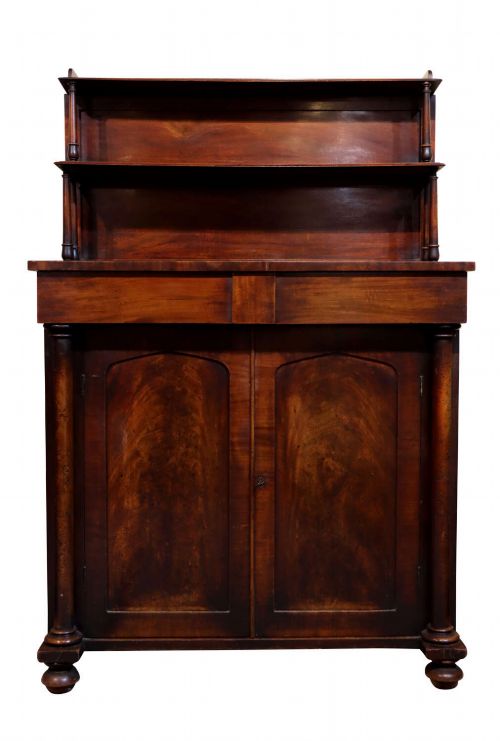
An early 19th century chiffonier brings compact low-level storage and display space to a room, offering both a functional surface and enclosed shelving.
Early 19th Century Chiffonier
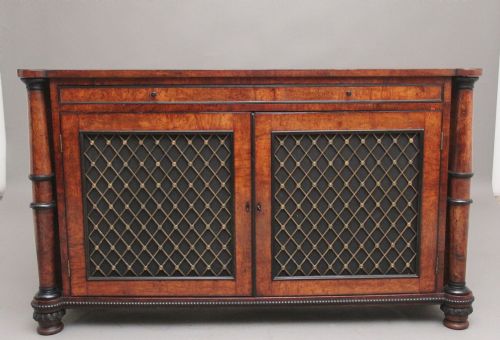
When searching for an early 19th century chiffonier, buyers encounter low cabinets designed primarily for side rooms or parlours during the Regency, William IV, and early Victorian periods. These pieces combine a lower enclosed cupboard section with upper shelving or a plain top surface, functioning as compact alternatives to traditional dining sideboards.
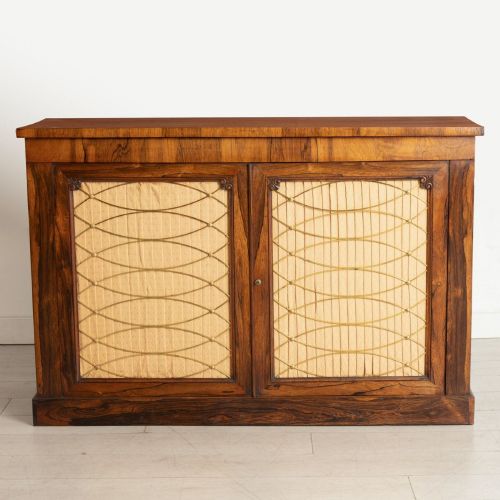
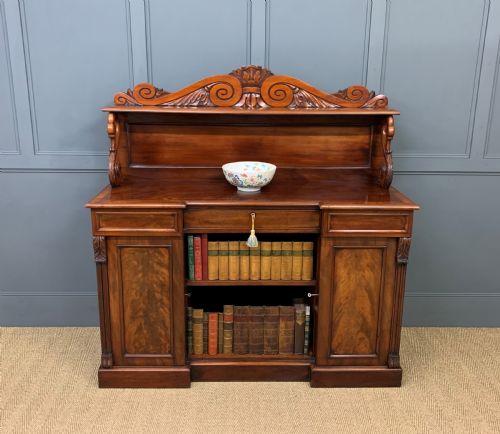
The versions most frequently met on this page are constructed from mahogany and rosewood, often featuring a small shelf raised on scrolling supports above the main body. Some examples incorporate glazed doors, brass inlay, or fabric panels behind wooden lattices, demonstrating the evolution of domestic storage furniture through the decades.
Materials and construction
Cabinetmakers utilised dense timbers such as mahogany, flame mahogany, and rosewood, frequently selecting figured veneers to create striking grain patterns across the primary surfaces. Solid secondary woods like pine appear in the internal structure and drawer linings.
Decorative detailing relies on contrasting materials, including brass inlay, ebony stringing, and satinwood accents, alongside carved scrolling brackets and turned columns. Glass panels and pleated fabric inserts are integrated into the lower cabinet doors depending on the specific regional style and period.
Listings feature mahogany, rosewood, pollard oak, and marble among the recorded materials spanning the 19th century.
Distinctions in craftsmanship
The upper tier of quality displays superior selection of timber veneers, where grain patterns match symmetrically across doors and drawers. Finer examples exhibit crisp, hand-carved mouldings and precise brass inlay rather than cast metal applied superficially.
Structural integrity and proportion also separate standard domestic pieces from workshop-attributed items, visible in the careful dovetailing of internal drawers and the weight of the timber used for upright supports and backboards.
Holland & Sons·Gillows
The Early 19th Century Chiffonier Glossary
- Chiffonier
- A low cabinet with drawers and shelves, developed in the early 19th century to hold dining silver or books.
- Regency
- A British design style spanning the early decades of the 19th century, characterised by classical motifs and dark exotic woods.
- Rosewood
- A heavy, dark timber with distinct figuring, widely utilised for fashionable cabinet work during the 19th century.
- Flame mahogany
- Mahogany timber cut to produce a characteristic flammiform grain pattern, favoured for door panels and drawer fronts.
- Breakfront
- A cabinet design where the central section projects forward from the flanking outer cupboards.
Early 19th Century Chiffonier: Frequently Asked Questions
What is an early 19th century chiffonier used for?
These cabinets served primarily as side storage in dining rooms or drawing rooms, holding linens, silver, or books.
The raised upper shelf provided a convenient display area for ornaments or small clocks, keeping surfaces clear.
How do I identify a Regency chiffonier?
Regency pieces often feature dark rosewood or mahogany, accompanied by brass inlay, sabre legs, or classical carved details.
They generally display clean architectural lines influenced by ancient Roman and Greek design.
Where should I place a chiffonier at home?
A chiffonier fits well in a living room, hallway, or dining space where floor area is limited.
Its low height ensures it does not overwhelm smaller walls or block window light.
What is the difference between a sideboard and a chiffonier?
Sideboards are generally larger and longer, designed specifically for formal dining rooms to serve food and store large platters.
Chiffoniers are smaller, incorporating a raised shelf back, and were built for more intimate reception rooms.