



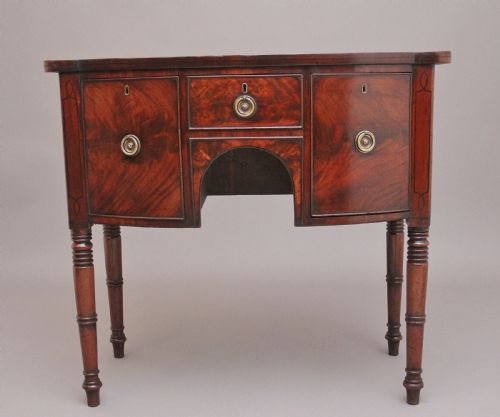
Early 19th Century Buffet
An early 19th century buffet brings substantial storage and grand proportions to a dining room, offering practical utility alongside strong architectural presence.
Early 19th Century Buffet
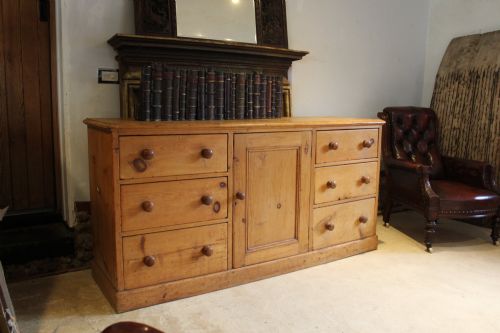
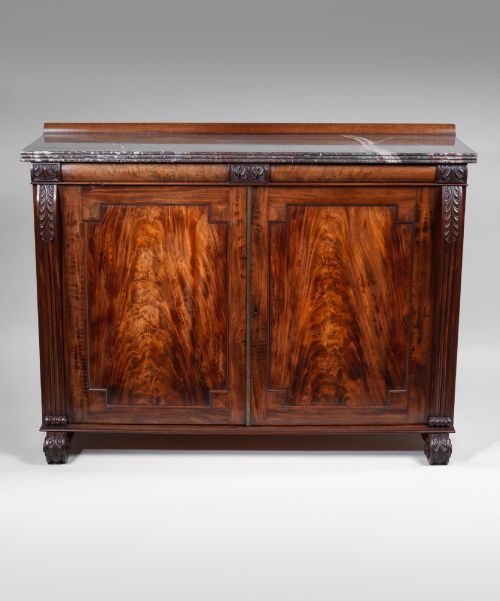
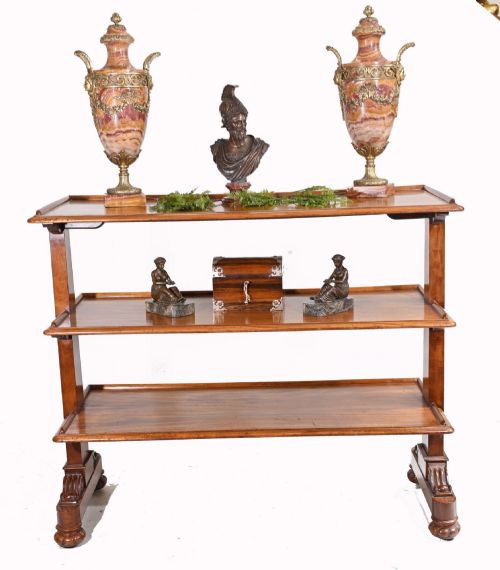
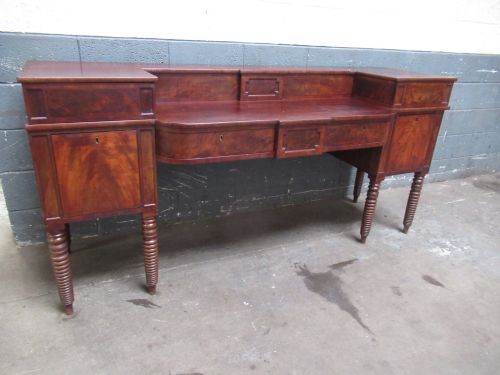
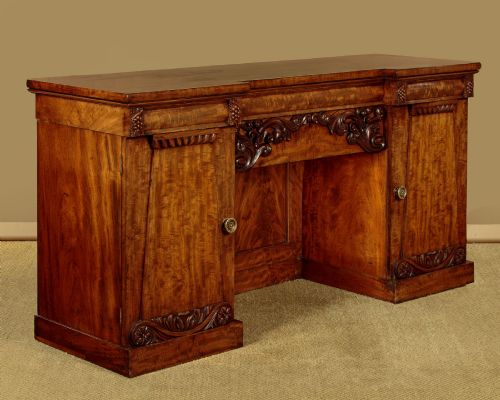
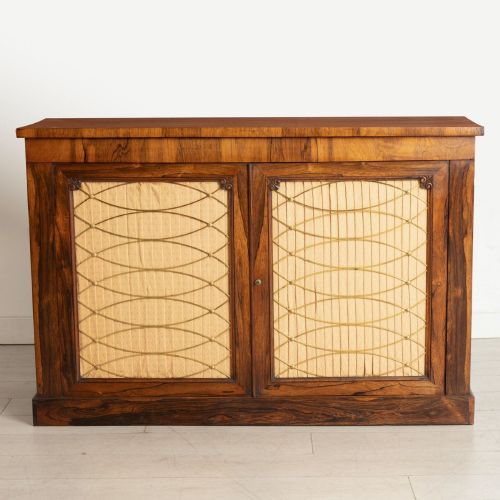
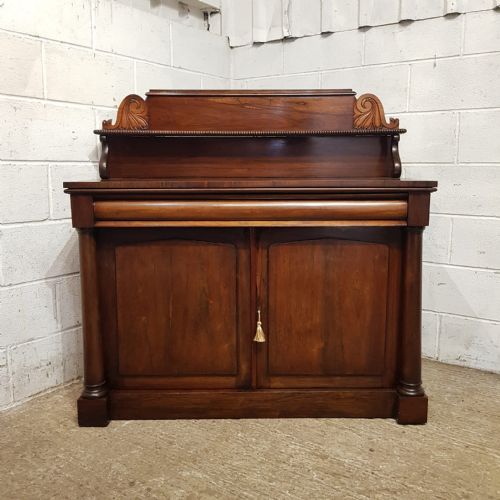
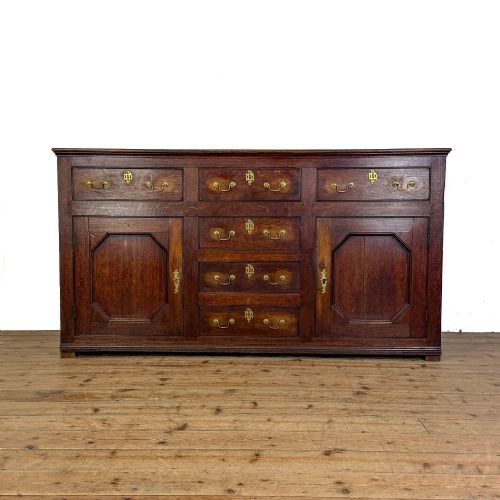
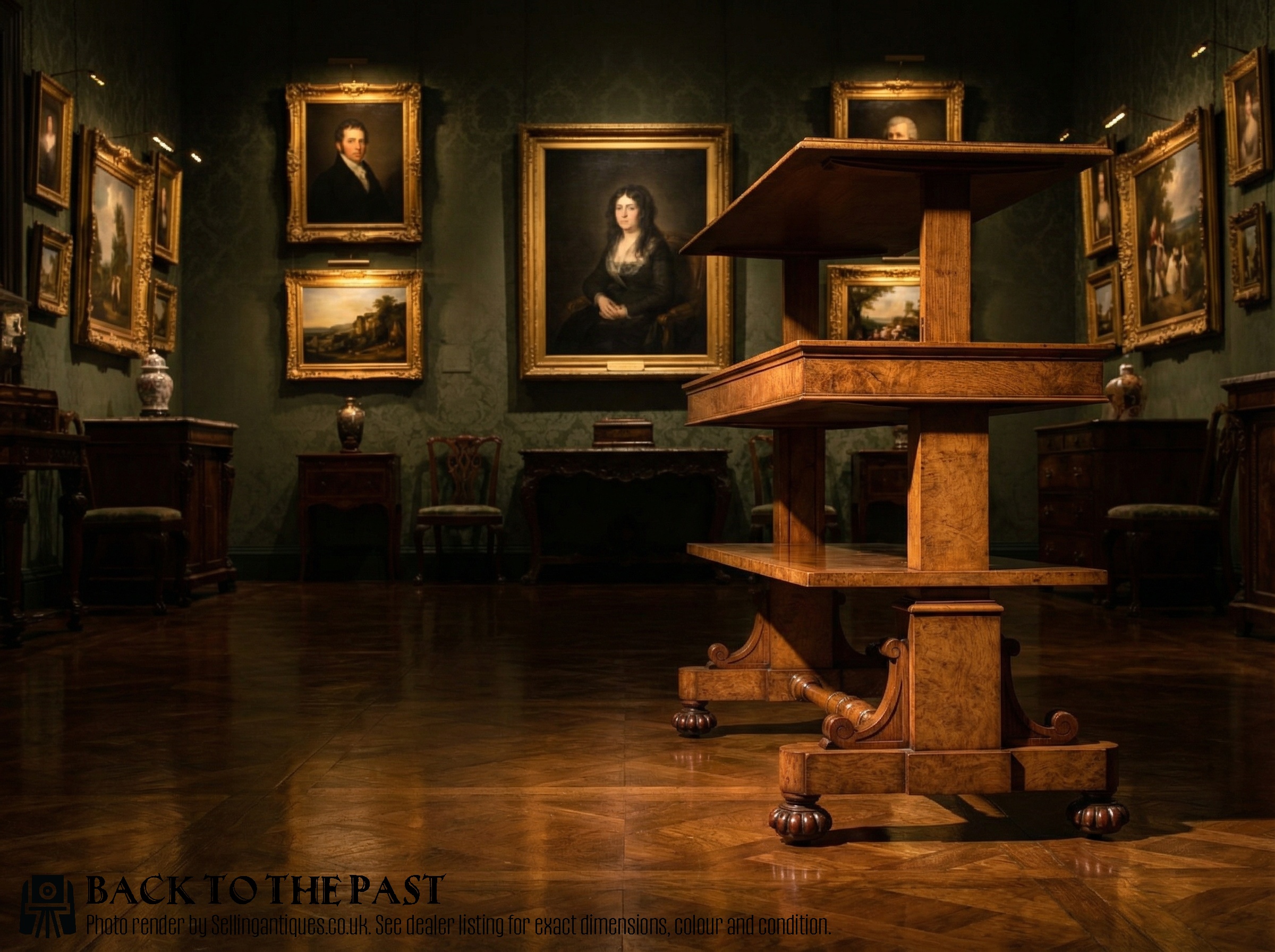
The term early 19th century buffet encompasses a variety of large dining furniture, most frequently appearing on this page as sideboards, chiffoniers, serving tables, and traditional buffets. These pieces originate from distinct design movements including Regency, Georgian, William IV, and French Provincial traditions.
Mahogany dominates the selection, accompanied by rosewood, oak, and regional timbers such as cherrywood, walnut, and fruitwood. Cabinets and serving pieces from this era range from substantial breakfront sideboards to smaller dumbwaiters and house maid cupboards.
Materials and construction methods
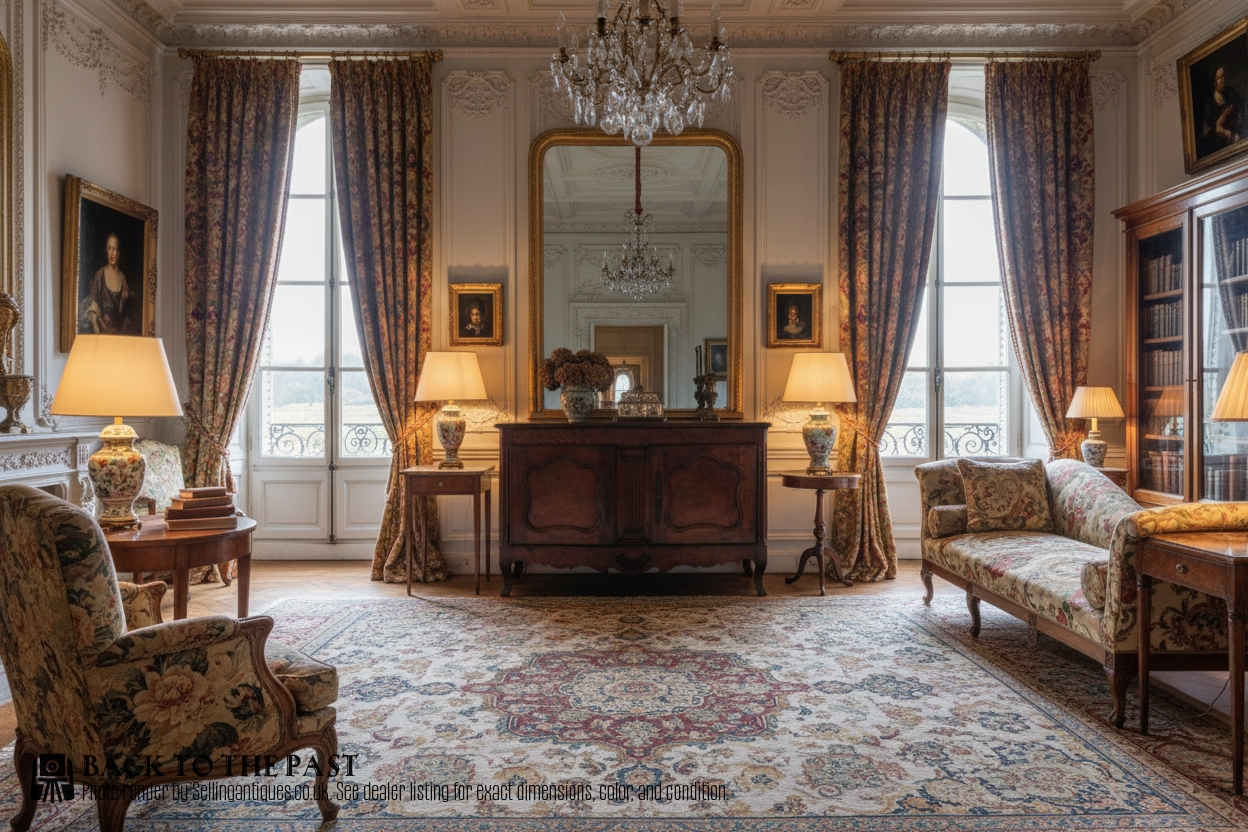
Cabinet makers utilised dense native and exotic timbers, applying figured mahogany, flame mahogany, and rosewood over sturdy pine or oak carcases. Brass mounts, handles, and gallery rails provide structural highlights against the dark polished wood.
Joinery techniques rely on traditional hand-cut dovetails for drawer construction and pegged mortise and tenon frames for structural support. Surface finishes were built up using traditional hand-polished French polish or oil to highlight the natural grain patterns of the timber.
Early 19th Century Buffet Retail Price Guide 2026
Typical asking prices for early 19th century buffet among the pieces listed under this phrase on Sellingantiques today, from the lower quarter to the upper quarter. They describe what is for sale here now, not the wider market.
The listings on this site combine British mahogany and rosewood dining furniture with continental French oak and cherrywood buffets.
Assessing quality in early dining furniture
Quality rests upon the selection of timber veneers and the precision of the underlying cabinet work. Superior pieces display book-matched flame mahogany or rosewood grains that align harmoniously across drawer fronts and cupboard doors.
The refinement of carved decorative details, such as rope twists, scroll brackets, and turned columns, distinguishes master workshops from standard production pieces. Original brass hardware, sturdy drawer linings, and smooth-running doors indicate careful preservation and superior initial construction.
Gillows
The Early 19th Century Buffet Glossary
- Buffet
- A sideboard or serving table designed for holding food, tableware, or household items. These pieces often feature multiple tiers or enclosed cupboards beneath a serving surface.
- Chiffonier
- A low cabinet or sideboard popular during the Regency and early Victorian periods, usually fitted with doors and a raised shelf superstructure. They provide compact storage for dining rooms and parlours.
- Dumbwaiter
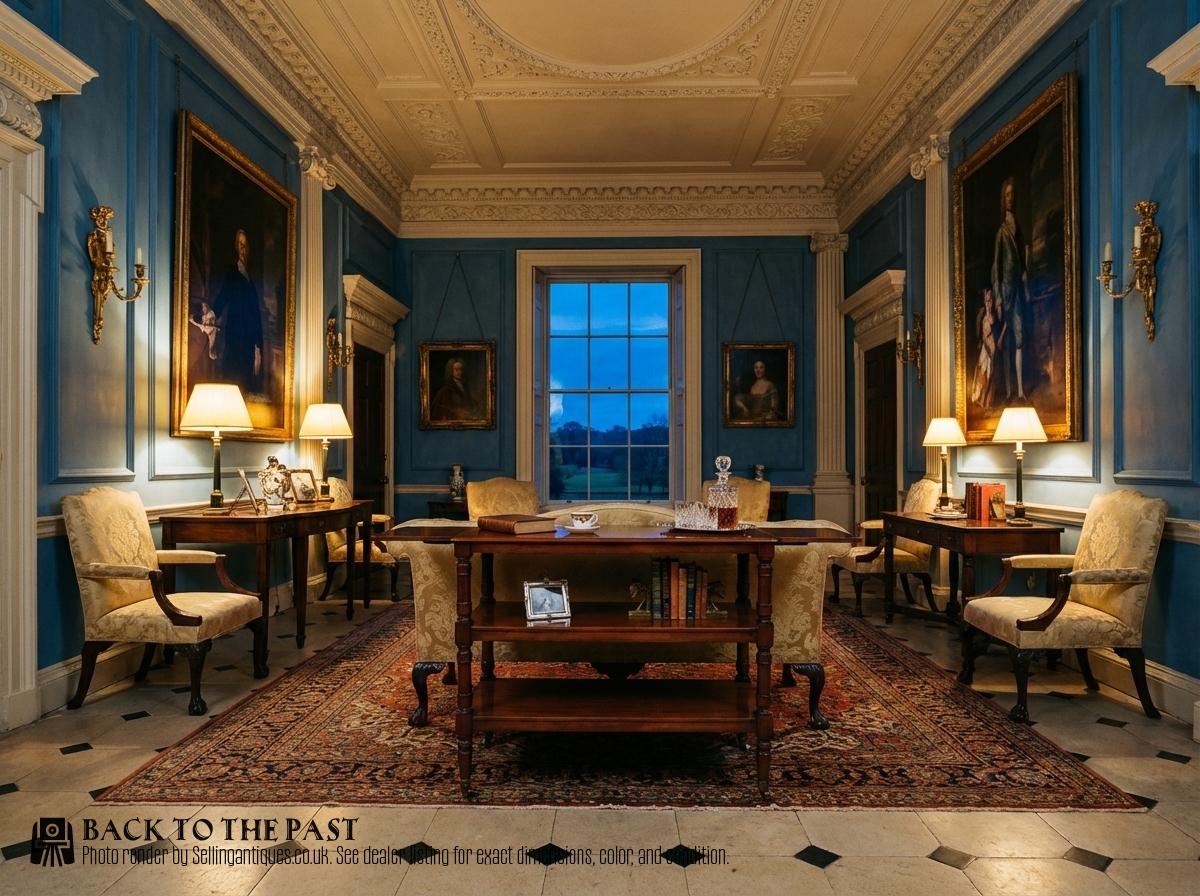
- A multi-tiered freestanding serving stand featuring circular or graduated shelves supported on a central pillar. These tables were utilised during meals to hold dishes without requiring servants.
- Flame Mahogany
- A highly figured veneer cut from the branch junctions of mahogany trees, producing a characteristic flickering flame pattern. Cabinet makers reserved this material for prominent door and drawer surfaces.
- Breakfront
- A large cabinet or sideboard whose central section projects forward from the flanking wings. This architectural arrangement creates depth and visual interest in formal dining furniture.
Early 19th Century Buffet: Frequently Asked Questions
What is an early 19th century buffet used for?
These pieces served primarily for food presentation, serving duties, and storing dining room silverware, linens, and glassware. Their generous proportions made them central fixtures in formal dining spaces.
In modern homes, they function effectively as sideboards in dining rooms or as storage credenzas in living areas and hallways, offering substantial surface space and interior capacity.
How do I tell Regency from Victorian pieces?
Regency items, produced in the early decades of the century, typically exhibit classical restraint, clean architectural lines, brass inlay, and rosewood or straight-grain mahogany veneers. Carvings often draw inspiration from Greek and Roman antiquities.
Victorian pieces from later in the period tend to feature heavier, more exuberant ornamentation, darker pollard oak or heavier mahogany timbers, and more robust structural proportions.
Are French and British buffets different?
British examples on this page are predominantly constructed from mahogany or rosewood, following formal architectural styles like Georgian, Regency, and William IV. They emphasise clean symmetry and dark polished surfaces.
Continental and French Provincial pieces more frequently utilise local woods such as cherrywood, walnut, and oak, displaying softer regional carving traditions and lighter natural timber tones.
How do I care for a mahogany buffet?
Keep polished timber furniture away from direct sunlight and heat sources to prevent the wood from drying out or splitting. Maintain the surface by dusting gently with a soft, dry cloth.
Apply a traditional beeswax polish sparingly when the wood appears dry, buffing it to a soft sheen rather than using modern silicone aerosols that damage historic finishes.