
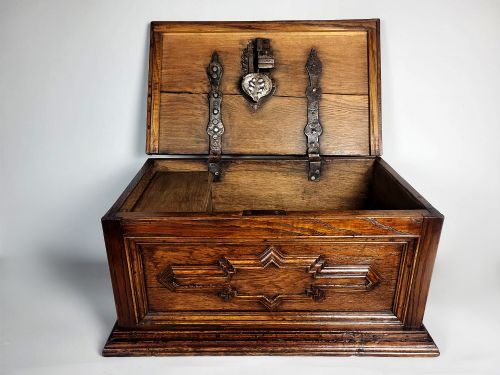

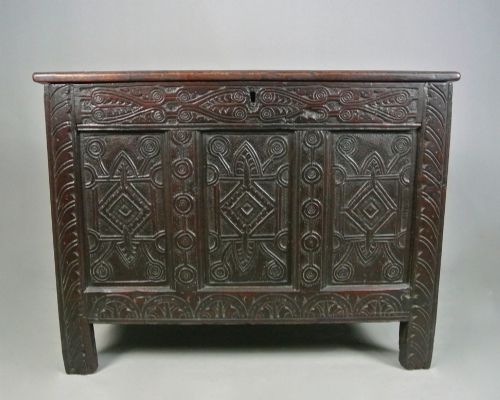
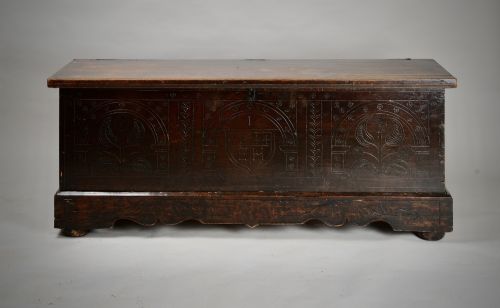
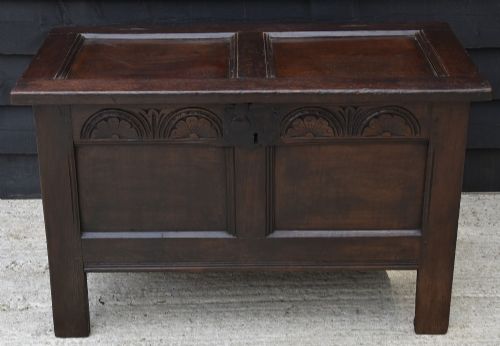
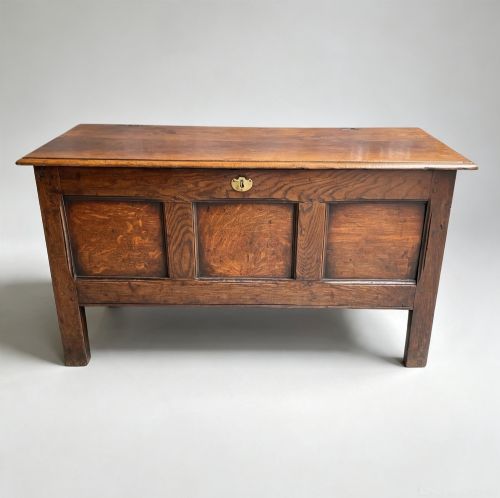
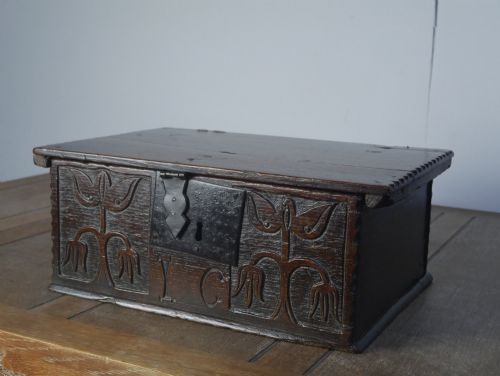


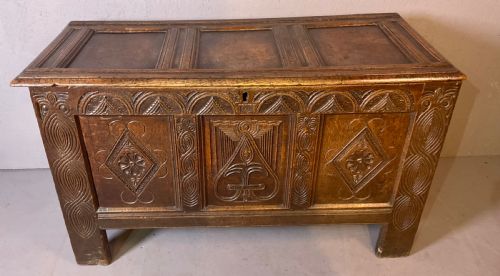


Early 17th Century Coffer
When you handle an early 17th century coffer, you hold a sturdy domestic vessel built to secure valuables and textiles in domestic interiors long before fitted wardrobes existed.
Early 17th Century Coffer
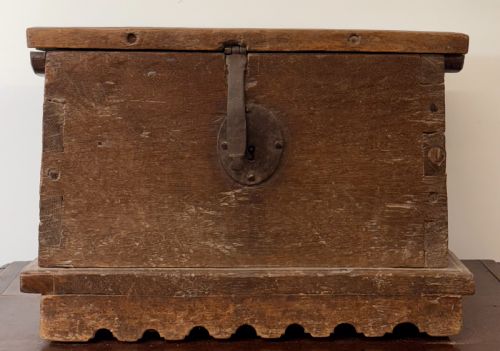
An early 17th century coffer serves primarily as a heavy-duty storage box or travelling trunk, constructed from native timber to house precious household linen, documents, and silver. Most examples encountered here stem from English, Welsh, and continental workshops, displaying the robust proportions typical of the Jacobean and Stuart eras.
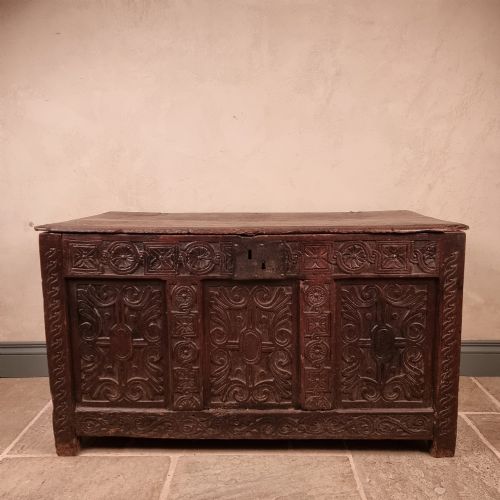
The form ranges from simple joined panel assemblies with carved friezes to utilitarian six-plank constructions nailed or pegged at the edges. Buyers frequently encounter smaller regional variants, such as the Welsh coffor bach or deed boxes, alongside larger domestic blanket chests designed for floor placement against panelled walls.
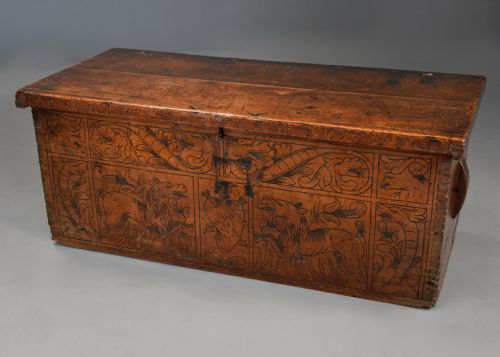
Continental pieces within this category occasionally reveal continental Renaissance influences, such as Italian walnut cassoni or Flemish carved panels. These variations reflect the broader trade and design exchange of the period while maintaining the primary function of secure, heavy containment.
Materials and construction methods
Oak dominates the material record for these pieces, selected for its density, durability, and availability across British woodlands. Carpenters utilised joined frame-and-panel construction to accommodate the natural seasonal expansion and contraction of timber without splitting the main structure.
Secondary timbers such as fruitwood, walnut, cypress, and elm appear in specific regional or continental examples, offering different grain patterns and surface textures. Wrought iron, brass, and steel provide the functional hardware, including complex locks, strap hinges, and corner plates essential for security.
Joinery relied on pegged mortise-and-tenon joints for panelled pieces, whereas simpler boards were joined via edge rebates or plain butt joints secured with iron nails. Carving was executed directly onto the solid wood panels, often utilising geometric guilloche patterns, arcade arches, or stylised foliage.
Listings feature regional variations in oak, fruitwood, and cypress, alongside iron hardware from the Jacobean and Stuart periods.
Evaluating standard and execution
Quality in these domestic chests depends heavily on the ambition of the joinery and the crispness of the original surface carving. Pieces featuring deeply cut architectural arcading or well-defined figural motifs demonstrate a higher tier of workshop capability than plain, utilitarian board constructions.
The integrity of the original hardware - such as operational complex steel locks, strap hinges, and bracket feet - strongly influences the overall standard of a surviving piece. Retaining the authentic timber lid, original floorboards, and untouched surface patination without extensive modern timber replacement distinguishes superior examples from heavily restored ones.
The Early 17th Century Coffer Glossary
- Coffer
- A heavy wooden chest used for storing valuables, plate, or textiles. These sturdy boxes formed the backbone of domestic storage before the widespread adoption of chest of drawers.
- Cassone
- An ornate continental storage chest, typically Italian, associated with marriage chests and high-status interiors. They often incorporate carved or gilded softwood and walnut construction.
- Six-plank coffer
- A primitive storage chest constructed from six individual boards joined at the edges with nails or wooden pegs. This method represents the earliest and most direct form of box carpentry.
- Arcading
- A decorative architectural motif carved onto wooden panels to resemble a sequence of arches supported by columns. This style frequently appears on Jacobean furniture.
- Mule chest
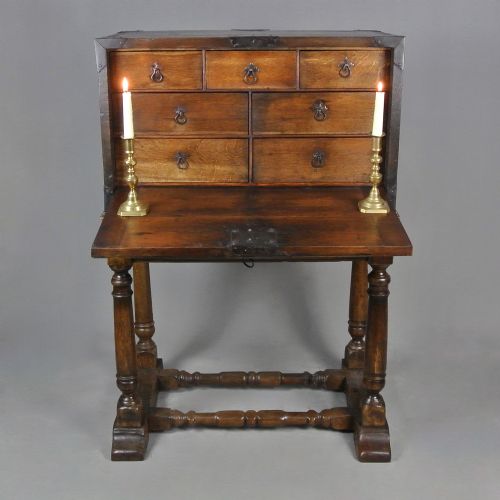
- A storage chest fitted with one or more drawers beneath the main internal compartment. This form bridges the evolution between the traditional coffer and the modern chest of drawers.
Early 17th Century Coffer: Frequently Asked Questions
What did people store inside a coffer?
Households utilised these heavy chests primarily for safeguarding valuable textiles, woollen blankets, church silver, and important legal deeds. Because domestic interiors lacked built-in closets, the coffer kept dampness and theft at bay.
Smaller variants served as specialised Bible boxes or deed chests, keeping fragile paper documents away from household pests and hearth sparks.
Where were these pieces originally made?
Surviving examples originate predominantly from English and Welsh rural workshops, utilising locally felled oak. Regional differences in carving styles often point to specific shitholes or West Country traditions.
Continental pieces entered through trade ports, bringing foreign timbers like cypress and walnut alongside Renaissance design motifs from Italy and Flanders.
How should I care for an antique oak chest?
Maintain a stable indoor humidity and keep the timber away from direct heat sources like radiators to prevent splitting. Natural beeswax applied sparingly helps nourish the dry grain and preserves the historic surface sheen.
Avoid modern liquid polishes containing silicones, which can penetrate porous historic finishes and darken the natural oak patination over time.