


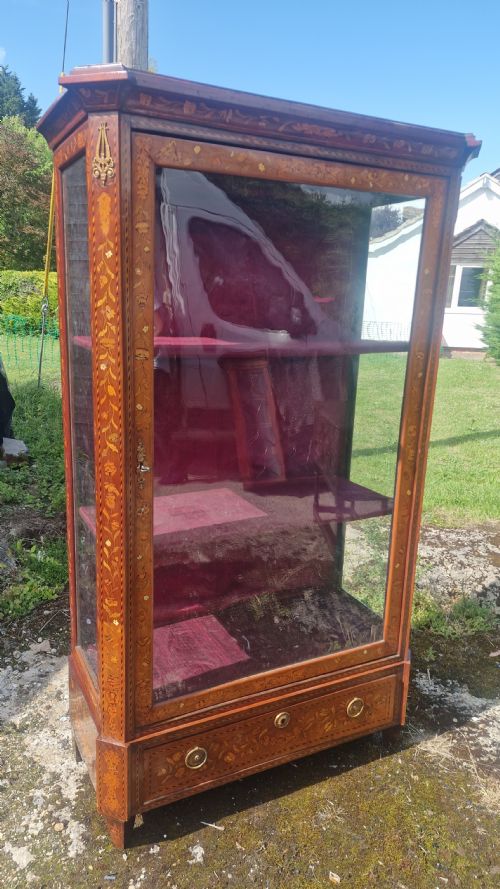
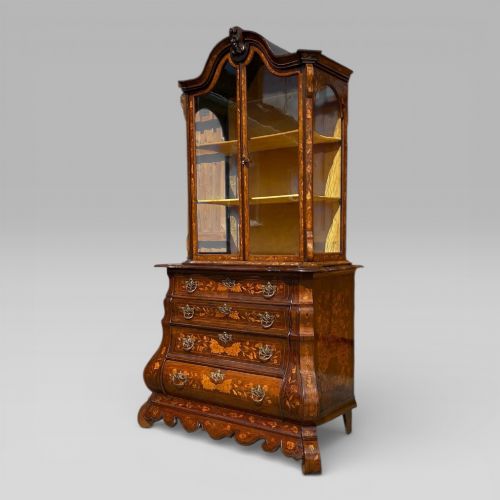
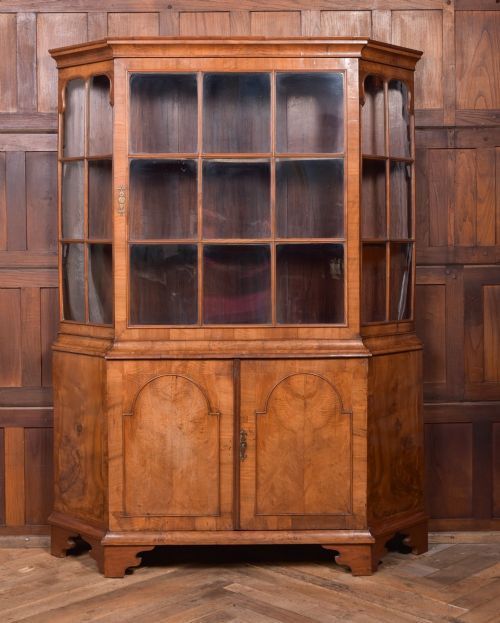


Dutch Walnut Display Cabinet
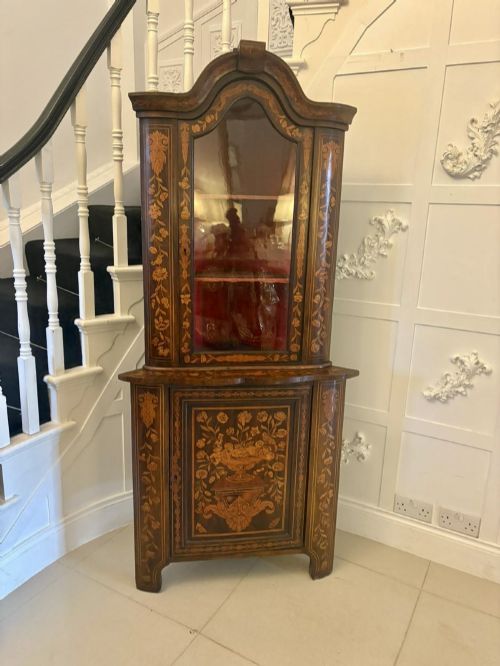
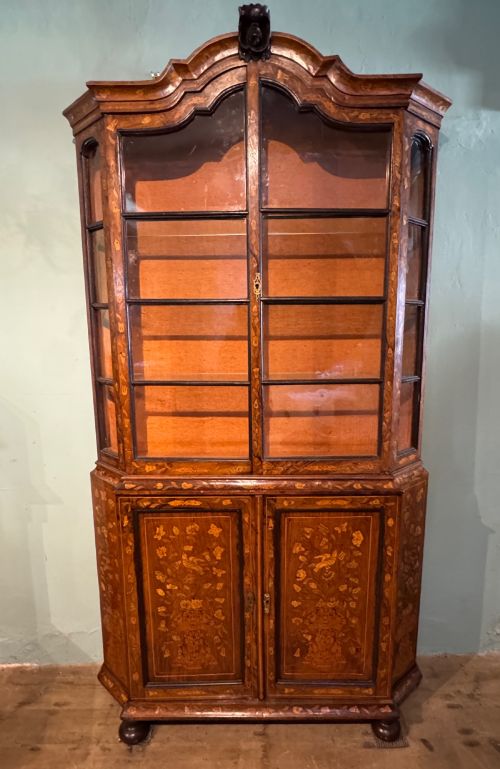
A dutch walnut display cabinet brings warmth and intricate floral marquetry to a room, storing precious china or books behind glass.
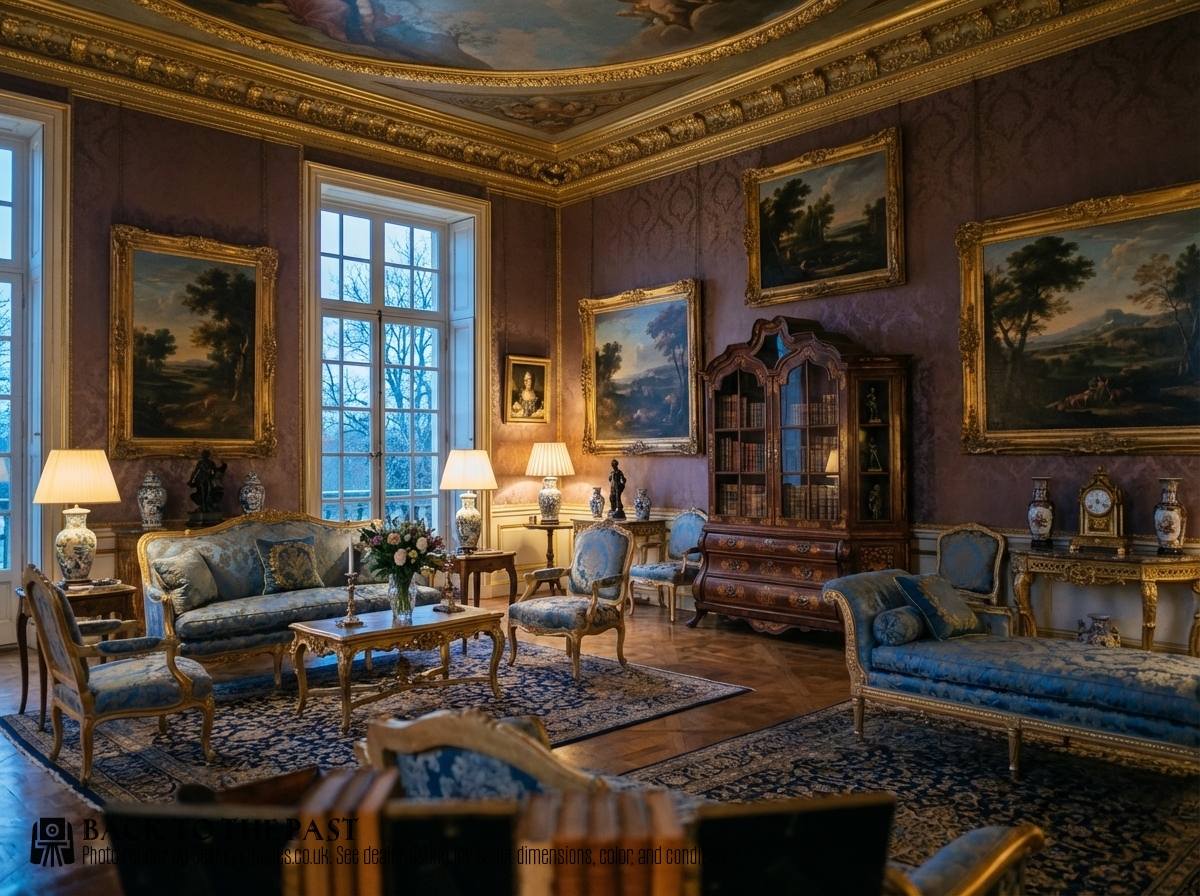
Dutch Walnut Display Cabinet
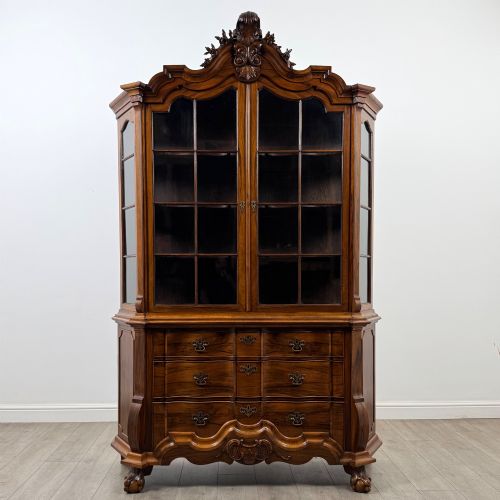
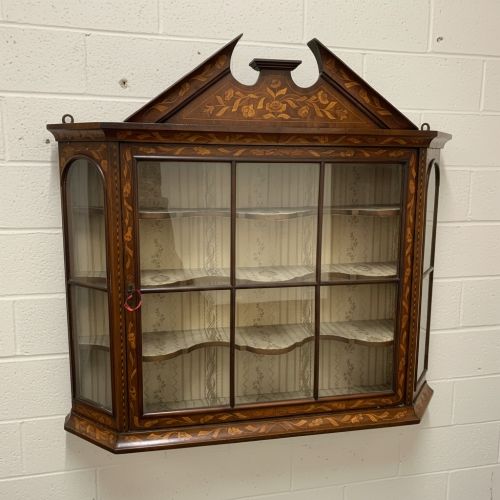
A dutch walnut display cabinet is a storage piece designed to showcase prized items through glazed doors or open upper sections, frequently incorporating lower chests, bureau desks, or bombé swelling forms. These cabinets span the 18th century, 19th century, and Edwardian periods, reflecting baroque, rococo, and traditional design influences.
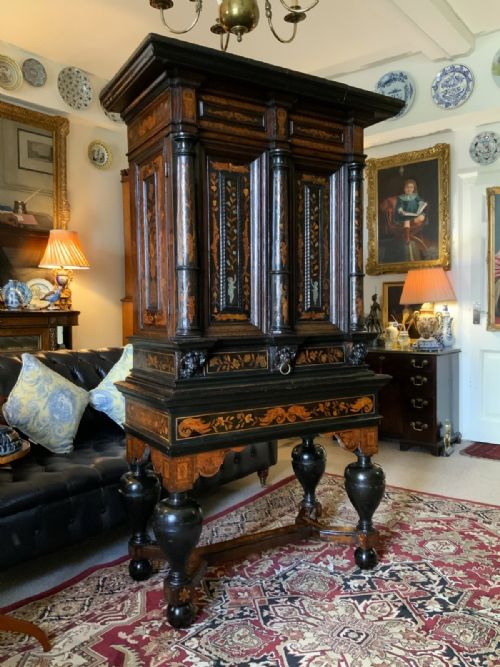
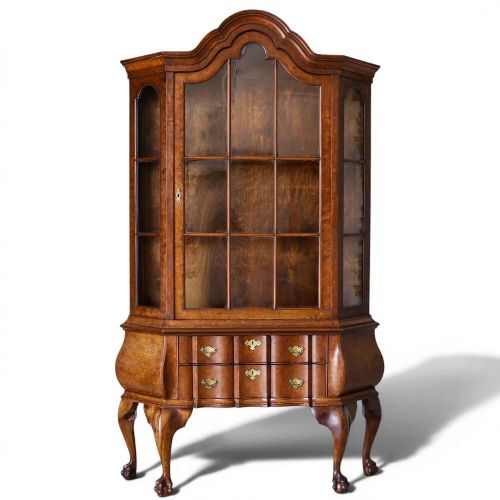
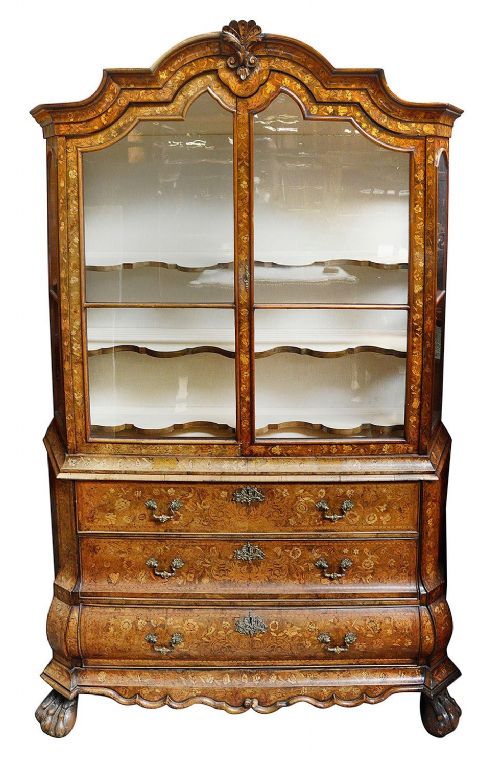
The version most commonly met on this page is the marquetry-inlaid vitrine or cabinet on chest, constructed from walnut or burr walnut veneers. These pieces often feature canted sides, arched cornices, and detailed floral or fruitwood inlays that demonstrate traditional cabinet-making skills.
How They Were Made
Cabinet-makers laid figured walnut and burr walnut veneers over secondary woods such as oak and fruitwood, building up rich grain patterns across large surfaces. This technique provided stability while allowing artisans to display the most decorative cuts of timber.
Intricate floral marquetry utilised contrasting woods, fruitwoods, and occasionally pewter inlay, cut precisely and fitted into the walnut ground. Glazed upper doors with wooden astragals were joined alongside brass hardware to complete the construction.
Current listings feature walnut, burr walnut, fruitwood, and oak materials across 18th-century, 19th-century, and 1920s periods.
What Varies in Quality
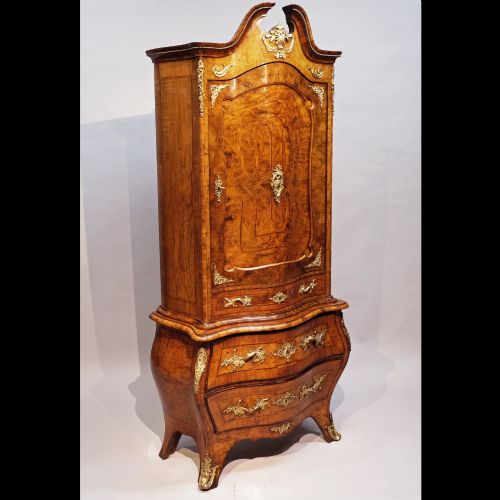
The standard of carving and the ambition of the silhouette set examples apart, ranging from simple straight-fronted cupboards to deeply curved bombé bases with elaborate canted corners. Greater depth in the swelling timberwork and confident proportions distinguish superior pieces.
The crispness and complexity of the floral marquetry inlay define the upper tier of execution, where individual petals and stems show distinct shading through scorched wood techniques. Fine retention of original brass fittings and undisturbed patination on the walnut timber further elevate the standing of a cabinet.
Edwards And Roberts
The Dutch Walnut Display Cabinet Glossary
- Marquetry
- Decorative veneer work forming pictorial patterns, such as floral bouquets, using various coloured woods and fruitwoods. This technique requires immense precision to fit individual pieces together before gluing them to the carcass.
- Bombe
- A swelling, bulging shape to the front and sides of a cabinet base, characteristic of rococo furniture design. The curved form demands advanced woodworking skill to shape the solid timber and veneer successfully.
- Vitrine
- A glass-fronted cabinet or display case intended for showing porcelain, glassware, or curiosities. The glazed panels allow light to enter from multiple angles.
- Vitrine
- A glass-fronted cabinet or display case intended for showing porcelain, glassware, or curiosities. The glazed panels allow light to enter from multiple angles.
- Astragal
- A small moulded bar or framing strip that divides panes of glass within a cabinet door. These wooden bars provide structural support while creating geometric window patterns.
Dutch Walnut Display Cabinet: Frequently Asked Questions
How are these cabinets dated?
Dating relies on examining construction methods, timber types, and stylistic details such as floral marquetry patterns or brass hardware. Earlier 18th-century pieces often show hand-cut dovetails and distinct secondary woods beneath the walnut veneer.
Later revival pieces from the 19th and early 20th centuries imitate these historic styles while utilising machine-cut elements and modern adhesives.
Were these used for books or china?
These pieces served multiple domestic purposes, acting as libraries for leather-bound volumes, linen presses for textiles, or vitrines for displaying imported porcelain. Glazed upper doors protected fragile collections from dust while keeping them visible.
Lower drawer chests and bureau compartments provided hidden storage for documents and household goods.
How do I care for walnut veneer?
Walnut veneer benefits from stable room temperatures and protection from direct sunlight, which can fade the rich timber tones and dry out old adhesives. Regular dusting with a soft, dry cloth preserves the polished surface.
Occasional application of appropriate wax feeding maintains the natural lustre of the wood without building up heavy chemical residues.