


Dutch School Landscape
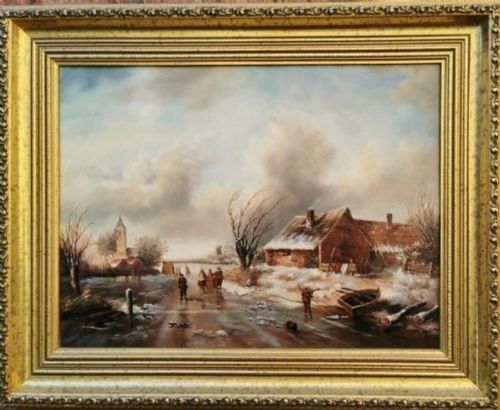
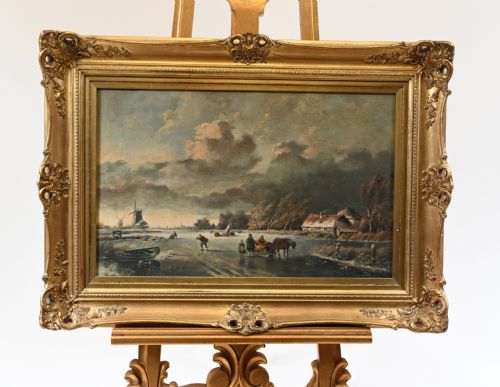
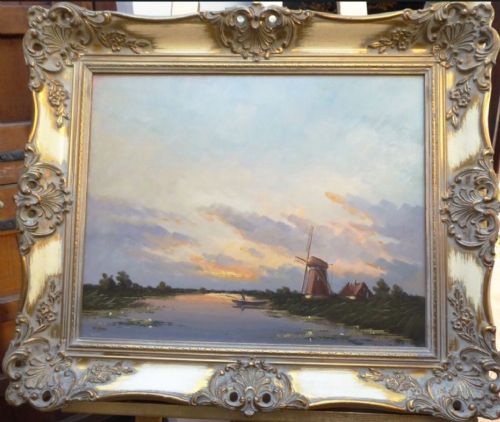
A dutch school landscape captures the flat horizons, heavy skies and quiet waterways characteristic of the Low Countries.
Dutch School Landscape
A dutch school landscape depicts rural scenes, frozen waterways, windmills and coastal views rooted in traditional Northern European painting conventions. These works range from tightly detailed 17th-century compositions to looser 19th-century interpretations and mid-century impressions.
The most common examples encountered here date from the 19th century and early 20th century, often rendered in oil on canvas or wood panel. They frequently feature figures skating, working fields or navigating rivers beneath expansive cloud formations.
Buyers also encounter watercolours and works on paper alongside framed oils, spanning styles from the Hague School to the Dutch Golden Age tradition. Each piece reflects a persistent fascination with natural light, flat topography and rural daily life.
How They Were Made
Artists typically applied oil paint to prepared canvas, wood panel or oak boards, sometimes working in watercolour on paper for lighter studies. Panels provided a rigid ground for detailed brushwork, while canvas allowed for larger compositions with textured impasto.
Finished paintings were commonly housed in giltwood frames featuring moulded gesso ornamentation to complement the tonal depth of the artwork. The handling of pigment ranged from smooth, blended glazes reminiscent of earlier centuries to the visible, rapid brushstrokes of later impressionist movements.
Listings feature oil paintings and watercolours spanning the nineteenth and twentieth centuries, incorporating both canvas and wood panel supports.
What Varies in Quality
Quality rests in the sensitivity of atmospheric rendering, particularly the management of low horizons and expansive overcast skies that define regional painting. Skilled handling of light reflecting across water or catching frozen ice elevates a composition above standard decorative output.
The confidence of the brushwork and the structural integrity of the support, whether stretched canvas or seasoned wood panel, distinguish finer works. Original frames with period gilding and gesso detail also contribute significantly to the integrity of the piece.
Pieter Cornelis Dommersen·Cornelis Christian Dommersen·Anthonij Anton Mauve·Andreas Schelfhout·William Raymond Dommersen
The Dutch School Landscape Glossary
- Hague School
- A group of artists working in the Hague during the late 19th century who painted in a realistic, tonal style often influenced by French realism. They focused heavily on grey skies, flat pastures and rural labour.
- Gesso
- A plaster mixture applied to wood panels or frames to create a smooth, absorbent surface for painting or gilding. It provides the base layer for intricate decorative mouldings.
- Oil on Panel
- A painting technique where oil pigments are applied directly to a prepared wooden board rather than woven fabric. Oak and other stable woods were frequently utilised for this purpose.
- Impasto
- Paint applied thickly to a canvas or panel so that it stands proud of the surface. This technique retains the distinct marks of the brush or palette knife, adding physical texture to light and water.
- Watercolour
- A painting method where fine pigment is suspended in a water-soluble binder and applied to paper. It relies on the white of the paper to show through thin washes for luminous effects.
Dutch School Landscape: Frequently Asked Questions
How do I care for an oil painting on wood panel?
Wood panels respond to fluctuations in humidity and temperature by expanding and contracting slightly. Keep them away from direct heat sources, radiators and strong sunlight to prevent warping or cracking.
Dust the surface gently with a soft, dry brush and avoid using water or chemical cleaning products. If the paint layer requires cleaning or conservation, consult a professional restorer.
How can I tell a panel painting from a canvas?
Panel paintings utilise a rigid wooden support, often oak, which feels solid and heavy when examined from the reverse. Canvas works are stretched over a wooden frame and exhibit some springiness when lightly pressed from the front.
Looking at the edges or the back of the artwork usually reveals the grain of the wood or the weave of the canvas fabric. Panels may also show historical cradling or reinforcement strips on the rear.
Where should I hang these works at home?
Display paintings on interior walls away from direct sunlight, damp areas and extreme temperature changes. Neutral or softly lit spaces allow the muted tones and atmospheric skies of these landscapes to stand out.
Ensure the wall fixings match the weight of the frame, particularly for heavier oil paintings housed in ornate giltwood surrounds. Grouping smaller works together can create a balanced focal point in a room.