


Dutch Rococo Chest of Drawers
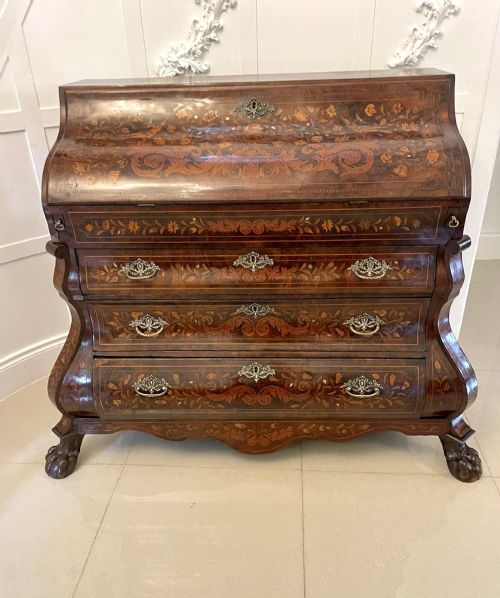
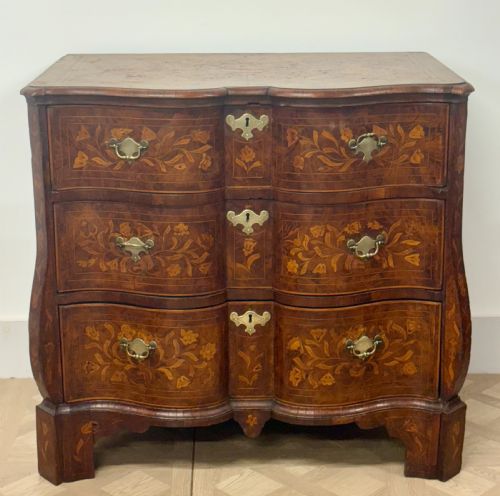
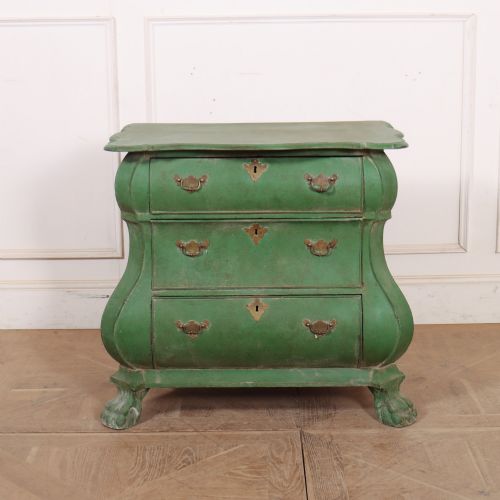
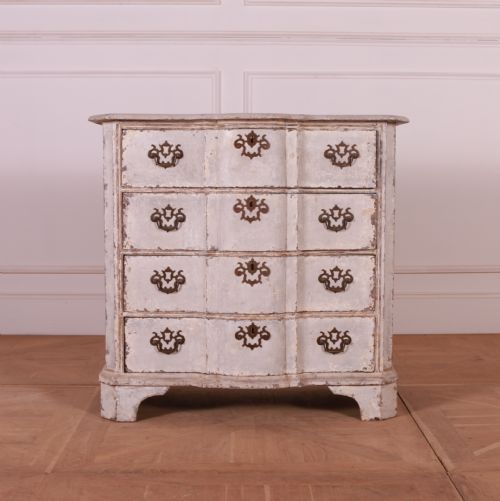
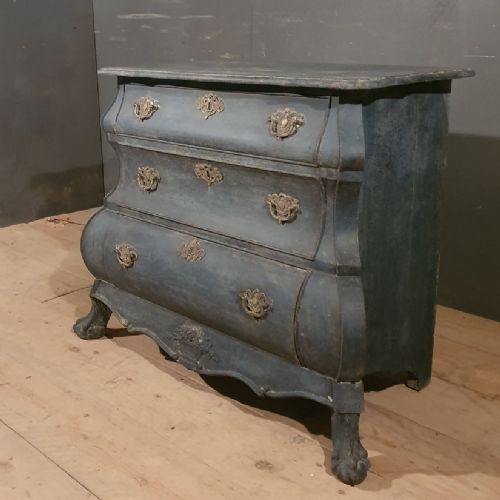
These dutch rococo chest of drawers pieces bring bold bombe profiles, rich walnut and floral marquetry to interiors.
Dutch Rococo Chest of Drawers
A dutch rococo chest of drawers brings a swelling bombe silhouette and rich walnut surfaces into the room. Buyers search for these pieces to secure classic continental forms with serpentine fronts and generous proportions.
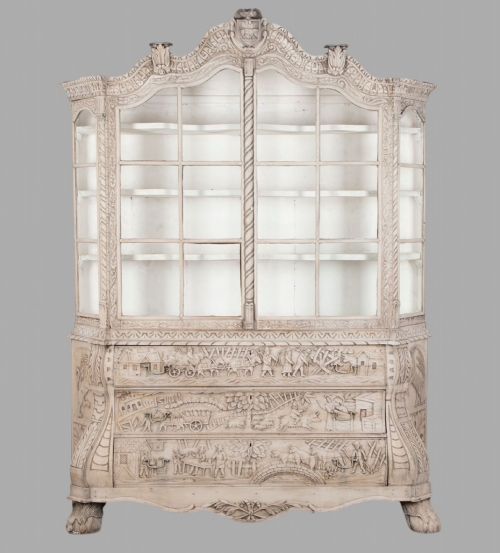
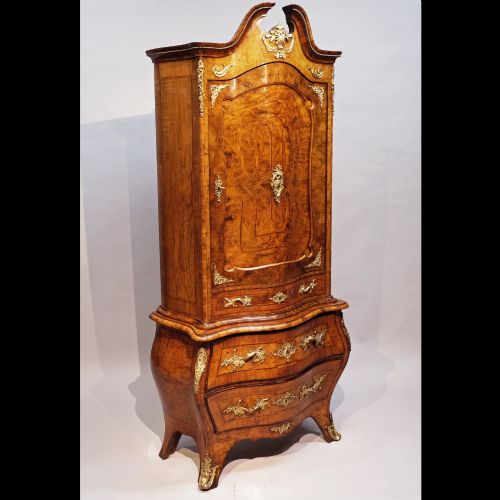
The versions most commonly met on this page span the eighteenth and nineteenth centuries, taking the form of commodes, bureaus, and cabinets. Oak, walnut, and fruitwood form the primary carcasses, often finished with elaborate floral marquetry.
Makers shaped these carcases with pronounced outward curves on the front and sides, creating a distinctive swelling profile. Smaller apprentice pieces and miniature furniture also appear alongside full-sized commodes.
How they were made
Craftsmen built these carcasses using oak, walnut, and fruitwood, applying burr walnut and fruitwood veneers across the curved surfaces. Brass handles and escutcheons punctuate the drawer fronts, secured alongside hand-cut dovetail joints.
Floral marquetry panels utilise precise cutting techniques to inlay lighter and darker woods into the primary walnut ground. Painted wood finishes also occur, sitting upon gesso and timber grounds prepared by hand.
Listings feature walnut, burr walnut, fruitwood, and oak timbers, alongside painted wood surfaces and detailed marquetry inlay.
What varies in quality
The ambition of the marquetry design and the crispness of the carving distinguish finer examples from simpler workshops. Grain selection in the burr walnut veneer dictates the visual depth of the facade.
The integrity of the bombe curve and the alignment of the drawer fronts demonstrate the joiner's skill. Superior execution shows seamless integration between the complex curved carcase and the fitted drawers.
The Dutch Rococo Chest of Drawers Glossary
- Bombe
- A swelling, outward-curving profile found on the front and sides of eighteenth-century commodes and bureaux. This contour requires advanced timber-bending and veneer-laying techniques.
- Marquetry
- The art of forming decorative patterns by fitting together contrasting veneers of wood. Floral motifs dominate these continental drawer fronts.
- Commode
- A low chest of drawers, typically featuring multiple tiers and resting on short feet. The term originates from the French furniture form adopted across the continent.
- Serpentine
- A shaped furniture front featuring a concave centre flanked by two convex ends. This contour creates a flowing, undulating line across the facade.
- Escutcheon
- A protective plate surrounding a keyhole, usually cast from brass. These elements often feature rococo scrollwork designs to match the era.
Dutch Rococo Chest of Drawers: Frequently Asked Questions
How are marquetry chests cleaned?
Marquetry surfaces require gentle dusting with a soft, dry cloth to protect the inlaid veneers. Moisture can damage old timber and loosen delicate wood pieces.
Applying a traditional wax polish periodically helps nourish the walnut and fruitwood without harming the finish.
Where should I place a commode?
These commodes suit living rooms, hallways, or bedrooms where their curved fronts can be appreciated from multiple angles. Their generous proportions demand adequate floor space.
Keep them away from direct sunlight and heat sources to prevent the walnut and burr walnut veneers from drying out.
How do I spot an 18th-century piece?
Eighteenth-century examples display hand-cut dovetails, oak carcass framing, and natural timber ageing beneath the wax polish. The marquetry uses genuine contrasting woods rather than printed substitutes.
Later revival pieces from the nineteenth century often show different construction methods and timber preparation beneath the surface.