




Dutch Wooden Commode
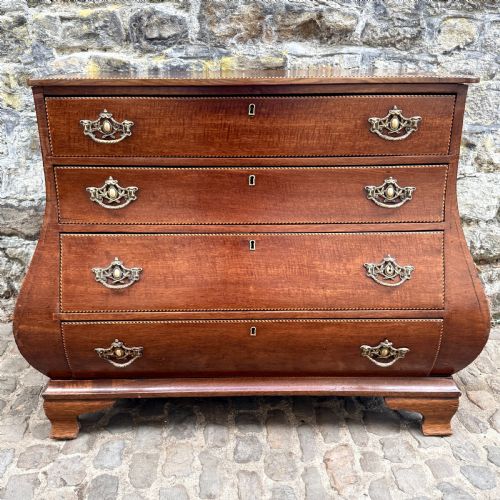
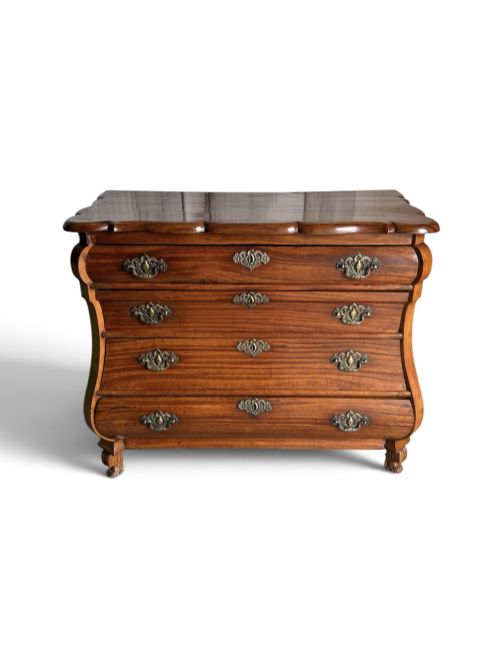
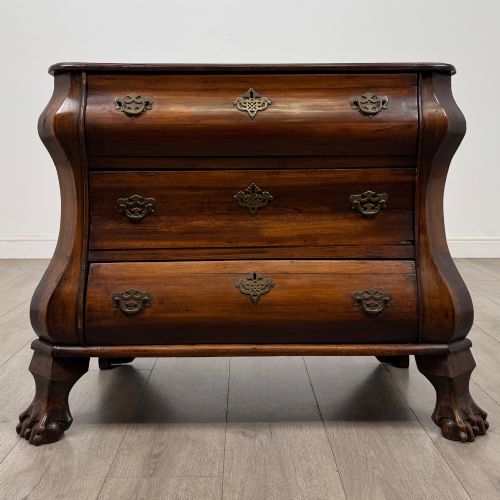
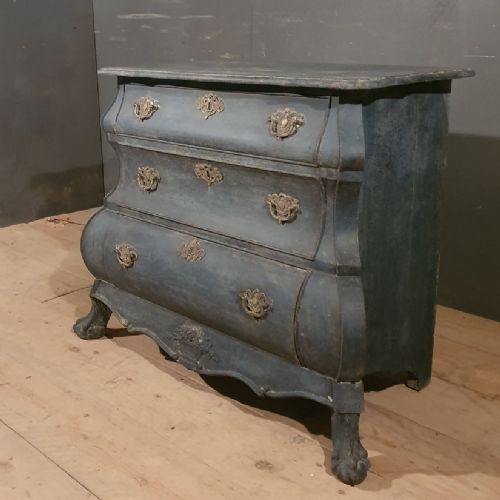
These Dutch wooden commode chests combine substantial storage with swelling bombe forms, drawing collectors who appreciate historic cabinet-making.
Dutch Wooden Commode
When you search for a dutch wooden commode, you encounter a variety of storage pieces ranging from compact chests to grand credenzas and tallboys. The selections span multiple eras, with eighteenth-century examples appearing frequently alongside seventeenth-century, nineteenth-century, and Edwardian pieces.
Makers shaped these chests of drawers in distinct regional styles such as Dutch Baroque, Rococo, Neoclassical, Colonial, and William and Mary. Many feature shaped fronts, curved bombe profiles, or block fronts designed to command attention in a room.
The materials and finishes reflect considerable craftsmanship, utilising solid woods and intricate veneers. Buyers often find pieces finished with marble tops, inlaid marquetry, or painted surfaces that highlight the decorative ambitions of early makers.
Materials and construction methods
Cabinet-makers relied on a diverse palette of timbers, utilising mahogany, walnut, oak, fruitwood, elm, and satinwood. Many workshops elevated these woods through decorative veneers like burr walnut and burr elm.
Decorative surface work defines the construction of these pieces, employing marquetry inlay alongside painted wood finishes. Structural hardware typically incorporates brass handles and escutcheons to complement the rich timber tones.
What separates examples
The sophistication of the timber veneer and the complexity of the marquetry inlay determine the visual impact of a piece. Finer examples display meticulous grain matching and elaborate floral or geometric patterns across curved surfaces.
The execution of the bombe silhouette and shaped front demonstrates the joiner's skill in handling challenging contours. Additional elements, such as fitted marble tops and intact period brass mounts, elevate the distinction of the construction.
The Dutch Wooden Commode Glossary
- Bombe
- A swelling, convex furniture shape that curves outward on the front and sides. This technique requires advanced woodworking skill to achieve balanced proportions.
- Marquetry
- The art of applying decorative pieces of veneer to a structure to form intricate designs. Craftsmen utilise various wood tones to create pictorial or geometric motifs.
- Tallboy
- A tall chest of drawers formed by stacking one cabinet atop another. This form maximises vertical storage while maintaining a formal presence.
- Credenza
- A sideboard or cabinet piece used for storage and display. The listings include inlaid examples reflecting seventeenth and eighteenth-century designs.
- Block front
- A piece of furniture featuring a front divided into three vertical sections, with the exterior sections projecting forward and the central section recessed. This creates a bold architectural facade.
Dutch Wooden Commode: Frequently Asked Questions
How do I date a Dutch commode?
Examine the secondary woods, construction joints, and overall style indicators like baroque curves or neoclassical lines. Eighteenth-century pieces often display hand-cut dovetails and distinct veneer choices.
Compare the hardware fixings and finish wear against known period examples. Listings span from the seventeenth century through the Edwardian era, each carrying characteristic structural details.
Where were these commodes made?
These pieces originate from the Netherlands or reflect Dutch colonial influences from regions such as South Africa. The styles span Dutch Baroque, Rococo, and Neoclassical traditions.
Makers incorporated local and imported timbers to satisfy domestic and overseas markets. Regional preferences shaped the decorative marquetry and structural profiles.
How do I care for burr walnut?
Keep burr walnut furniture away from direct sunlight and sudden temperature shifts to prevent veneer splitting. Dust gently with a dry cloth and apply appropriate wax sparingly.
Avoid placing damp items directly on marble tops or wooden surfaces. Proper humidity control preserves the intricate grain patterns of the burr.