
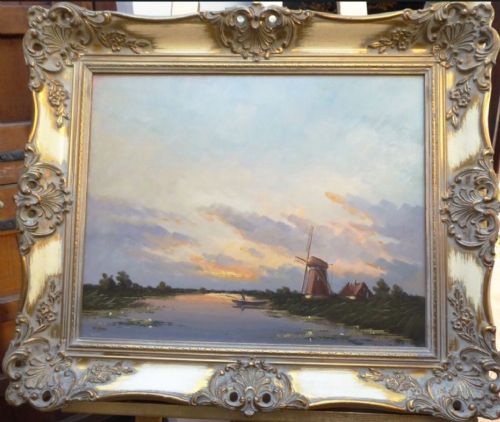


Dutch River Landscape
A dutch river landscape captures tranquil waterways, distant windmills, and low horizons in oil or watercolour.
Dutch River Landscape
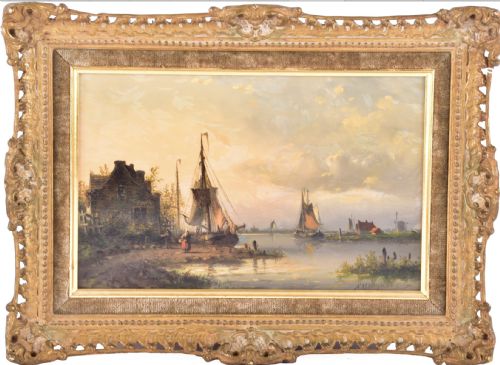
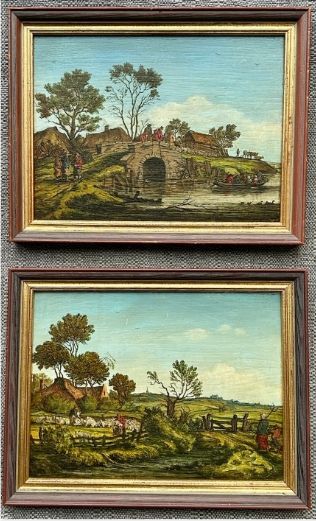
A dutch river landscape depicts waterways, figures, boats, and traditional architectural elements such as windmills and cottages. These works range from mid-17th-century interpretations to mid-20th-century impressions.
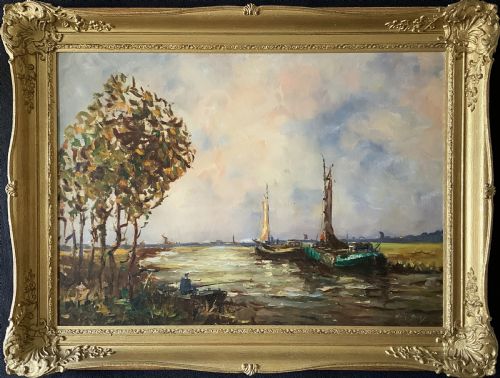
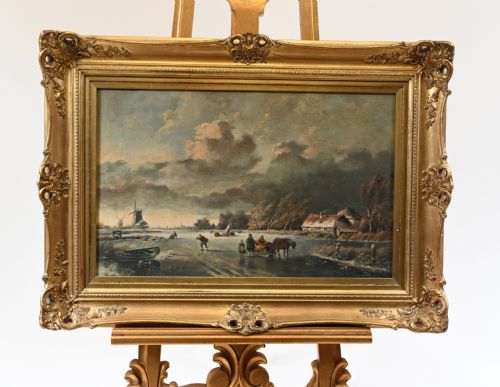
The version most commonly encountered on this page is the 19th-century oil painting or panel depiction, often showing winter scenes with figures skating or summer views along a canal. These pieces follow established traditions of the Dutch School and Dutch Impressionism.
Compositions frequently incorporate atmospheric skies, calm water reflecting distant horizons, and subtle tonal shifts. Artists balance naturalism with distinct regional motifs characteristic of lowland European scenery.
Materials and construction
These works rely primarily on oil paint applied to canvas, canvas boards, or wooden panels, with occasional examples executed in watercolour. Wooden panels often provide a rigid support favoured by earlier painters.
Frames are frequently constructed from wood with gilt and gesso finishes, adding substantial weight and decorative depth to the presentation. Pigments build up layered textures that define water surfaces, winter skies, and structural details.
Ducks and ducklings frequently paddle across these rivers, occasionally upstaging the grand windmills and bustling barge traffic.
Distinctions in execution
Quality rests upon the handling of light, atmospheric perspective, and brushwork control within the painted surface. Superior examples demonstrate confident control over tonal gradation, particularly in rendering flat horizons and reflective water.
Framing and structural support also differentiate works, with original heavy gesso and gilt frames contributing to the integrity of the piece. The articulation of small figures and architectural elements distinguishes proficient studio production from repetitive output.
Willem Bos·Thomas Bush Hardy·Gudrun Sibbons·Pieter Cornelis Steenhouwer·Constant Ludovic Artz·Ludwig Hermann·Louis Smets·William Dommersen·Jacob Knyff
The Dutch River Landscape Glossary
- Dutch School
- A broad designation covering painters originating from or working within the artistic traditions of the Netherlands. This term encompasses centuries of stylistic evolution from the golden age onwards.
- Panel
- A rigid wooden support used as an alternative to stretched canvas for oil paintings. Panels were frequently utilised during earlier centuries and for smaller cabinet works.
- Gesso
- A plaster-like preparation applied to wood or canvas to create a smooth, absorbent surface for painting or gilding. It is commonly found beneath the gilt surfaces of period frames.
- Watercolour
- A painting method using water-soluble pigments on paper supports. These works often capture delicate atmospheric conditions and translucent light effects.
- Impressionism
- A style focused on capturing the visual impression of a moment, with emphasis on shifting light and unblended brushstrokes. In these listings, it appears across 19th-century and mid-century interpretations.
Dutch River Landscape: Frequently Asked Questions
What periods do these paintings span?
The listings span from the 17th century through the 19th century and into the mid-20th century. Earlier examples emerge from the Dutch School tradition.
Later works reflect impressionist and mid-century approaches while maintaining the traditional subject matter of waterways and windmills.
How should I display a panel painting?
Wood panel paintings require stable indoor humidity levels to prevent warping of the wooden support. Avoid placing them near direct heat sources.
Many of these works are housed in substantial gilt and gesso frames designed to support the weight of the panel.
What subjects appear in these scenes?
Common subjects include frozen rivers with figures skating, windmills at sunset, quiet canals, and rural cottages. Boats, barges, and maritime vessels also frequently populate the foreground.
Animals such as ducks on river banks and figures collecting firewood add narrative detail to the landscape compositions.
Are these works created on canvas or wood?
The pieces utilise various supports including stretched canvas, canvas boards, and solid wood panels. Watercolour works on paper also appear within the selection.
Each material dictates the texture of the painted surface and influences how the framing is constructed.