



Gold Leaf Landscape Artwork
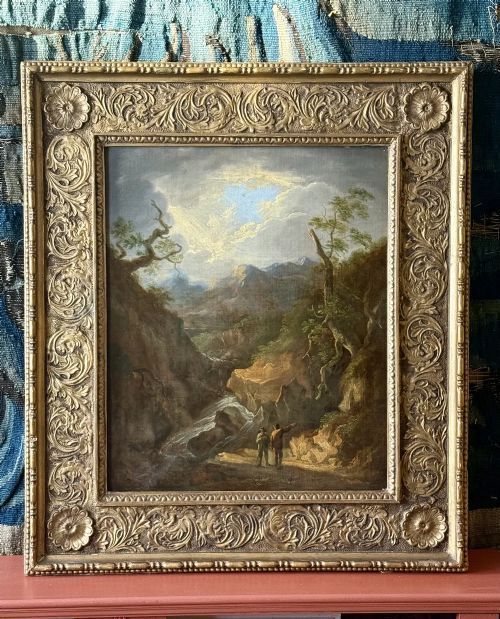
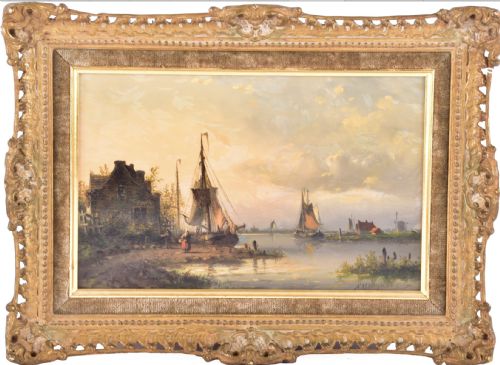
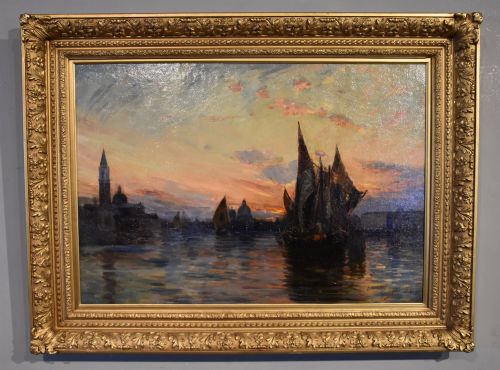
Gold leaf landscape artwork brings together natural scenery and gilded light, offering collectors a traditional window into pastoral and maritime vistas.
Gold Leaf Landscape Artwork
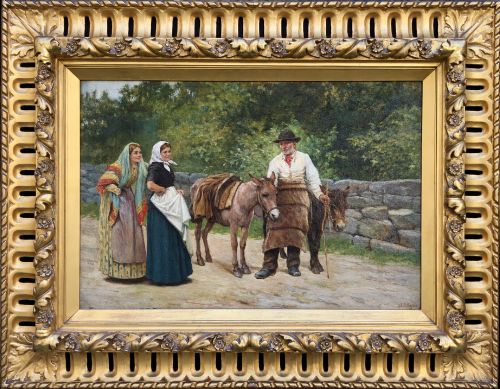
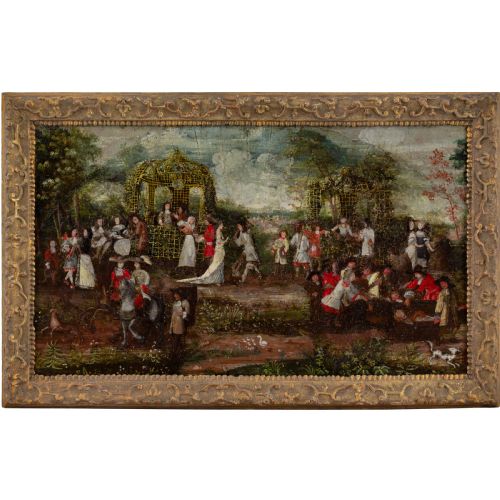
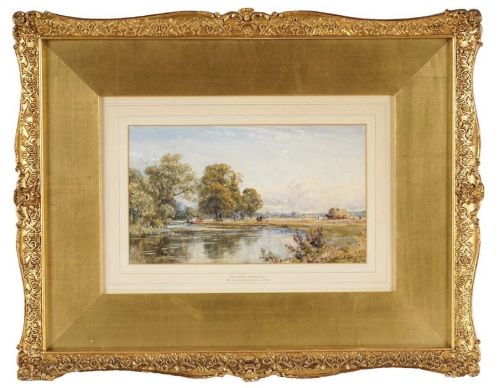
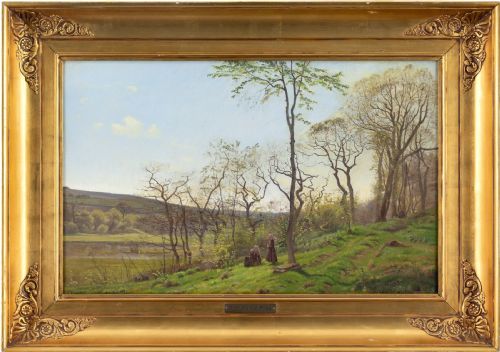
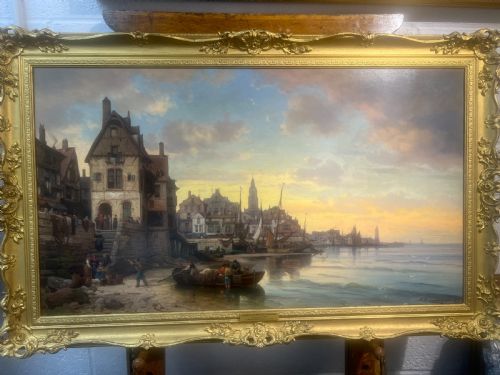
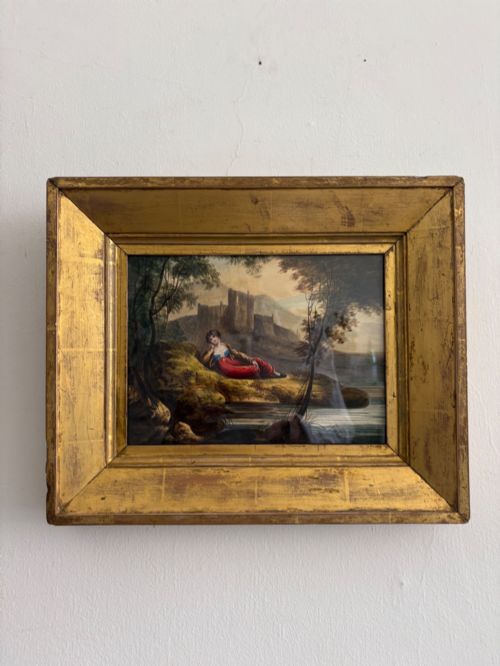
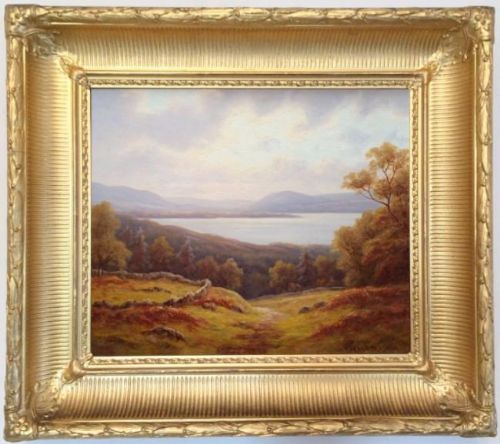
Gold leaf landscape artwork encompasses oil paintings and watercolours depicting rivers, farmsteads, and rural scenes, often framed in elaborate gilded surrounds.
The pieces on this page originate predominantly from the nineteenth century, alongside examples from the eighteenth and early twentieth centuries.
Buyers encounter British, Dutch, and Flemish interpretations of nature, executed in mediums that range from oil on canvas to delicate needlework pictures.
Materials and Techniques
Artists painted primarily with oil paint on canvas or watercolour on paper, building up depth and atmosphere through layered brushwork.
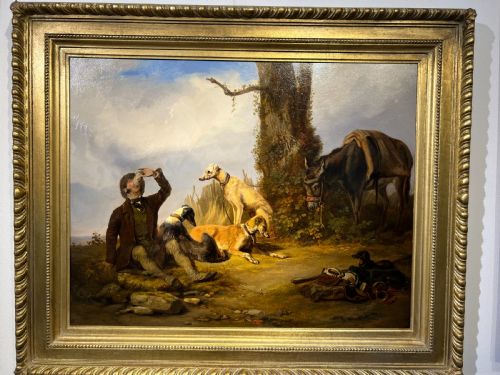
Frames frequently utilised wood, gesso, and gold leaf to create luminous borders that complement the illuminated skies and water within the scenes.
Listings feature oil paintings and watercolours on canvas, paper, and wood from the eighteenth to the twentieth centuries.
Assessing Quality
Quality rests in the handling of light and perspective, where superior brushwork gives the illusion of depth and natural movement.
The condition and craftsmanship of the original frame play a significant role, particularly when the gilding and gesso retain their crisp detail.
Nicolaas Martinus Wijdoogen·Alfred Walter Bayes·Thomas Sidney Cooper·Pieter Cornelis Dommersen·John Charles Maggs
The Gold Leaf Landscape Artwork Glossary
- Giltwood
- Wood that has been coated with a thin layer of gold leaf or gold paint. This technique was widely applied to nineteenth-century picture frames to enhance illumination.
- Gesso
- A plaster mixture applied to wooden frames as a base for gilding. It allows craftsmen to mould intricate decorative reliefs before laying gold leaf.
- Oil on Canvas
- Pigment mixed with drying oil applied to stretched fabric. It serves as the primary medium for durable landscape painting across the Victorian period.
- Watercolour Painting
- Pigments suspended in a water-soluble base applied to paper. These works offer a lighter alternative to oils, often preserved behind glass.
Gold Leaf Landscape Artwork: Frequently Asked Questions
What periods do these landscapes date from?
The selection spans several centuries, with a strong representation of nineteenth-century Victorian works alongside eighteenth-century compositions and early twentieth-century pieces.
Creators from this era utilised traditional oil and watercolour techniques to capture changing light and seasonal conditions across Europe.
How should I display framed oil paintings?
Display paintings away from direct sunlight and fluctuating heat sources to protect both the canvas and the delicate wooden gilding on the frame.
Ensure the wall can support the weight of heavier frames, particularly those featuring dense gesso mouldings.
What subjects are common in these scenes?
Common subjects include river views, pastoral gatherings, harvest scenes, and coastal marine settings painted by British and continental European artists.
Many pieces focus on rural daily life, domestic animals, and architectural landmarks set within open countryside.
Are watercolours as durable as oils?
Watercolours require careful framing behind glass to protect the paper substrate and pigments from atmospheric moisture and handling.
When kept in stable indoor environments, these works retain their original vibrancy over generations.