


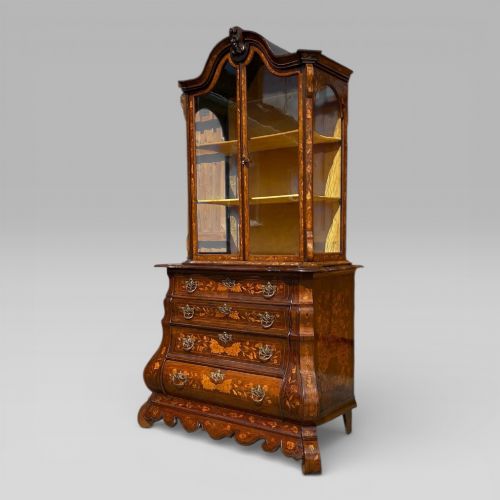


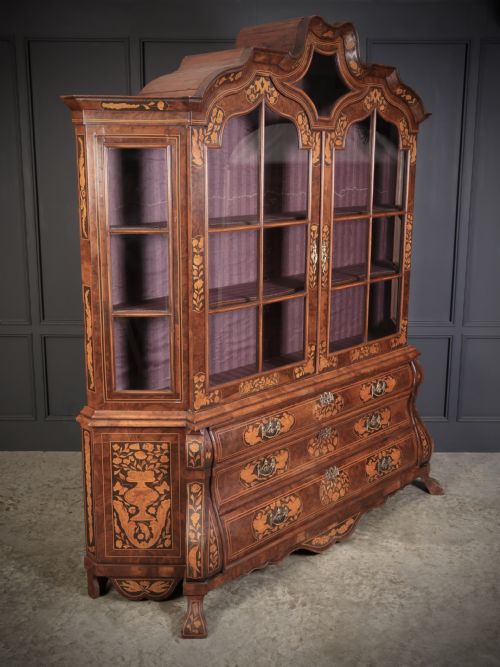
Dutch Marquetry Display Cabinet
A dutch marquetry display cabinet brings centuries of floral inlay and rich walnut timber into a room to hold treasured porcelain.
Dutch Marquetry Display Cabinet
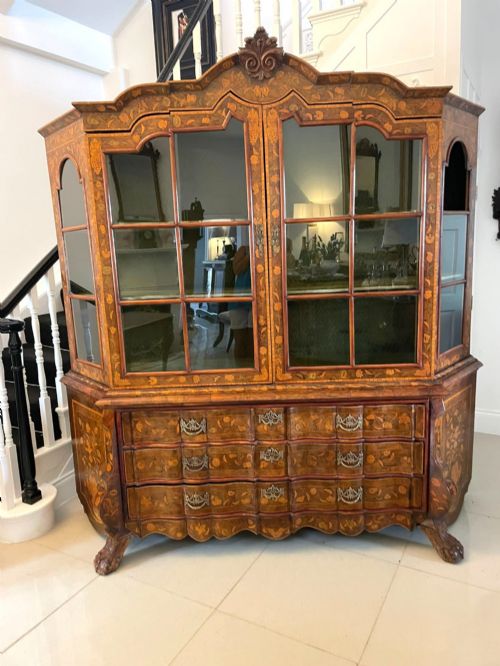
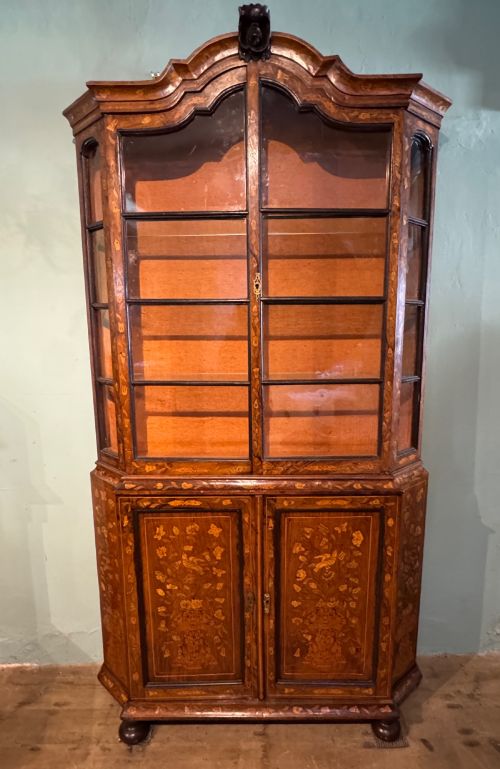
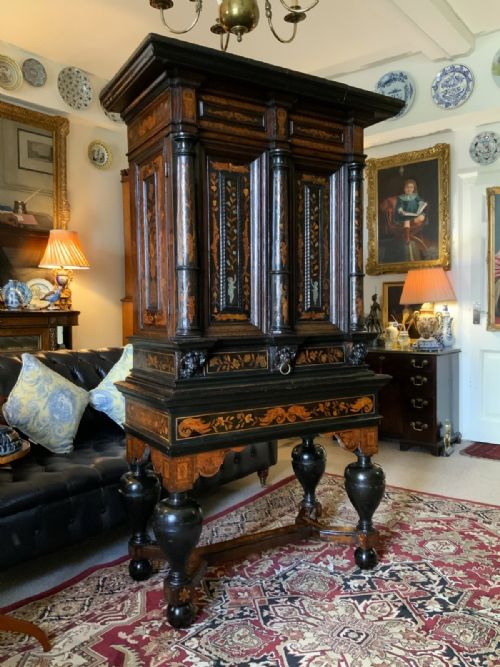
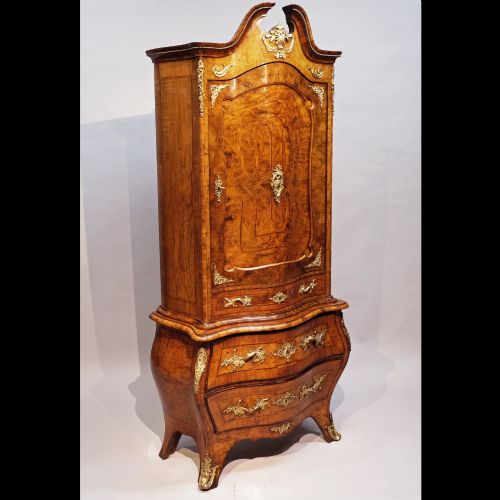
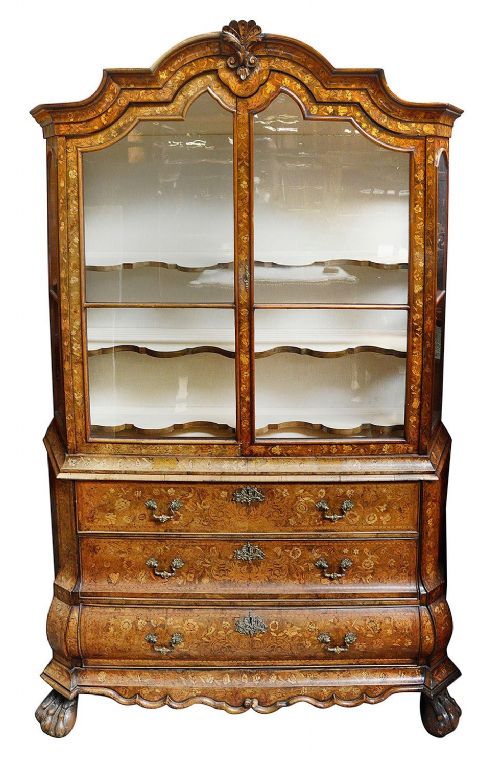
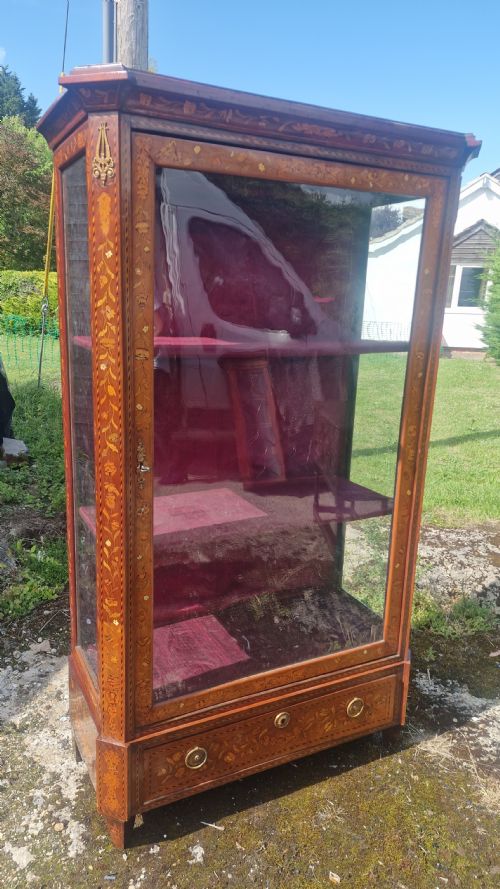
A dutch marquetry display cabinet combines glazed upper sections for display with lower chests, stands, or bombe bases for storage. The pieces here span from the seventeenth century through the Victorian era and into the twentieth century, reflecting enduring European cabinet-making traditions.
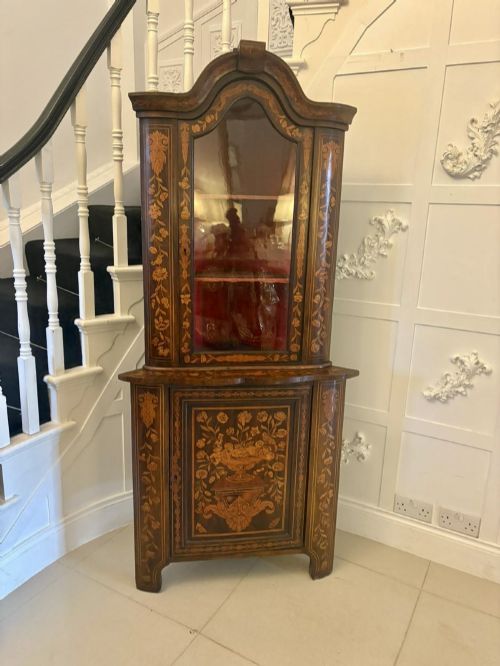
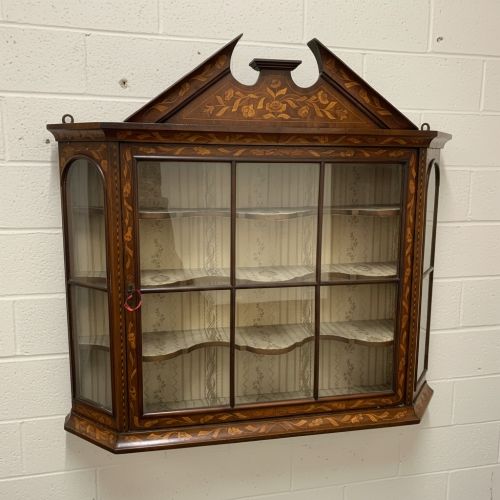
The form appears as corner cupboards, wall cabinets, linen presses, and tall bureau bookcases alongside traditional freestanding vitrines. Walnut and burr walnut dominate the structural timbers, providing a dark, figured foundation for intricate light-toned inlays.
Makers and workshops constructed these display pieces primarily during the eighteenth century and subsequent revival periods. Buyers encounter both original period examples and later nineteenth or twentieth-century interpretations sharing identical decorative vocabularies.
Materials and construction
Cabinet makers laid down foundational carcases of solid walnut, oak, or fruitwood before applying veneers of burr walnut and satinwood. Glazed doors utilised timber framing to support large glass panes designed to protect contents from dust.
Floral and urn motifs utilise fruitwood marquetry, contrasting light and dark woods, occasionally augmented with pewter inlay. Artisans cut delicate botanical scrolls by hand and pressed them into prepared recesses across doors, cornices, and bulging bombe fronts.
Tulip-mania left a lasting botanical legacy, ensuring Dutch cabinet makers filled every possible surface with permanent wooden bouquets.
Quality and execution
The sophistication of the marquetry dictates the standing of a piece, with naturalistic floral bursts showing greater depth than stiff, mechanical repeats. Precision in the alignment of walnut grain across curving bombe drawers demonstrates the skill of the original workshop.
Proportion and structural integrity separate standard utility pieces from masterworks of the Dutch Baroque and Rococo styles. Smooth operation of glazed doors, original brass hardware, and well-preserved timber patination complete the measure of quality.
Edwards and Roberts
The Dutch Marquetry Display Cabinet Glossary
- Marquetry
- Decorative veneer work forming pictures or patterns by using small pieces of wood, shell, or ivory. In these cabinets, marquetry typically depicts elaborate urns and trailing flowers.
- Bombe
- A bulging, outward-curving swell on the lower front and sides of a cabinet or chest. This shaped silhouette requires advanced woodworking joinery.
- Vitrine
- A glass-fronted cabinet or display case specifically designed for exhibiting porcelain and small objects. Many examples in this inventory serve this exact purpose.
- Burr walnut
- Wood taken from a walnut tree growth featuring swirling, highly figured grain patterns. It creates a rich background texture behind floral marquetry panels.
- Linen press
- A tall cupboard originally built to store household linens, often adapted in these listings to display collections behind glass doors.
Dutch Marquetry Display Cabinet: Frequently Asked Questions
How do I clean the glass?
Use a soft microfibre cloth dampened slightly with water or a mild glass cleaner sprayed onto the cloth rather than directly onto the wood.
Keep liquids away from the delicate marquetry and antique wood surfaces to prevent moisture damage to the finish.
Are the shelves adjustable?
Most period interiors feature fixed wooden shelves integrated into the original carcase construction during initial manufacture.
Later revival pieces occasionally incorporate modern slot supports, but traditional display cabinets require careful placement of items to fit existing shelf heights.
How do I tell an 18th century piece apart from a 19th century revival?
Examine the timber construction methods, interior secondary woods, and hand-cut dovetail joints visible inside the drawers. Eighteenth-century examples display distinct hand-tool marks and older patination compared to later copies.
The complexity and crispness of the fruitwood floral marquetry also offer clues regarding the period of production.
How do I secure the heavy doors?
Ensure the cabinet stands on a completely level floor using discreet shims if necessary to prevent the heavy glazed doors from sagging on their hinges.
Original brass locks and latches should engage smoothly without forcing the framework of the cabinet.