





Dutch Marquetry China Display
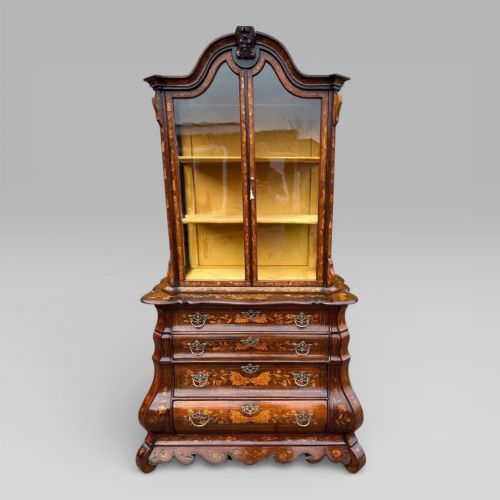
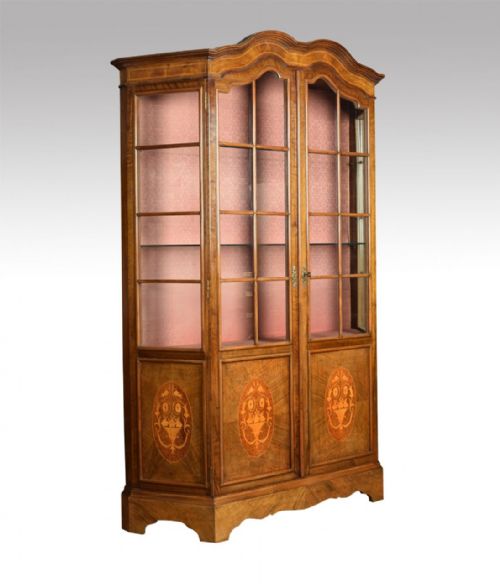
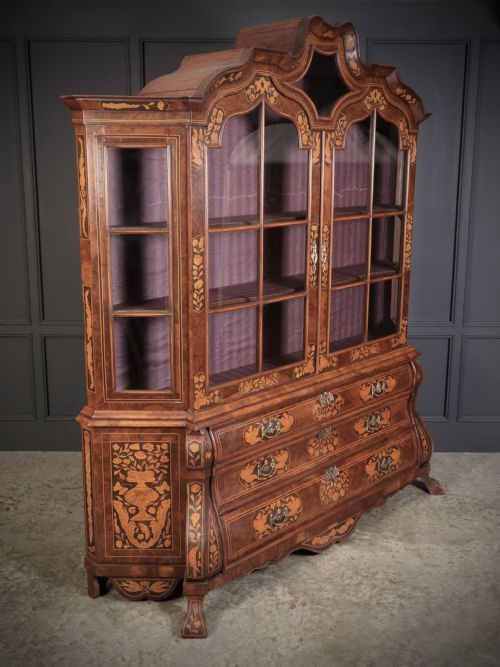
Dutch marquetry china display cabinets are richly inlaid statement pieces in walnut and fruitwood that showcase porcelain while anchoring a room.
Dutch Marquetry China Display
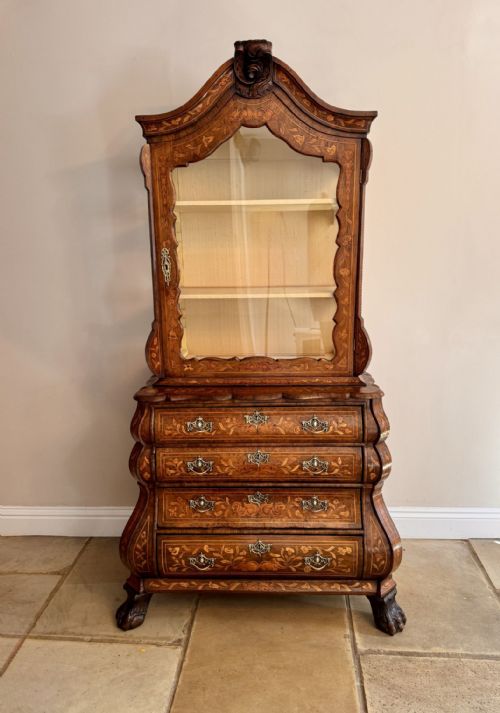
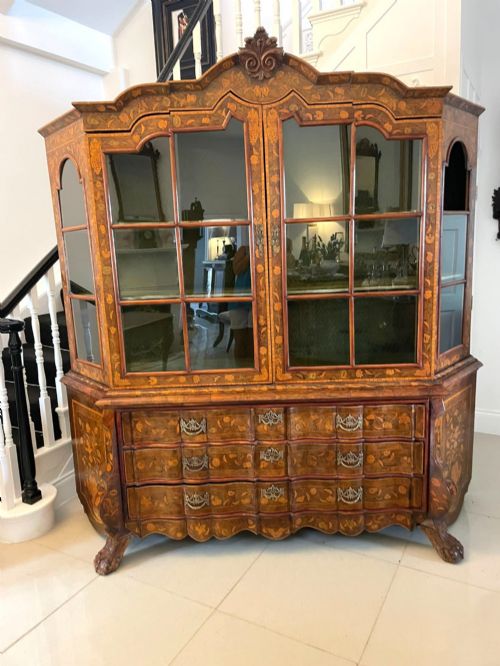
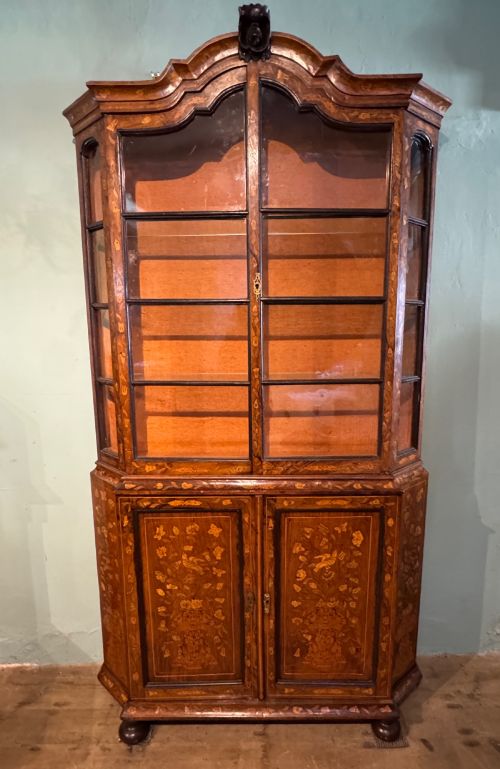
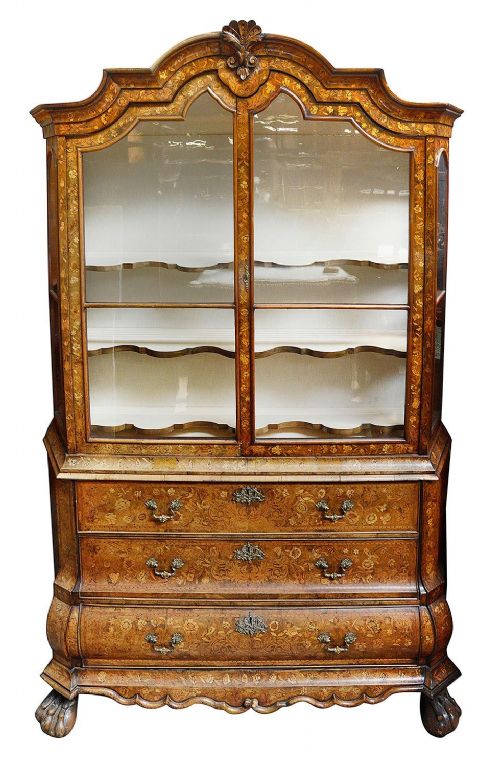
A Dutch marquetry china display cabinet combines intricate floral wood inlay with practical glazed shelving designed to house porcelain and glassware. These furnishings appear across several centuries, ranging from eighteenth-century originals to later nineteenth-century revivals and twentieth-century interpretations.
The dominant forms on this page include tall display cabinets, vitrines, and corner cabinets configured as standalone units or paired with lower chest bases and bookcases. Walnut serves as the primary timber, enhanced by contrasting fruitwood and satinwood floral details.
Buyers encounter traditional bombé shapes with swelling fronts alongside straight-sided display pieces reflecting Dutch Baroque and Rococo styles. Each iteration provides visible glazing to protect curated ceramics while displaying elaborate cabinetwork across the entire exterior.
Materials and construction methods
Cabinetmakers constructed the carcase using solid and veneered timbers such as walnut, oak, and mahogany, applying intricate marquetry panels across the surface. These decorative veneers utilise fruitwoods and satinwood cut into floral and foliate motifs, then fitted meticulously into the primary wood background.
Glazing bars divide the glass door panels to secure individual panes within timber frames, while brass hardware often furnishes the hinges and lock escutcheons. The bombé forms require skilled bending of wooden framing members to achieve the characteristic swelling silhouette seen in eighteenth and twentieth-century examples.
Dutch Marquetry China Display Retail Price Guide 2026
Typical asking prices for dutch marquetry china display among the pieces listed under this phrase on Sellingantiques today, from the lower quarter to the upper quarter. They describe what is for sale here now, not the wider market.
Cabinet forms on this page range from tall display bookcases and vitrines to compact corner display cases.
Elements of distinction and manufacture
The refinement of the marquetry work separates standard production from exceptional examples, judged by the intricacy of the floral shading and the tightness of the veneer joints. Artisans achieved depth in floral petals by scorching veneer edges in hot sand before assembly, creating subtle tonal gradations.
Structural harmony also dictates quality, particularly how cleanly the bombé curves swell from the base and how seamlessly glazed doors align with the cabinet body. The selection of secondary woods and the preservation of original brass fittings further distinguish superior cabinetmaking.
Edwards and Roberts
The Dutch Marquetry China Display Glossary
- Marquetry
- Decorative veneer work forming pictures or patterns by assembling small pieces of different coloured woods. This technique covers the entire facade of these cabinets with floral arrangements.
- Vitrine
- A glass-fronted display cabinet created specifically to exhibit porcelain, curiosities, or fine china. The glazed doors and sides allow light to reach stored objects from multiple angles.
- Bombé
- A swelling, outwardly curving furniture shape most pronounced on the lower doors or drawers of eighteenth-century case pieces. This undulating contour demands advanced woodworking skill to execute properly.
- Display Cabinet on Chest
- A tall cabinet mounted upon a matching lower chest of drawers or base unit. This combination provides both upper glass shelving and concealed lower storage space.
Dutch Marquetry China Display: Frequently Asked Questions
How do I date a Dutch marquetry cabinet?
Dating relies on examining the secondary timbers, construction methods, and stylistic cues such as bombé shaping or straight lines. Eighteenth-century models often show hand-cut veneers and older internal joinery, while later nineteenth and twentieth-century pieces incorporate revival details.
Cabinet hardware, glass consistency, and the style of the floral marquetry further clarify whether a piece originates from the original period or a later revival era.
Where should I place a corner display cabinet?
Corner display cabinets fit neatly into ninety-degree room intersections, making efficient use of unassigned floor space while drawing the eye upward. They work effectively in dining rooms or drawing rooms where wall space is limited but porcelain storage is required.
Positioning them away from direct sunlight protects both the polished walnut timber and the interior lining fabrics from fading.
How should I clean the marquetry veneer?
Maintenance requires gentle dusting with a soft, dry cloth to prevent abrasive particles from scratching the delicate fruitwood and satinwood inlay. Avoid harsh chemical cleaners or excessive moisture, which can damage old veneer adhesives and finishes.
Applying a specialist cabinet wax occasionally helps nourish the walnut surface and preserves the subtle shading within the floral motifs.