


Dutch Marine Oil Painting
These pieces of dutch marine oil painting capture turbulent seas and quiet canals on canvas, offering a glimpse into centuries of maritime heritage.
Dutch Marine Oil Painting
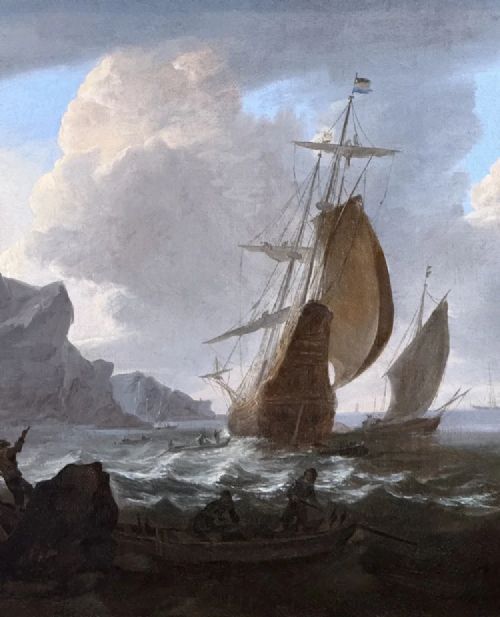
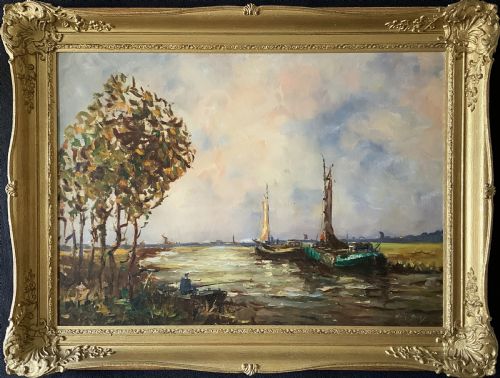
When you search for a dutch marine oil painting, you encounter works depicting sailing boats, fishing vessels, and bustling canals from periods spanning the seventeenth century to the mid-twentieth century. The selection leans heavily towards nineteenth-century expressions, alongside earlier seventeenth-century compositions and later interpretations from the twentieth century.
The subjects range from stormy gales off the coast to calm waters near windmills and harbours. Canvas and wood serve as the primary supports for these coastal scenes, capturing both historical naval battles and everyday maritime life.
How they were made
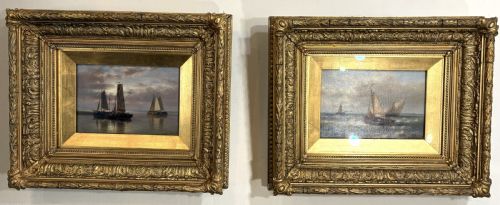
Artists painted primarily with oil paint on stretched canvas or wooden panels, applying pigment to build depth in sky and water. Many works are paired with decorative frames constructed from wood, gesso, and gold leaf.
Techniques varied from the precise realism of the Dutch Golden Age tradition to looser nineteenth-century brushwork seen in the Hague School and Dutch Impressionism.
Periods represented span from the seventeenth century through the nineteenth century and into the mid-twentieth century.
What varies in quality
The distinction between works rests on the handling of light, atmospheric perspective, and the accurate depiction of rigging and hull structures on sailing vessels. Superior examples demonstrate a confident command of maritime movement, whether rendering violent gales or tranquil estuaries.
Frame construction also contributes, where period giltwood and gesso mouldings complement the depth of the canvas rather than overpowering the composition.
Bonaventura Peeters·Willem Bos·Abraham Hulk I·Pieter Cornelis Dommersen·Adrian Van Porten·Hendrik Willebrord Jansen·Owen Bowen·Paul Jean Clays·Frank Myers Boggs·William Dommersen·Charles Martin Powell·Jacob Knyff·Abraham Storck·Alfred Montague·Maud E. Dickinson·Bernard Page
The Dutch Marine Oil Painting Glossary
- Giltwood
- Wood carved and coated with gold leaf or a gold-coloured finish. This material is frequently found on period frames enclosing marine canvases.
- Gesso
- A plaster-like mixture applied to wood frames to create a smooth surface for gilding. It allows for intricate moulded decorative details.
- Estuary
- The tidal mouth of a large river, where the tide meets the stream. These settings provide the backdrop for numerous coastal and canal scenes.
- Canvas
- Closely woven fabric used as a surface for oil painting. It is typically stretched over a wooden frame before pigment is applied.
Dutch Marine Oil Painting: Frequently Asked Questions
What subjects appear in these paintings?
The compositions record sailing boats, fishing vessels, war vessels, and commercial craft navigating choppy seas or sheltered canals. Coastal views, windmills, and shipyards also populate the imagery.
Scenes frequently draw inspiration from the Netherlands coastline, capturing the shifting light over estuaries and open water.
How do I identify the period?
Dating relies on stylistic clues, framing materials, and the canvas preparation methods typical of specific centuries. Seventeenth-century works often show darker, dramatic palettes, whilst nineteenth-century pieces embrace broader atmospheric effects.
Signatures, when present, provide a direct link to recorded painters active during those eras.
Where were these works created?
While many originate directly from Dutch artists depicting their native waters, others stem from British, American, and Belgian painters working in the established Dutch manner.
Foreign artists frequently travelled to the Netherlands to capture the distinct local atmosphere and maritime traditions.
How should I care for an oil painting?
Protect the canvas from direct sunlight and steady humidity to prevent paint cracking or warping of the wooden stretcher. Dust the surface and frame gently with a dry, soft brush without applying pressure.
Avoid using liquid cleaners on the paint or the giltwood frame.