

Dutch Inlaid Furniture
Dutch inlaid furniture brings heavy walnut and fruitwood marquetry into domestic rooms, offering ornate floral panels across chests, bureaux and cabinets.
Dutch Inlaid Furniture
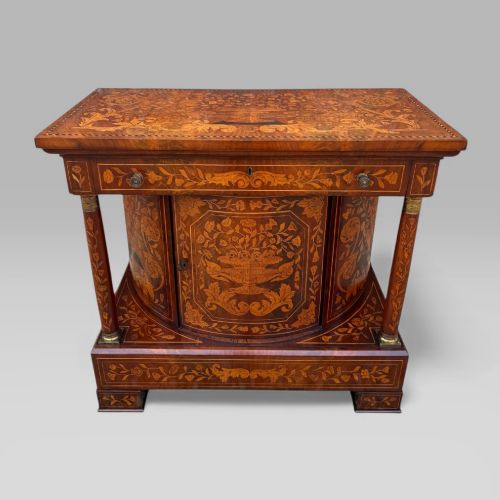
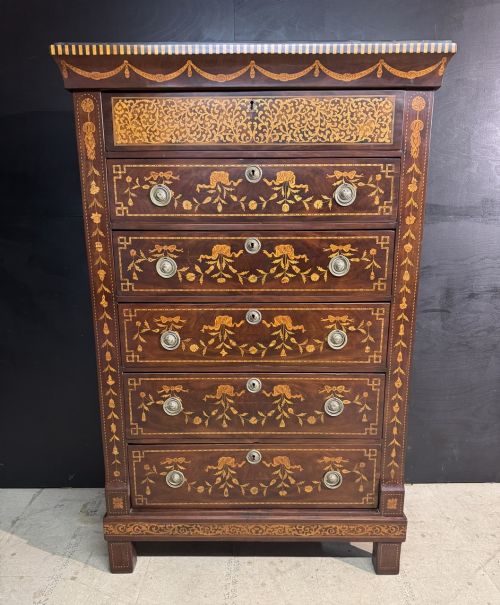
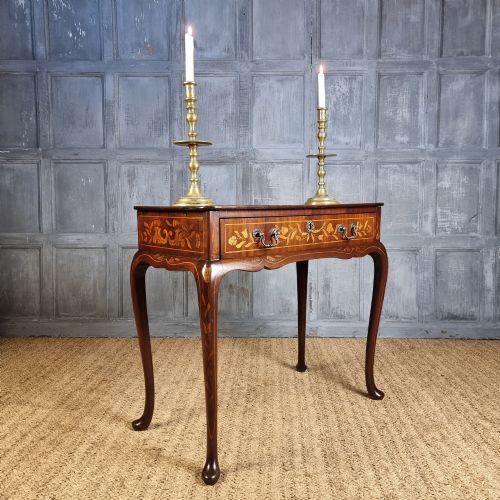
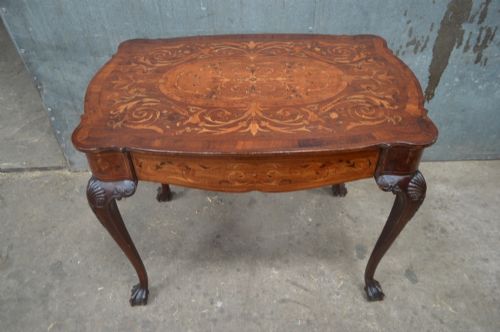
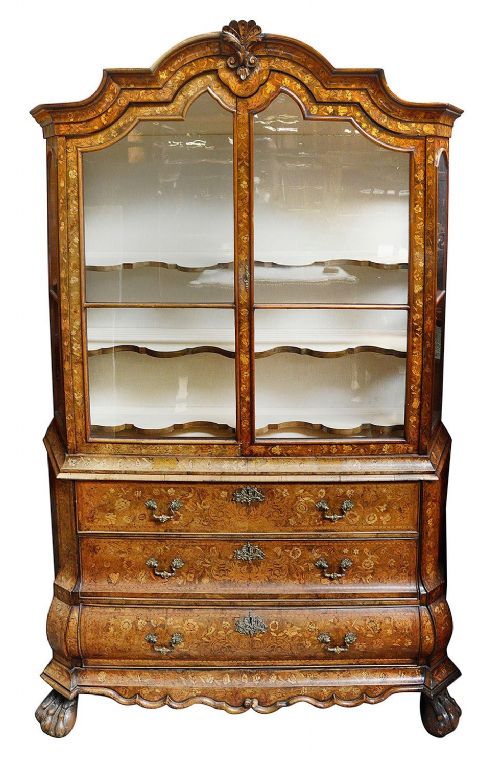
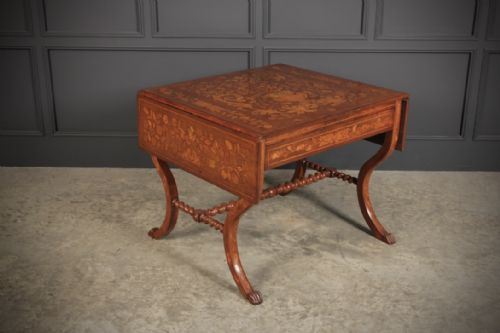
Dutch inlaid furniture spans substantial case pieces and tables, focusing particularly on chests of drawers, bureaux and display cabinets. These forms emerge across the seventeenth, eighteenth and nineteenth centuries, often displaying distinct floral and botanical patterns.
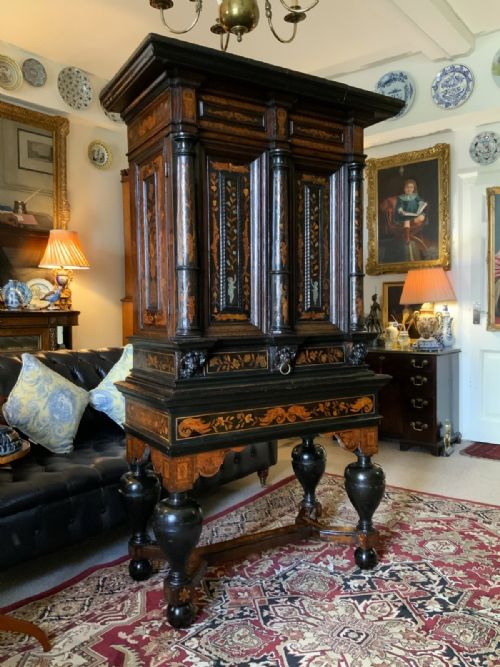
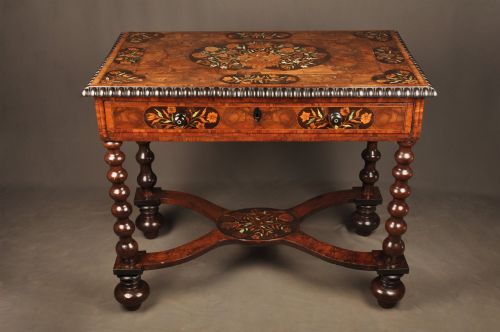
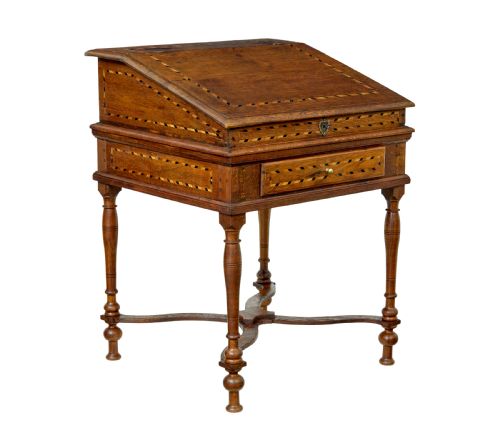
The pieces on this page lean heavily towards eighteenth-century production, alongside seventeenth-century cabinets and nineteenth-century side tables and writing slopes. Common formats include bombe chests, bureau bookcases and corner cabinets.
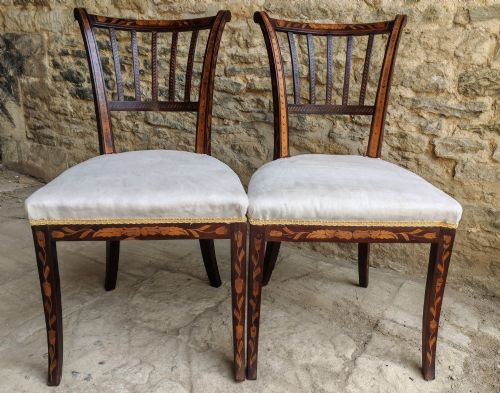
Makers construct these items using regional stylistic shifts ranging from Dutch Baroque and Rococo to Neoclassical interpretations. Walnut and mahogany provide the primary foundation for intricate marquetry layouts.
Materials and construction methods
Craftsmen construct carcases from sturdy timbers like oak and walnut, applying richly grained veneers of walnut, mahogany and burr walnut across the visible surfaces. Marquetry panels utilise assorted fruitwoods to build up detailed floral motifs through precision cutting and fitting.
Specialist workers integrate contrasting elements such as pewter, brass, rosewood and ebony inlay to accent the primary marquetry scenes. Surface ornamentation frequently employs shaped brass hardware alongside glass panels in display cabinets and vitrines.
Listings feature pieces spanning from the 17th century through the Georgian and 19th-century periods, built predominantly in walnut, oak and fruitwood.
Distinctions in quality and execution
Quality rests upon the complexity and precision of the marquetry cutter's art, where botanical details retain crisp outlines and varied fruitwood tones. Superior examples combine dense burr walnut foundations with balanced, multi-layered floral compositions across curved bombe fronts.
Construction standards reveal themselves in the stability of carcases and the seamless integration of secondary woods like oak and fruitwood. Finer pieces maintain structural integrity alongside elaborate decorative schemes without relying on excessive surface repairs.
The Dutch Inlaid Furniture Glossary
- Marquetry
- Decorative veneer work forming pictures or patterns by assembling small pieces of wood, often fruitwoods and exotic timbers. This technique defines the surface decoration of most pieces on this page.
- Bombe
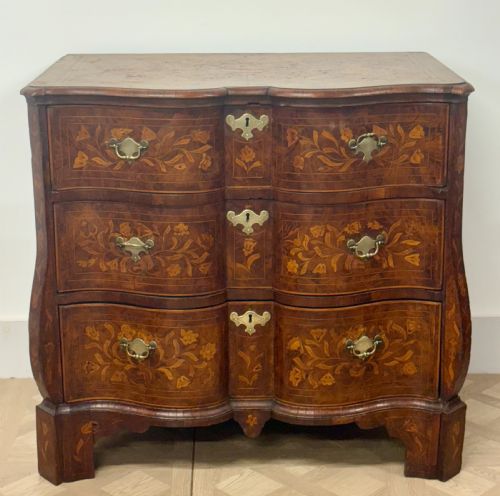
- A swelling, outward-curved shape characteristic of furniture fronts and sides, common in eighteenth-century Dutch chests and bureaux. This contour demands advanced woodworking skill to fit the matching marquetry veneer.
- Bureau
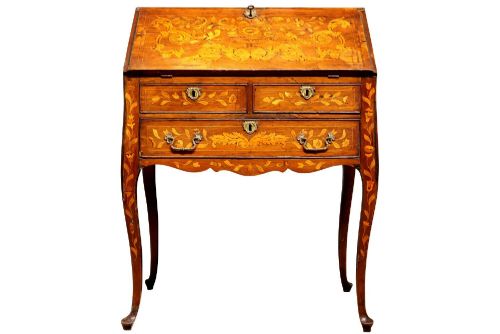
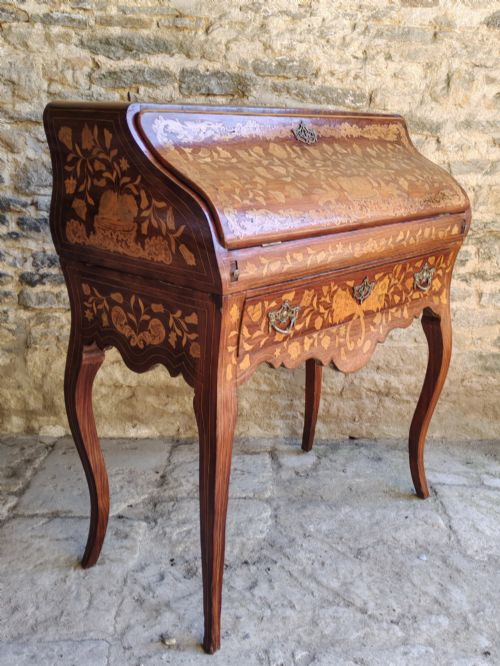
- A desk featuring a sloping hinged lid that opens to reveal internal small drawers and pigeonholes. Many examples combine this writing compartment with tiered drawer carcases below.
- Kussenkast
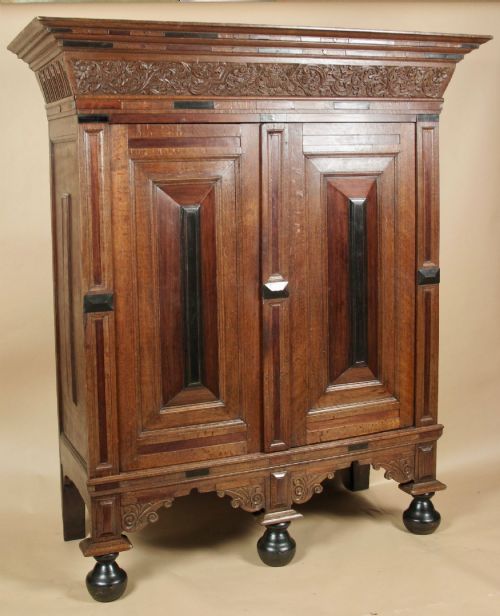
- A heavy seventeenth-century wardrobe or cabinet style featuring prominent cushion-moulded panel doors. These monumental pieces often incorporate dense contrasting veneers.
- Vitrine
- A glass-fronted cabinet designed for displaying porcelain or curiosities. These units utilise glazed doors to showcase internal shelving.
Dutch Inlaid Furniture: Frequently Asked Questions
How do I date Dutch inlaid furniture?
Dating relies on combining structural evidence, timber choice and stylistic indicators such as Baroque curves or Neoclassical symmetry. Eighteenth-century pieces frequently feature distinct floral marquetry on walnut carcases, while nineteenth-century items adopt lighter mahogany foundations.
Changes in hardware styles and secondary framing woods help narrow down the period further. Examining the interior construction reveals how cabinet-making techniques evolved across these decades.
What is a bombe front?
A bombe front describes a chest or bureau whose drawers and frame swell outward in a convex curve. This undulating shape requires precise carpentry to ensure the timber veneer follows the complex contours without splitting.
Craftsmen matched floral marquetry across these curved surfaces to create continuous visual flow. This form remains a hallmark of high-status Dutch case pieces from the eighteenth century.
How should I care for marquetry surfaces?
Marquetry surfaces require stable indoor humidity levels and protection from direct sunlight to prevent veneer shrinkage or fading. Regular dusting with a soft cloth keeps the fruitwood and walnut in stable condition.
Applying microcrystalline wax periodically feeds the timber without building up heavy residues. Avoid harsh liquid cleaners that might loosen the delicate inlaid joints.
Where were these cabinets used?
These cabinets and chests served as prominent display and storage pieces in principal rooms of seventeenth and eighteenth-century homes. Bureau bookcases and display cabinets held valuable books, glassware and correspondence.
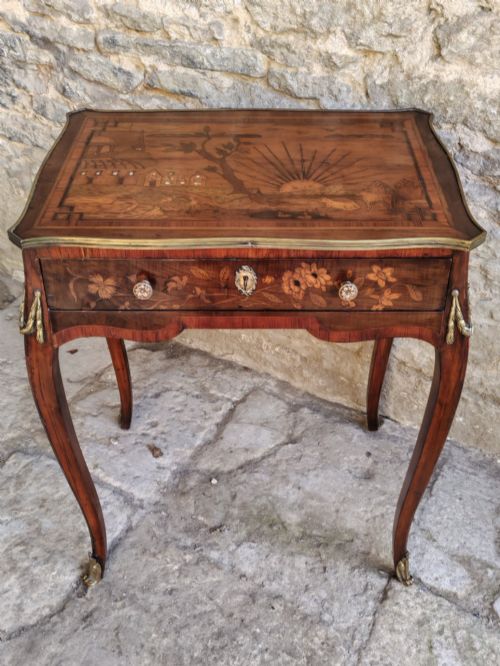
Smaller side tables and console cabinets functioned as decorative furniture in hallways and reception spaces. Their elaborate floral veneers were designed to display status to visiting guests.