



Dutch Glazed Bookcase
A dutch glazed bookcase combines generous display space with intricate marquetry, offering a traditional centrepiece for any study or drawing room.
Dutch Glazed Bookcase
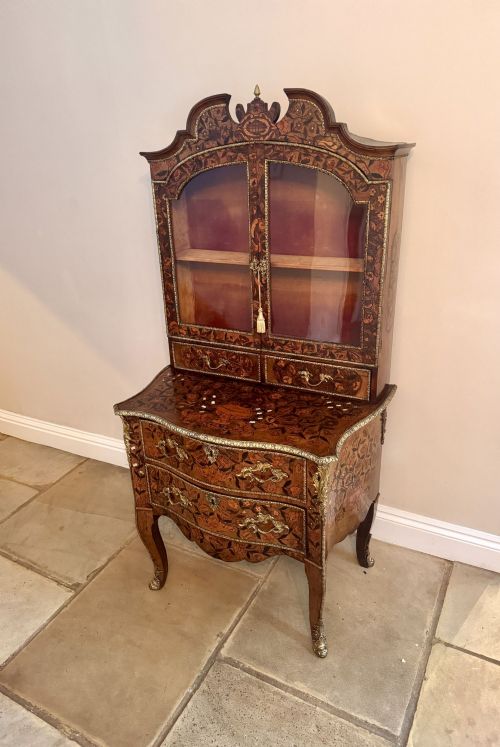
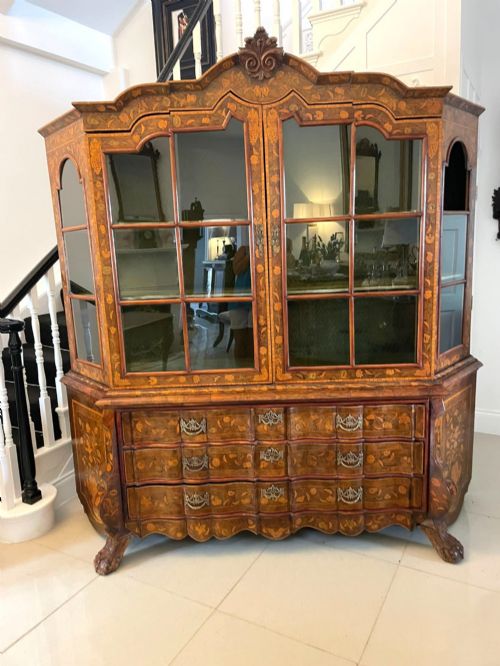
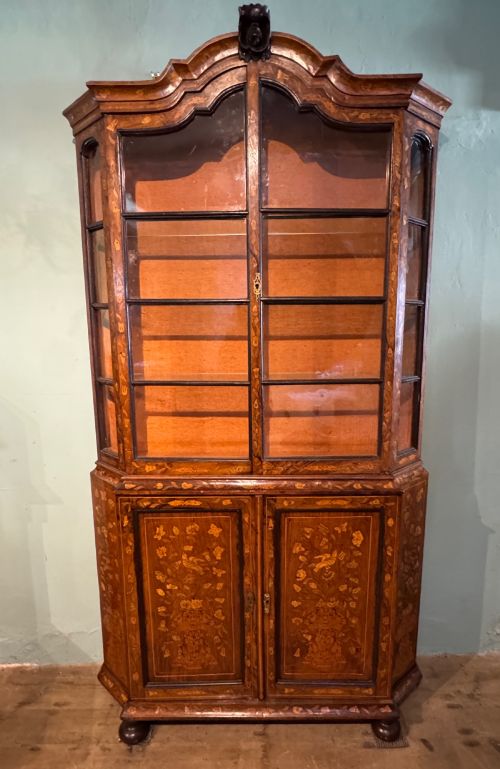
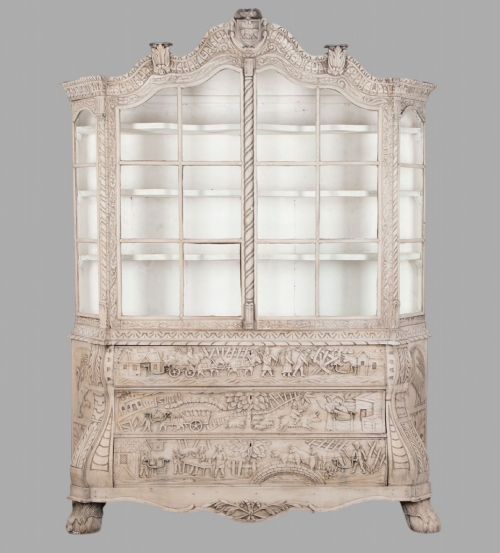
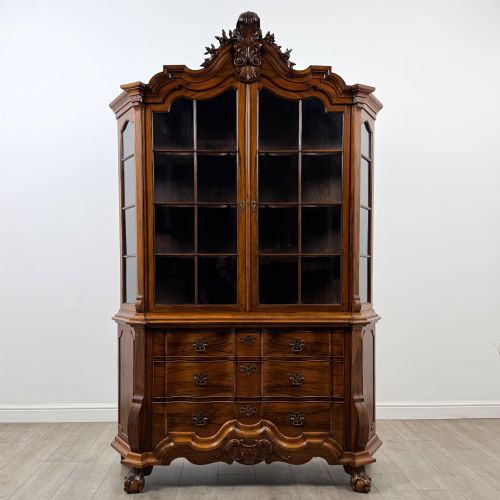
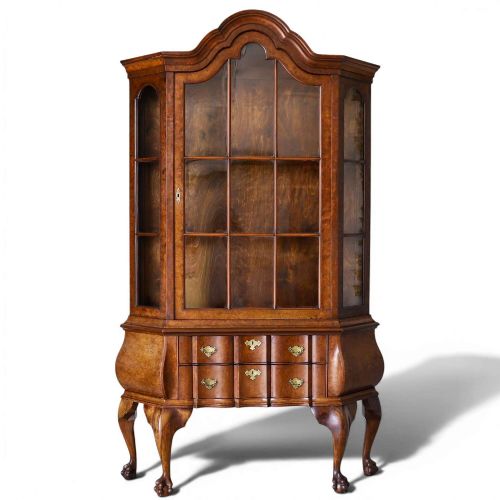
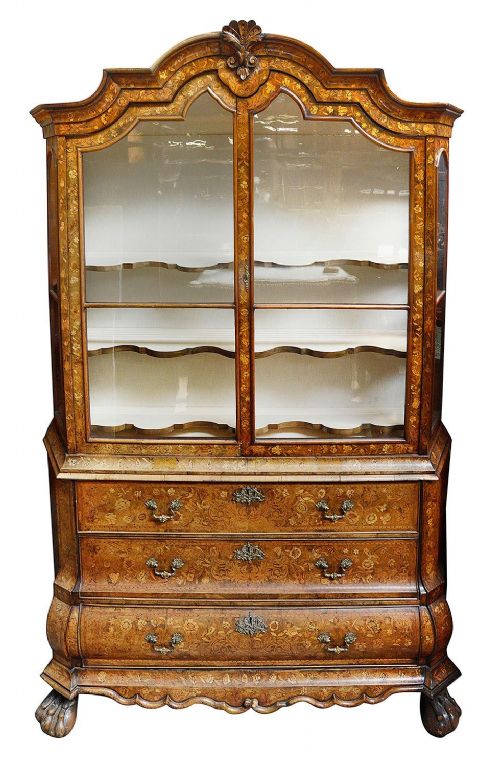
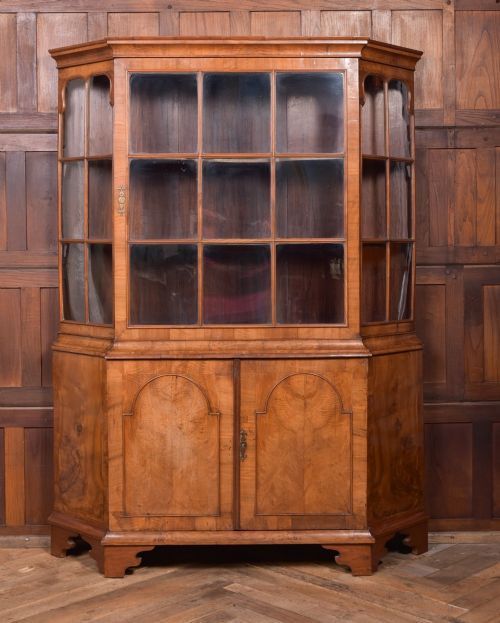
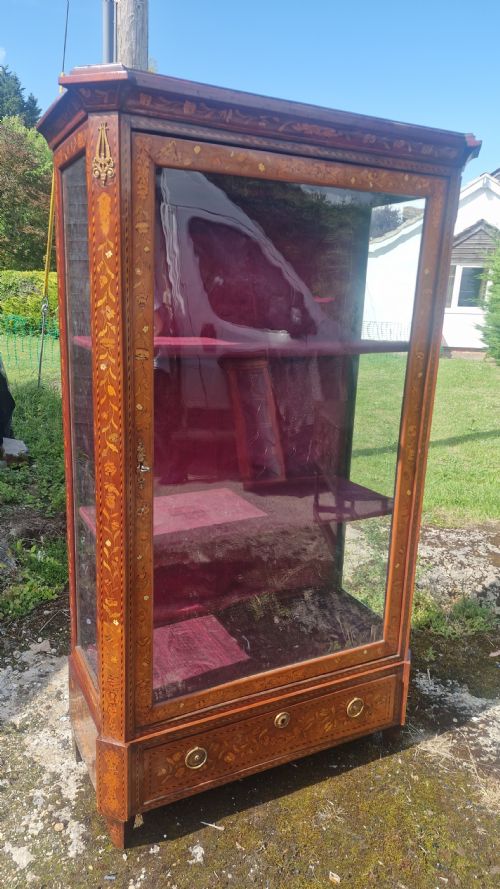
A dutch glazed bookcase serves as a refined storage solution, often taking the form of a tall display cabinet, vitrine, or bureau bookcase. These pieces combine upper glass doors for exhibiting books and ceramics with lower wooden cupboards or drawer chests.
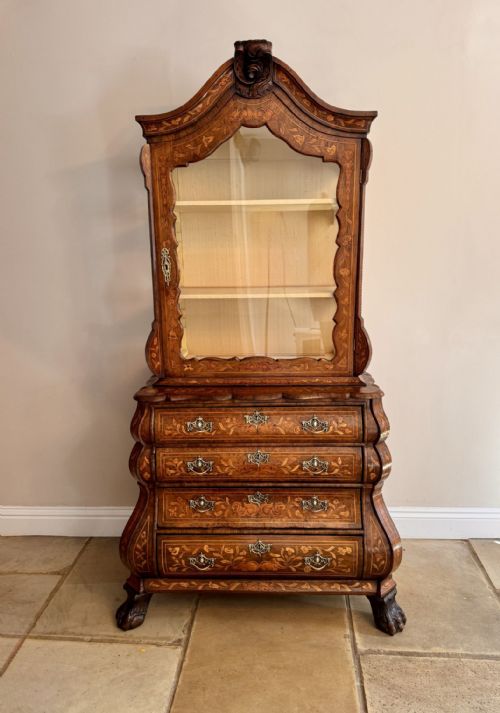
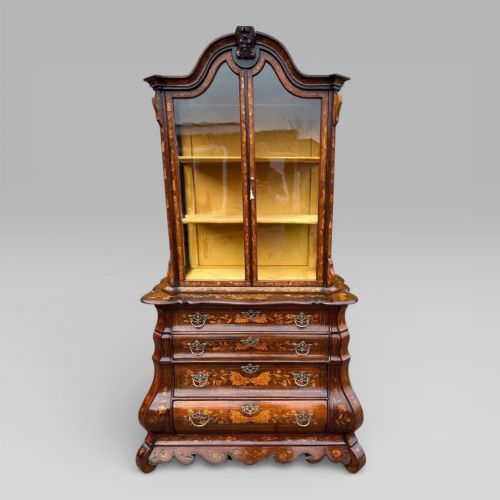
The version most commonly met on this page dates from the eighteenth and nineteenth centuries, spanning periods from Georgian eras through to the Edwardian period and nineteen-twenties. Walnut and burr walnut predominate, frequently decorated with elaborate floral marquetry.
Many examples exhibit the characteristic bombé shape, featuring swelling front and side panels that demand exceptional cabinet-making skill. Other variations include painted wood finishes, satinwood highlights, and structured oak frameworks.
Materials and Construction
Cabinet-makers constructed these pieces using solid timbers like oak and fruitwood as foundational carcases, applying rich veneers of walnut, burr walnut, and mahogany over the exterior surfaces. Marquetry panels incorporated delicately cut pieces of various woods to form complex floral and pictorial inlay.
Glazing bars divided the glass panes of the upper doors into geometric or arched patterns, securing the glass while maintaining transparency for display. Brass hardware, including hinges, escutcheons, and drop handles, provided functional and decorative accents to the cabinetry.
Dutch Glazed Bookcase Retail Price Guide 2026
Typical asking prices for dutch glazed bookcase among the pieces listed under this phrase on Sellingantiques today, from the lower quarter to the upper quarter. They describe what is for sale here now, not the wider market.
Samuel Pepys makes an unexpected appearance among nineteenth-century cabinet titles, linking fine colonial ebony joinery directly to the famous diarist.
Assessing Quality and Craftsmanship
The sophistication of the floral marquetry dictates much of the visual merit, with superior pieces displaying tightly fitted, varied veneers that cover both flat surfaces and curved bombé contours smoothly. Simpler painted or plain walnut versions rely instead on the natural figuring of the timber and the crispness of carved details.
Structural integrity depends on how well the heavy upper glazed sections sit upon the lower chests or cupboards, particularly given the movement inherent in larger eighteenth-century and nineteenth-century carcases. Finer examples maintain balanced proportions, clean joinery along canted sides, and original brass fittings that complement the overall age of the wood.
Edwards & Roberts
The Dutch Glazed Bookcase Glossary
- Bombé
- A swelling, bulging contour found on the lower sections of certain cabinets and chests. This curved profile requires advanced woodworking techniques to veneer successfully.
- Marquetry
- Decorative inlay work where thin pieces of various coloured woods are assembled to create pictorial or floral patterns. Craftsmen apply these veneers across the primary carcase surfaces.
- Vitrine
- A glass-fronted cabinet designed specifically for displaying fine porcelain, curiosities, or books. These pieces usually feature glazed doors on the front and sometimes the sides.
- Escutcheon
- A protective plate surrounding a keyhole, frequently cast from brass. It guards the surrounding wood from wear caused by repeated use of the key.
- Canted
- Bevelled or sloped corners that angle inward on a cabinet or display case. This shaping softens the rectangular silhouette of the furniture.
Dutch Glazed Bookcase: Frequently Asked Questions
What is a dutch glazed bookcase used for?
These cabinets were originally designed to protect and display prized volumes, fine porcelain, and decorative objects behind glass panels while storing additional items in lower cupboards or drawers.
Today, they serve a similar purpose in domestic interiors, offering prominent display space that keeps collections free from dust while adding period character to a room.
How do I distinguish eighteenth-century from later pieces?
Eighteenth-century examples often feature hand-cut dovetails, older glass panes with subtle distortions, and traditional wax finishes that build up a deep patina over generations. Later nineteenth-century revival pieces and nineteen-twenties adaptations may utilise machine-sawn timber elements and different veneer application methods.
Examining the internal construction, secondary woods used in drawer linings, and the style of the floral marquetry helps establish the likely period of manufacture.
What does bombé shape mean?
The term describes a swelling, outward-curving profile on the front and sides of the lower cabinet section. This dramatic contour creates a robust silhouette that contrasts with the straighter lines of the upper glazed bookcase.
Crafting a bombé shape required master carpenters to bend and veneer wood across compound curves without cracking the delicate marquetry.
How should I care for walnut veneer?
Walnut furniture benefits from stable indoor environments away from direct sunlight and sudden temperature shifts, which can cause timber to dry out or veneers to lift. Regular dusting with a soft, dry cloth preserves the finish without introducing moisture.
Applying a traditional beeswax polish occasionally helps nourish the wood and maintain the natural lustre of the antique surface.