





Dutch Burr Walnut Chest
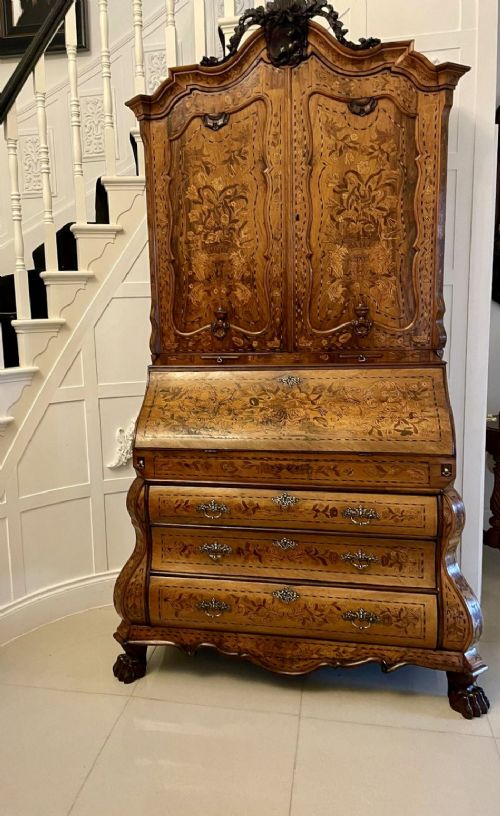
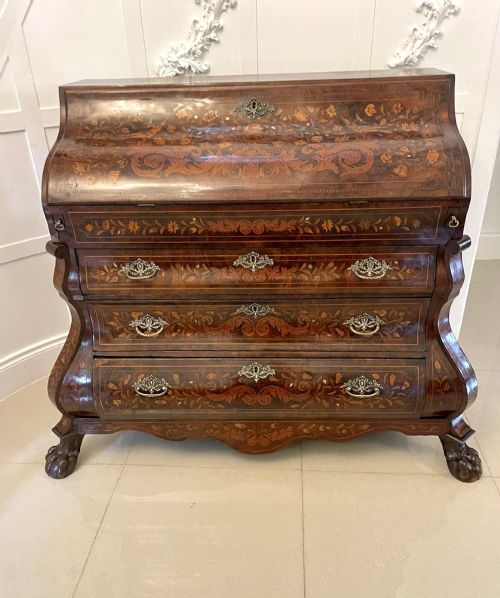
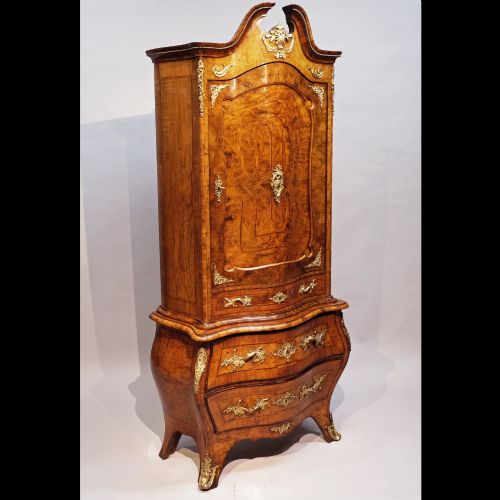
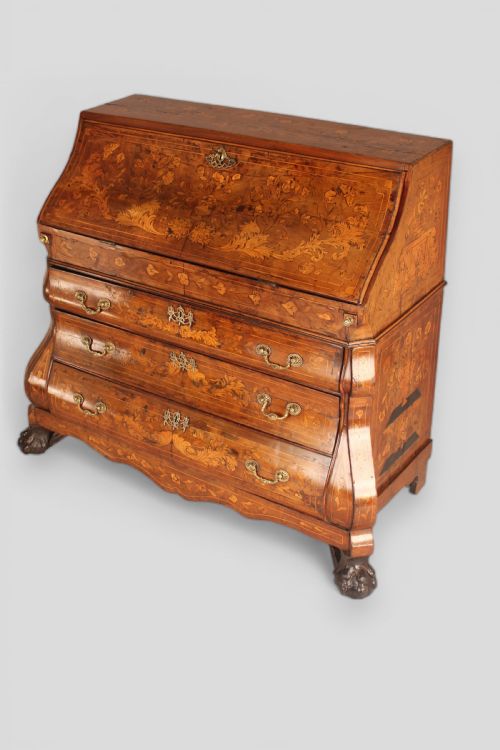
These dutch burr walnut chest pieces combine striking figured veneers with serpentine and bombe forms, offering serious storage and period presence.
Dutch Burr Walnut Chest
When you search for a dutch burr walnut chest, you are looking at substantial case furniture built with highly figured timber and distinctive silhouettes. The selection spans straightforward chests of drawers, commodes with secret drawers, and complex bureau bookcases.
You are most likely to meet 18th century and 19th century examples on this page, often featuring dramatic bombe shaping or flat fronts with floral marquetry inlay. Cabinets, linen press cupboards, and writing desks also appear alongside the core chest forms.
Originating largely from the Netherlands, these pieces reflect regional tastes for rich burr veneers and elaborate decorative techniques. They range from compact small chests to towering architectural bureau cabinets.
How they were made
Cabinetmakers constructed the carcases of these pieces primarily using oak and walnut, applying thin slices of burr walnut veneer to create intricate grain patterns across the surfaces. Secondary woods such as fruitwood frequently supported detailed marquetry inlay depicting floral and foliate motifs.
Structural and decorative hardware relied heavily on cast brass drawer pulls, escutcheons, and occasionally ormolu mounts. The timber was carefully selected and laid out to create symmetrical book-matched patterns, particularly on the prominent drawer fronts of bombe chests.
Dutch Burr Walnut Chest Retail Price Guide 2026
Typical asking prices for dutch burr walnut chest among the pieces listed under this phrase on Sellingantiques today, from the lower quarter to the upper quarter. They describe what is for sale here now, not the wider market.
Listings feature items spanning the eighteenth and nineteenth centuries, utilising burr walnut, oak, fruitwood, and brass.
What varies in quality
The visual impact of a piece depends largely on the selection and matching of the burr walnut veneer across the facade. Finer examples display dense, swirling grain patterns that remain intact and undisturbed by major losses across the undulating surfaces.
The handling of the bombe curve and the precision of the marquetry inlay dictate the refinement of the construction. Superior pieces maintain crisp carving, integrated secret compartments, and harmonious proportions between the carcass and the original brass hardware.
The Dutch Burr Walnut Chest Glossary
- Bombe
- A swelling, outward-curving profile found on the sides and fronts of case furniture. This undulating form requires exceptional woodworking skill to veneer accurately.
- Burr Walnut
- Timber taken from a tree growth or burl, yielding swirling, knotty grain patterns. It provides a highly decorative surface for high-status cabinetwork.
- Marquetry
- Inlay work using various tinted woods to form decorative pictures or patterns. Floral designs are particularly common on continental European furniture.
- Commode
- A low chest of drawers, often with wide proportions and decorative hardware. The term frequently applies to continental European drawer units of the eighteenth century.
Dutch Burr Walnut Chest: Frequently Asked Questions
What is a bombe chest?
A bombe chest is a piece of furniture featuring sides and drawer fronts that curve outward in a convex swell. This dramatic silhouette became a hallmark of eighteenth-century Dutch cabinetmaking.
The sweeping contours demand sophisticated carpentry, as the veneer must be coaxed over compound curves without splitting or lifting from the oak carcass.
How do I date a piece?
Dating relies on observing construction methods, secondary timbers, hardware styles, and the character of the veneers. Eighteenth-century examples often display hand-cut dovetails and native oak linings.
Nineteenth-century revivals and later copies tend to use more uniform machine-sawn timbers and different secondary woods, though they still mimic the earlier Georgian and Rococo styles.
Where were they made?
These pieces were produced primarily in workshops across the Netherlands, driven by local demand for elaborate veneered furniture. Dutch cabinetmakers traded extensively and had access to exotic imported timbers.
Local design preferences favoured swelling fronts, floral marquetry, and rich burr walnut finishes that showcased the wealth of the household.
How do I care for burr walnut?
Burr walnut requires stable indoor humidity and protection from direct sunlight to prevent the thin veneer from drying out or fading. Regular dusting with a dry cloth keeps the surface clean without moisture damage.
Avoid placing these items near direct heat sources, as fluctuations in temperature can cause the old glues beneath the burr veneer to fail.