


Duplex Oil Lamp Shade
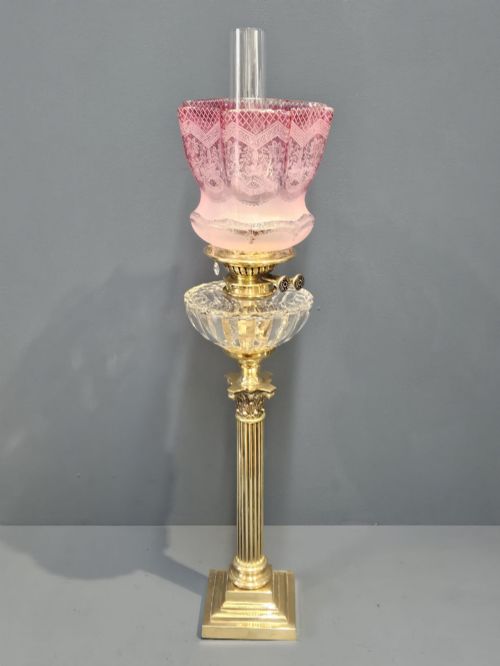
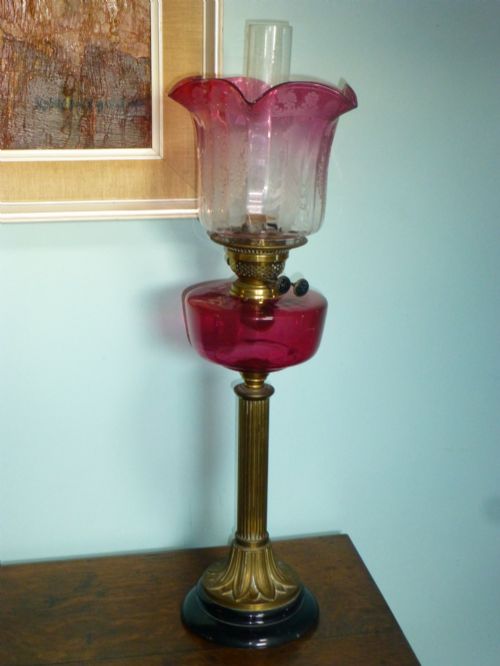
These duplex oil lamp shade pieces deliver the warm illumination and rich coloured glass that collectors seek.
Duplex Oil Lamp Shade
A duplex oil lamp shade sits atop nineteenth and early twentieth century lighting fixtures, diffusing the brighter light produced by twin-burner mechanisms. These components appear frequently in Victorian and Edwardian examples across this selection.
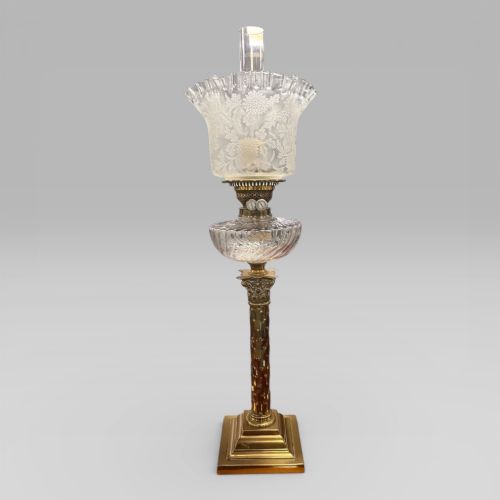
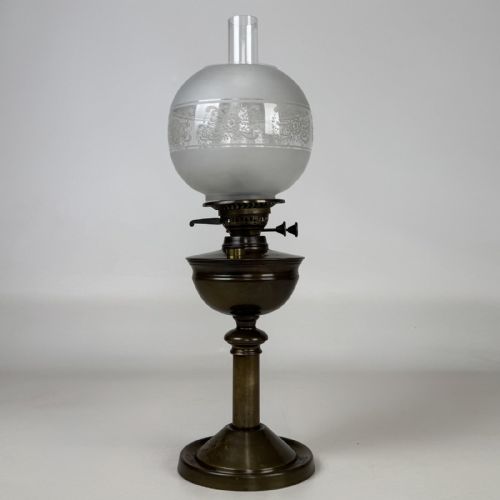
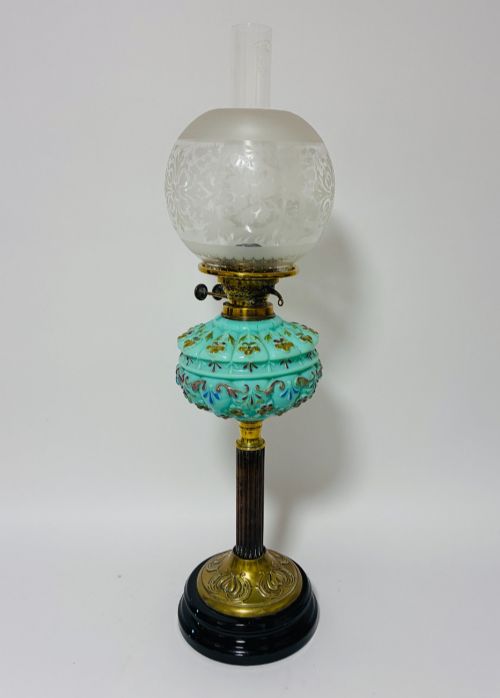
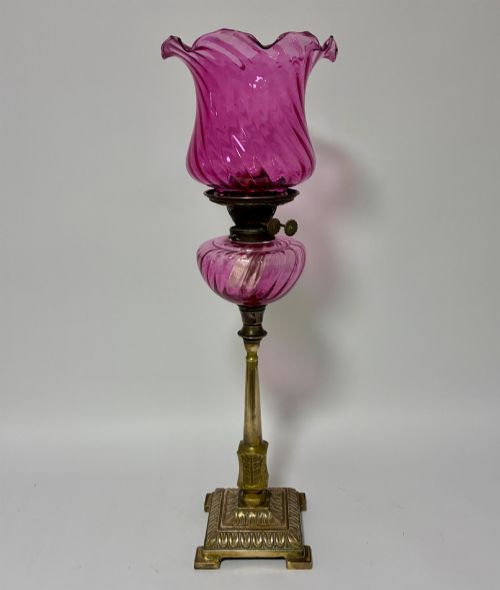
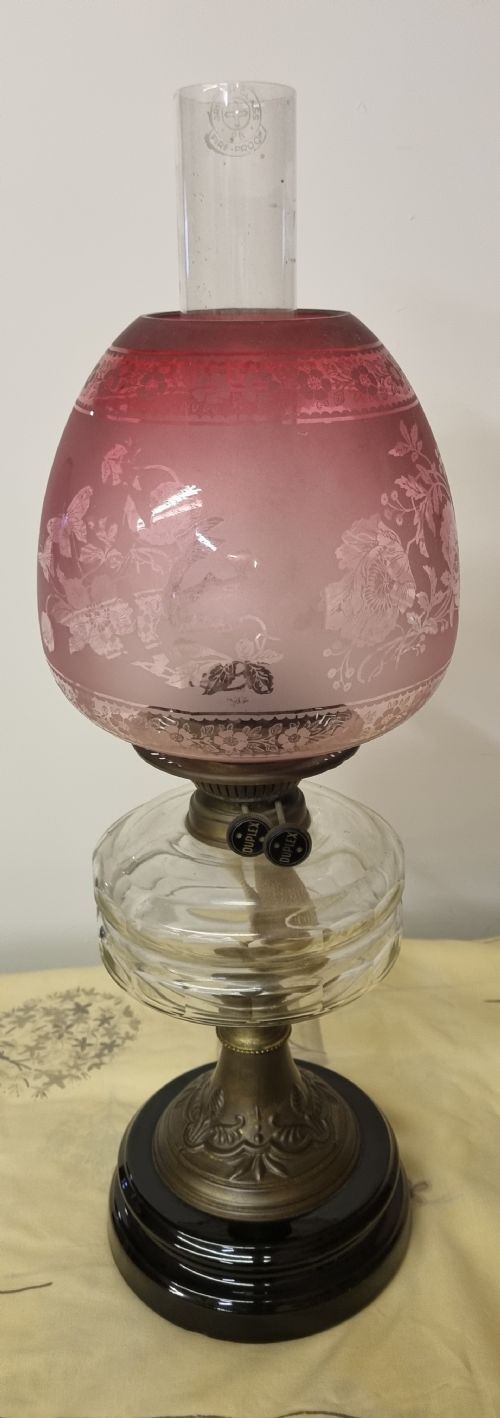
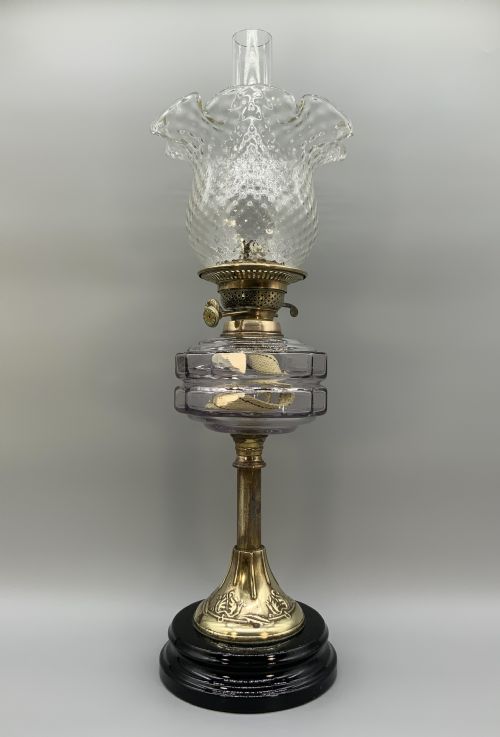
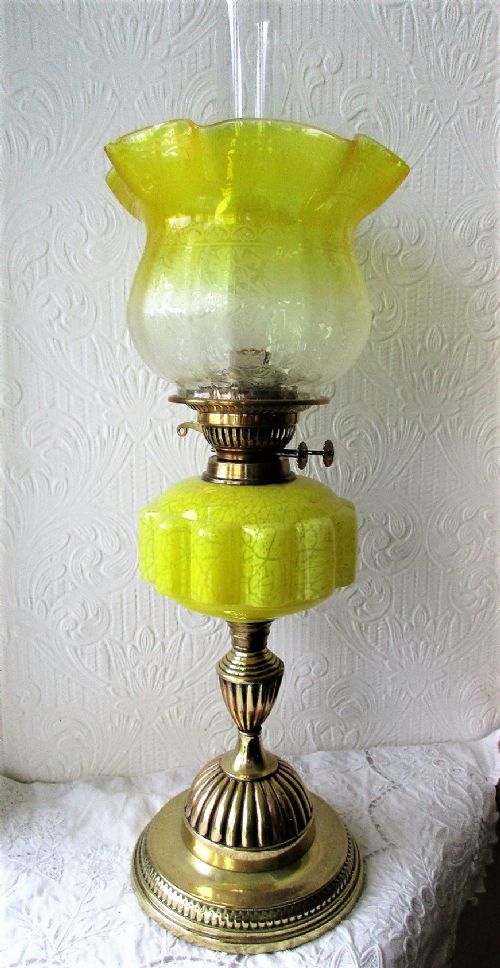
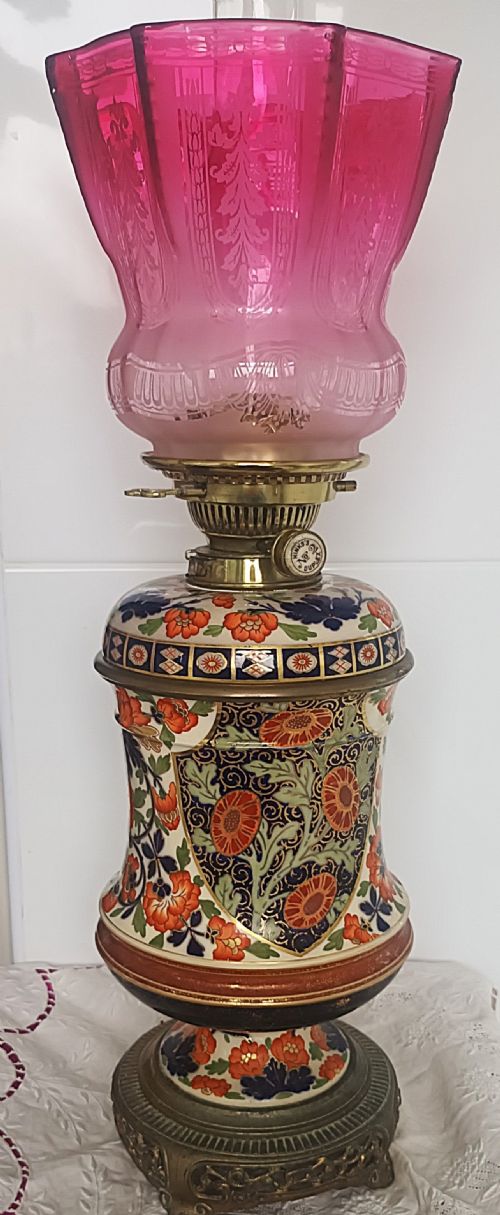
Most pieces seen here take the form of globular, tulip, or frilled glass shades paired with brass columns or ceramic fonts. Cranberry glass, opaline glass, and frosted glass feature prominently among the surviving specimens.
Makers designed these shades to withstand high heat while softening the illumination in Victorian drawing rooms and parlours. Collectors encounter them as replacements or integrated elements on tall table lamps.
How they were made
Glassmakers blew and moulded these shades using specialised mineral colouring agents to achieve rich pink, green, and cranberry hues. Etched patterns and hand-blown profiles reflect the decorative techniques popular during the nineteenth century.
Workers combined these delicate glass elements with heavy structural metals like brass and ormolu, often mounting them above ceramic or glass fonts. The resulting assemblies relied on stable weight distribution to support the broad spread of a duplex burner.
Object forms recorded here include table lamps, column lamps, and frilled tulip shades paired with twin-burner mechanisms.
What varies in quality
Superior examples display crisp etching, deep saturated glass colour without cloudiness, and substantial weight in the accompanying brass or ceramic mounts. Finer shades maintain uniform thickness across their curved profiles.
The sophistication of the decorative treatment separates ordinary utility items from exceptional decorative pieces. Well-executed frills, clean hand-blown bubbles, and harmonious proportions between the shade and the lamp base define the higher end of the range.
Hinks·Taylor Tunnicliff·Messenger·Young·Doulton Lambeth
The Duplex Oil Lamp Shade Glossary
- Duplex burner
- A twin-wick mechanism designed to produce a brighter, wider flame than standard single-burner oil lamps. It requires a specific shade collar size to seat properly.
- Cranberry glass
- Transparent red-pink glass coloured with gold chloride during production. It remains a hallmark of Victorian decorative lighting.
- Opaline glass
- Opaque or semi-translucent pale glass that diffuses light softly. This material appears frequently on Edwardian lamp shades.
- Tulip shade
- A shade shaped like an opening flower petal, flaring outward at the rim. This form directs light effectively while concealing the burner gallery.
Duplex Oil Lamp Shade: Frequently Asked Questions
What is a duplex oil lamp shade?
A duplex oil lamp shade is a glass cover designed to fit over a twin-burner oil lamp, softening the increased illumination produced by the dual wicks. These shades appear in various tinted and etched glass forms dating from the nineteenth and early twentieth centuries.
Collectors find them mounted on brass, ceramic, or glass lamp bases from the Victorian and Edwardian periods.
How do I identify a Victorian shade?
Victorian shades typically feature rich cranberry, green, or opaline glass, often decorated with hand-etched botanical or geometric patterns. Frilled rims and tulip profiles are common characteristics of this era.
The manufacturing methods reflect nineteenth-century glassblowing techniques, producing heavy, tactile pieces designed for domestic paraffin lighting.
What materials were used?
These shades are constructed entirely of glass, utilising techniques such as hand-blowing, moulding, and acid-etching. Common glass types include cranberry, frosted, cut, and opaline varieties.
They were paired with lamps made from brass, ormolu, ceramic, and crystal columns.
How do I clean an antique glass shade?
Cleaning requires warm water and mild soap, applied gently by hand to preserve any delicate etched surfaces or original coloration. Avoid harsh chemical cleaners or abrasive scouring pads that might damage the antique glass.
Allow the shade to dry completely before placing it back onto the brass gallery of an oil lamp.