


Floral Etched Glass Shade
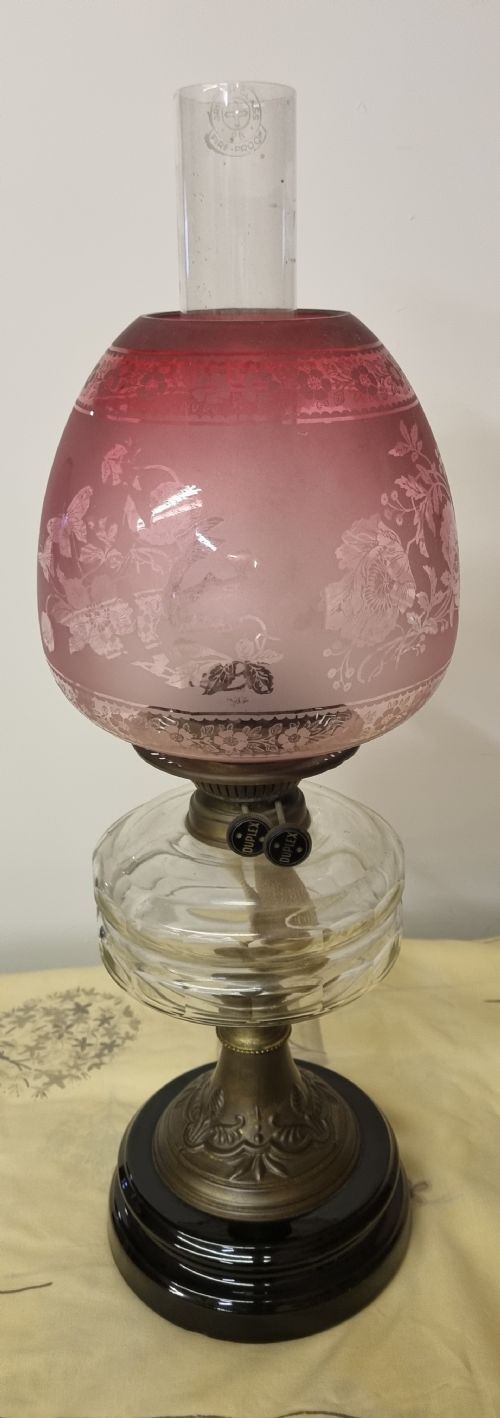
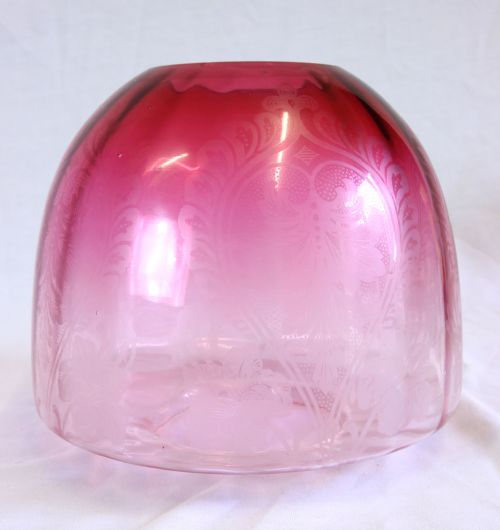
These floral etched glass shade pieces combine botanical decoration with tinted or clear glass, bringing period character to antique lighting.
Floral Etched Glass Shade
When you search for a floral etched glass shade, you encounter Victorian and Edwardian lighting components designed to diffuse light through patterned surfaces. These items mostly appear as globes and shades fitted to oil lamps and pendant lights.
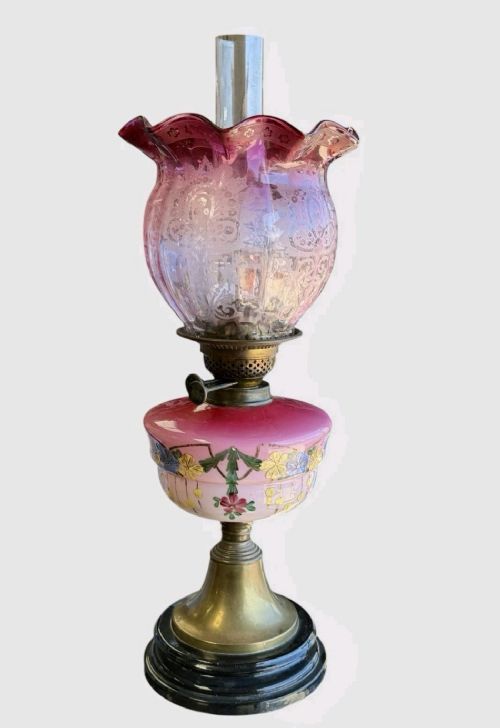
The selections on this page draw from the Victorian era up to the 1930s, showing variations in colour such as cranberry and green glass. They range from simple frilled oil lamp shades to large hall lanterns with brass and glass elements.
Makers and designers of the period utilised techniques like hand-painting and cameo work to render botanical motifs upon the glass surface. The forms reflect the shifting styles of the nineteenth and early twentieth centuries, spanning Art Nouveau and Italian Rococo Revival influences.
How they were made
Glassmakers employed blowing and moulding techniques to shape the molten material into globes, tulips, and frilled shades, often incorporating rich pigments such as cranberry or green into the batch. Artisans then applied acid-etching or wheel-carving to create floral and botanical designs against the frosted or transparent background.
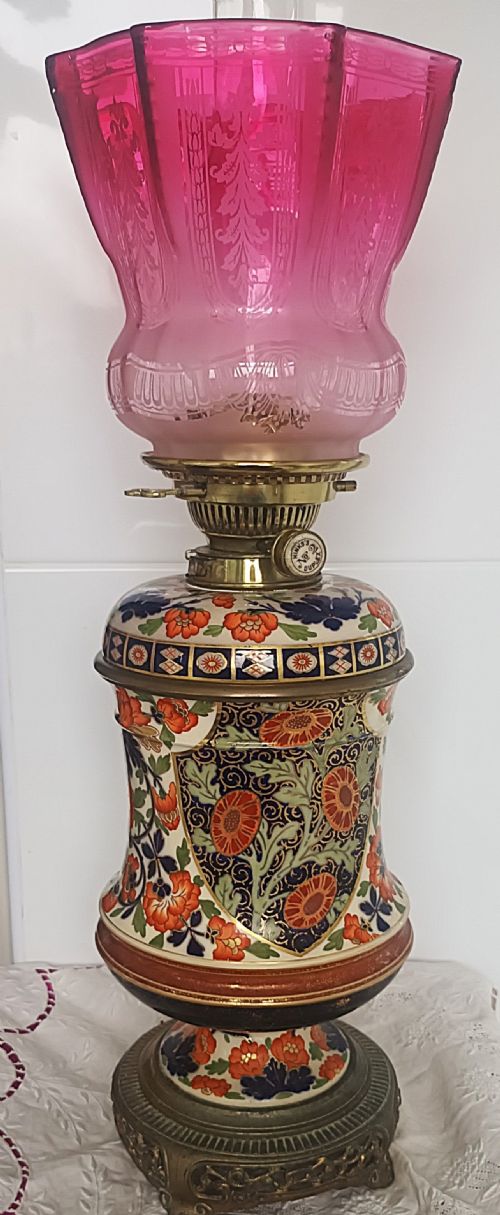
Many pieces combined the glass shade with mounts and structures made from brass, porcelain, ceramic, or slate, particularly when forming complete oil lamps and hall lanterns. Hand-painted enamel details frequently complemented the etched patterns on the glass surface.
Coloured glass options span pale green, deep green, and cranberry hues across Victorian and 1930s forms.
What varies in quality
Depth and clarity in the botanical etching separate finer examples from standard production, as skilled carvers achieved subtle gradations of relief and shading within the glass. The richness of the coloured glass ground, particularly in cranberry and cameo pieces, contributes significantly to the visual weight of the item.
The integration between the glass shade and its mounting hardware also indicates the standard of manufacture, where well-finished brass fittings and balanced proportions enhance the complete lamp or lantern.
Galle·Hinks·Taylor Tunnicliff
The Floral Etched Glass Shade Glossary
- Cranberry Glass
- A transparent pinkish-red glass coloured by the addition of gold chloride to the molten batch. It is frequently seen in Victorian oil lamp shades.
- Acid-Etched Glass
- A technique where hydrofluoric acid is applied to the glass surface to eat away unprotected areas, creating a frosted pattern with floral designs. This method allowed for precise botanical details.
- Cameo Glass
- Vessels or shades featuring multiple layers of different coloured glass, where outer layers are carved away to leave a raised design. Gallé utilised this method for floral motifs.
- Frilled Shade
- A lampshade edge that has been manipulated while hot to create a ruffled or scalloped border. This shape appears on several Victorian examples.
- Font
- The reservoir that holds the fuel in an oil lamp, often made of glass or porcelain to match the shade. It sits beneath or within the lighting mount.
Floral Etched Glass Shade: Frequently Asked Questions
What periods do these glass shades come from?
The listings span from the Victorian period through the Edwardian era and into the 1930s. Most examples date from the nineteenth century up to the early twentieth century.
Design styles shift from traditional Victorian and Rococo Revival forms toward Art Nouveau and Art Deco aesthetics in the later pieces.
How were these shades used originally?
These glass shades were primarily manufactured to fit on oil lamps, table lamps, and pendant ceiling lights. They served to soften and diffuse the light while adding decorative colour to a room.
Some larger examples were designed specifically for hall lanterns and vestibule lighting in period homes.
What materials are combined with the glass?
Glass is the primary component, often found in coloured varieties like cranberry, green, or opaque porcelain. Metal elements such as brass and silver-gilded frames support the glass components.
Additional materials include ceramic bases and slate mounting elements seen in heavier table lamps.
How do I identify botanical motifs on the glass?
Botanical designs typically appear as etched, cameo-carved, or hand-painted flowers and leaves upon the surface. Motifs range from simple trailing foliage to distinct blooms like begonias.
The technique used to apply the flora helps distinguish standard pressed items from cameo or acid-etched works.