


Ruby Glass Light Shade
A ruby glass light shade brings a warm, rich glow to a room, catching the light in tones from deep crimson to bright cherry.
Ruby Glass Light Shade
When searching for a ruby glass light shade, collectors find items originating from the nineteenth century, including the Victorian and Edwardian eras. These pieces appear as oil lamp shades, ceiling pendant shades, and chandelier components.
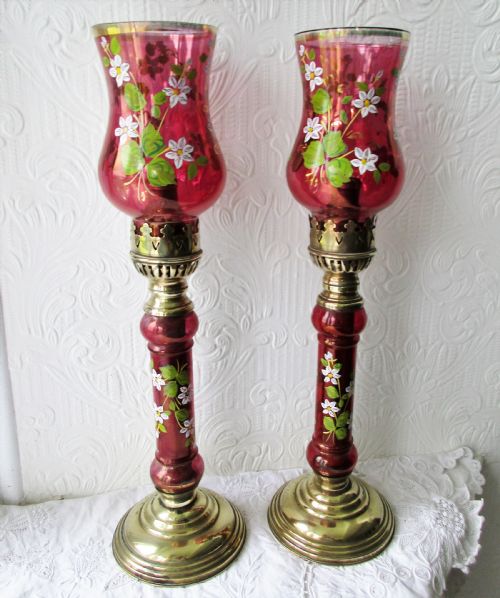
The most common forms on this page are lamp shades paired with brass fittings, oil lamps, and chandelier bowls. They stem from English, Bohemian, and French traditions, often featuring etched or gilded details.
How they were made
Makers produced ruby glass and cranberry glass using gold or copper oxide in the molten batch to achieve the deep red colour. Artisans then shaped the glass by hand, sometimes blowing it into moulds or forming dimpled textures.
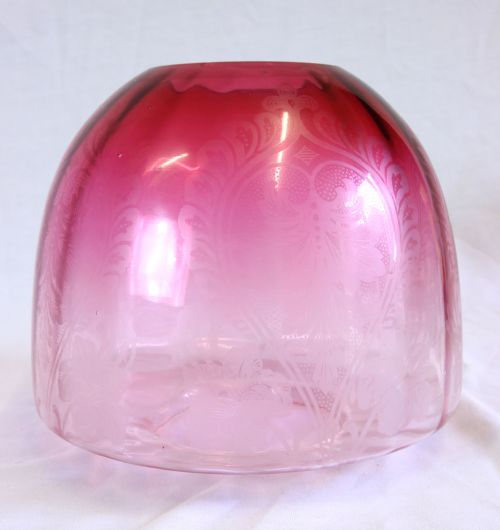
Decoration involved surface work such as gold leaf application, enamel painting, and acid etching to create frosted or patterned designs. Mounts and galleries typically utilised brass or gilded metal work to secure the shades.
Listings feature items from the Victorian and Edwardian periods, incorporating materials such as brass, cranberry glass, ruby glass, and gold leaf.
What varies in quality
Quality rests on the depth and evenness of the glass colour, alongside the crispness of any etching or gilding. Superior examples display rich hues without muddiness and careful hand-finishing on the surface decoration.
The integration between the glass shade and its metal hardware indicates higher craftsmanship. Matching pairs and complete sets with original brass fittings command greater attention than mismatched components.
The Ruby Glass Light Shade Glossary
- Ruby glass
- A deep red glass coloured during production using gold or copper. It absorbs shorter light wavelengths to yield a rich, crimson appearance.
- Cranberry glass
- A transparent pinkish-red glass created with gold chloride. It differs from denser ruby glass by showing a lighter, brighter tone.
- Peg lamp
- A small oil lamp featuring a tapered base or peg designed to fit directly into a candlestick or lamp receiver. These often include matching glass shades.
- Etched glass
- Glass decorated by applying acid to eat away exposed surfaces. This technique produces frosted designs against clear or polished ruby backgrounds.
- Chandelier component
- An individual part of a larger hanging light fixture, such as a bowl or shade. These elements diffuse the light across the room.
Ruby Glass Light Shade: Frequently Asked Questions
What periods do these shades come from?
These pieces date mainly from the nineteenth century, spanning the Victorian and Edwardian periods. Makers produced them across the eighteen eighties and nineties, as well as the early twentieth century.
Design styles range from plain Victorian forms to French Rococo Revival and Bohemian elaborations. Each era brought distinct brass mounts and decorative motifs to the glass.
How were ruby glass shades used?
They served primarily as protective and decorative covers for oil lamps, candle lamps, and early electric or gas pendant lights. The deep glass softened the harsh glare of the flame while casting a warm tint.
Many hung from ceilings as pendant shades or sat atop table lamps and oil peg lamps. Their rich colour transformed the atmosphere of Victorian parlours and dining rooms.
How do I tell ruby glass from cranberry glass?
Ruby glass tends to be denser and deeper in its crimson tone, often requiring direct light to show its full saturation. Cranberry glass is typically lighter, brighter, and more transparent with a pinkish-red cast.
Both materials owe their colour to metallic additives in the molten batch, but the specific chemical amounts and cooling methods created these distinct visual weights.
How do I clean an antique glass shade?
Clean these shades gently using lukewarm water and mild soap, avoiding harsh scrubbing on any gilded or enameled surfaces. Metal components should be kept dry to protect the brass.
Antique glass benefits from careful handling away from hard sinks. Patinas on the original brass work are best left intact rather than polished to a bright shine.
Are these shades compatible with modern fittings?
Many antique shades fit standard gallery rings, but fitter rim diameters vary across nineteenth-century lighting. Checking the specific measurements of the collar is essential.
Adaptors can sometimes bridge the gap between old glass and modern wiring. Consulting the listed dimensions helps ensure a secure fit for contemporary pendant hardware.