
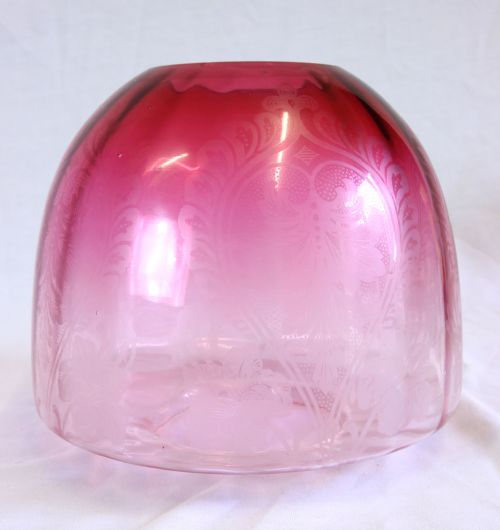


Acid Etched Glass Shade
These acid etched glass shade examples bring nineteenth century gas or oil lighting back to life.
What They Are
An acid etched glass shade forms the top globe of period lighting, softening the flame while directing the beam. The selection spans the Victorian era down to eighteen ninety, covering lamp shade forms in various silhouettes.
The most common form on this page is the oil lamp shade, designed to sit atop a burner with a flared or frilled rim. Collectors encounter distinct colourways, notably cranberry glass and green glass tulip profiles, which define the look of late nineteenth century interiors.
How They Were Made
Glassmakers shaped these pieces by hand using traditional glassblowing techniques before applying chemical treatment. Acid etching created frosted patterns and matte designs by exposing unprotected areas to hydrofluoric acid.
Makers utilised coloured glass batches, incorporating minerals to achieve rich cranberry or vibrant green hues throughout the body. Frilled rims were shaped while the glass remained hot, adding undulating edges to the finished globe.
Gold makes cranberry glass pink, proving that Victorian alchemists still managed to turn base metal into precious colour.
What Varies in Quality
Quality rests in the depth and crispness of the acid etched decoration, where finer work displays sharp frosted contrast against clear or coloured grounds. The richness of the cranberry or green glass batch dictates the visual weight of the piece.
Form dictates the upper tier of the range, particularly tulip shapes and frilled rims that demand greater skill at the glasshouse furnace. Simpler spherical globes sit lower in the hierarchy of decorative appeal.
The Acid Etched Glass Shade Glossary
- Cranberry Glass
- A rich pinkish-red glass created by adding gold chloride to the molten batch. It gained immense popularity during the Victorian period for tableware and lighting.
- Frosted Glass
- Glass treated with acid or sandblasting to create a cloudy, translucent surface. This texture diffuses harsh light effectively in oil and gas lamps.
- Frilled Rim
- An outer edge shaped into ruffles or waves while the glass is still pliable. It provides a decorative finish typical of late nineteenth century lighting.
- Tulip Oil Lamp Shade
- A lamp globe shaped to resemble an opening tulip blossom, tapering at the base and flaring at the top. This profile directed light efficiently in Victorian sitting rooms.
Frequently Asked Questions
What is an acid etched glass shade?
An acid etched glass shade is a decorative Victorian lamp globe featuring patterns created by chemical treatment. These pieces softened the harsh glare of oil and gas burners.
They sit atop period lamps, secured by the burner gallery. The technique allows for intricate frosted designs against coloured or clear glass.
How do I clean an old glass shade?
Clean these delicate items gently using warm water and mild soap. Avoid abrasive scrubbers that might damage the frosted or etched surface.
Pat dry with a soft cloth rather than air drying to prevent water spots. Take extra care around frilled edges where the glass is thinner.
Will these fit modern lamps?
These antique shades were designed for nineteenth century oil and gas burners with specific fitter dimensions. You must check the base diameter against your lamp gallery before purchase.
Many period shades require a matching antique gallery size. Modern conversion rings can sometimes bridge small sizing gaps.
How do I date a glass shade?
Dating relies on material colour, manufacturing technique, and stylistic markers such as frilled rims or tulip profiles. The inventory here spans the Victorian era and eighteen ninety.
Examine the fitter rim for rough pontil marks or hand finishing that indicates nineteenth century production. Cranberry and green glass pairings offer strong chronological clues for this period.