
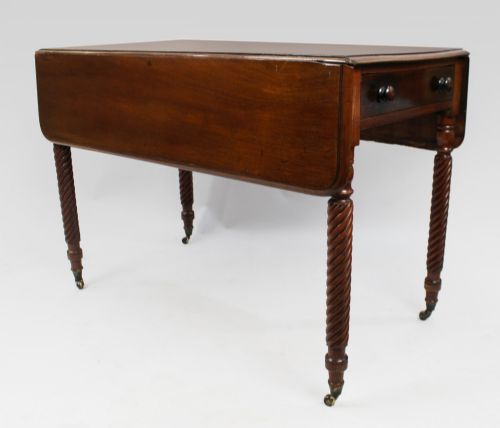
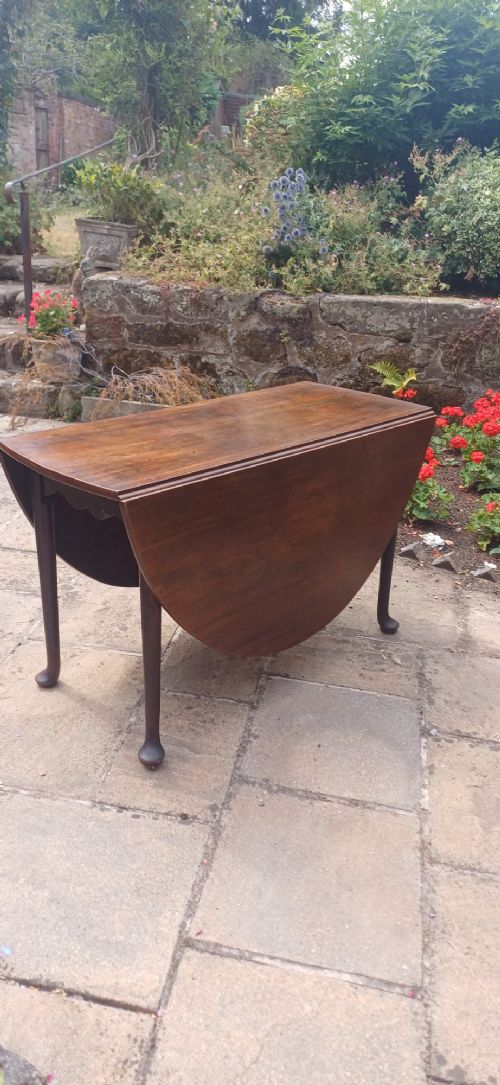
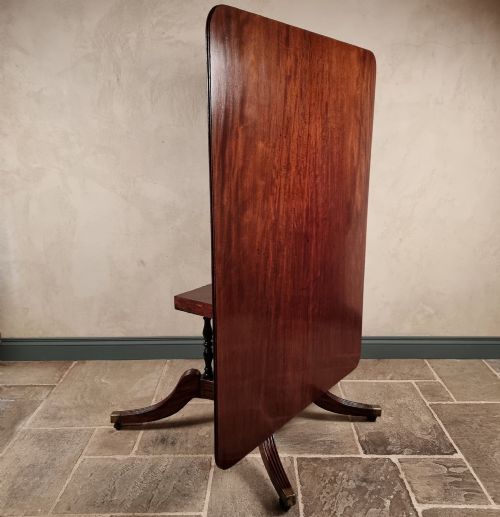
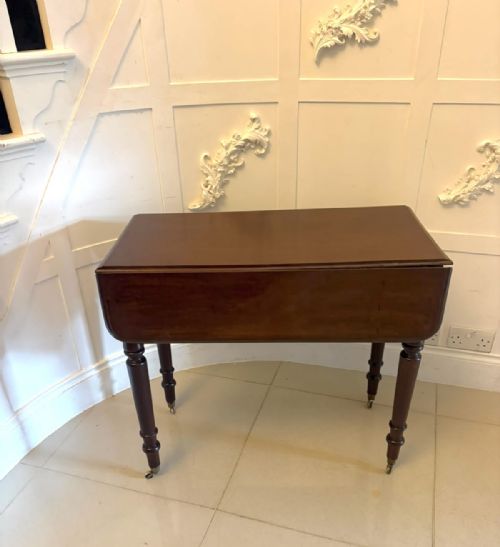
Drop Leaf Breakfast Table
A drop leaf breakfast table is a versatile surface that expands to accommodate guests and folds away to save space.
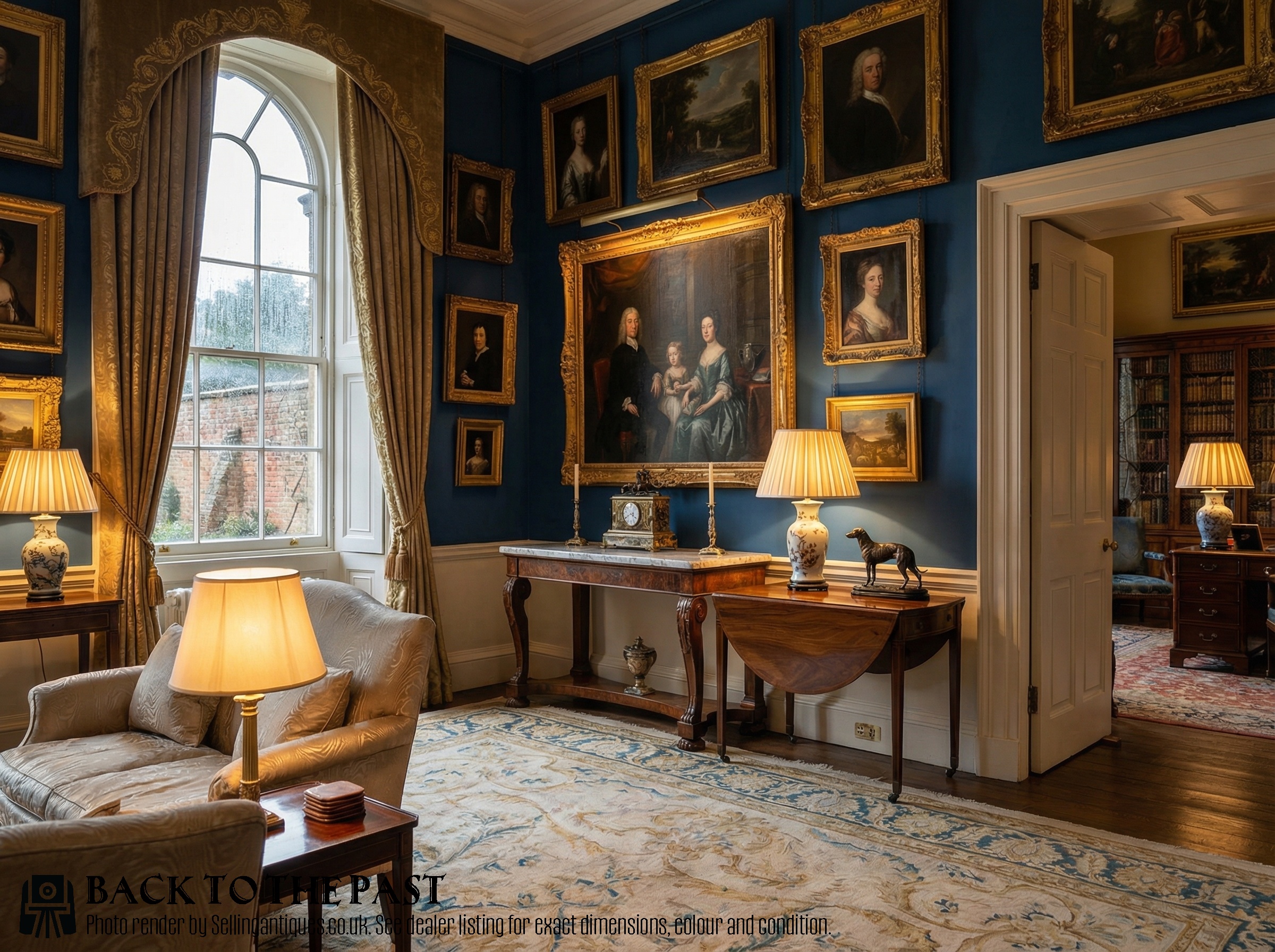
Drop Leaf Breakfast Table
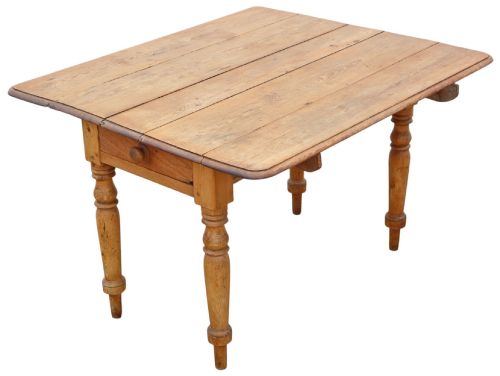
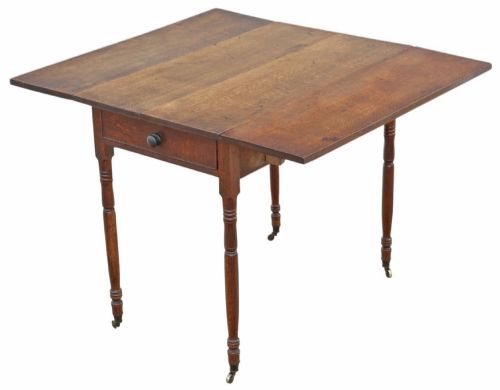
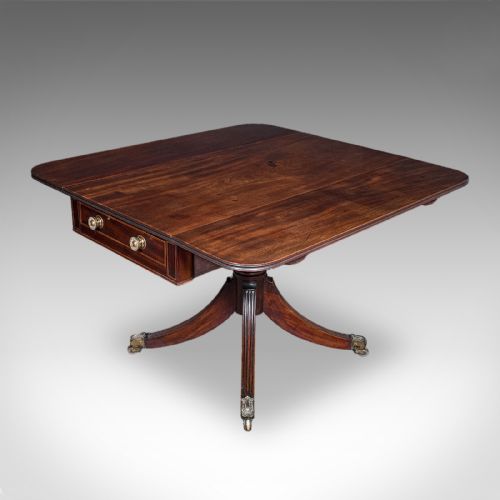
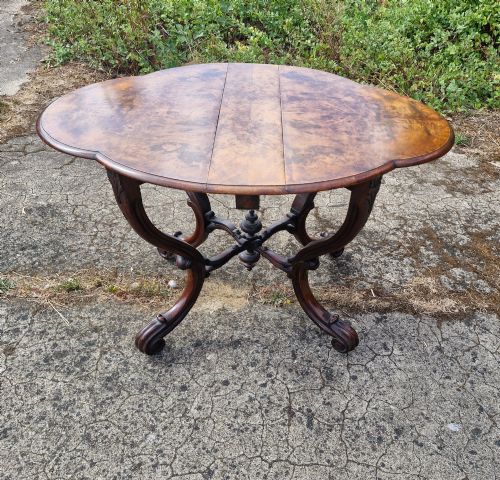
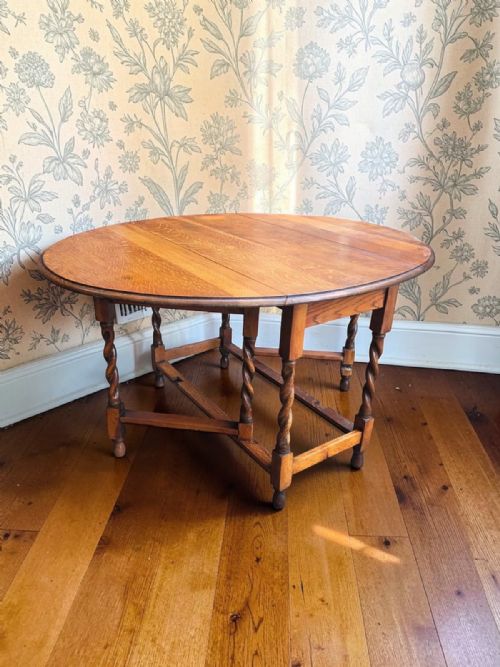
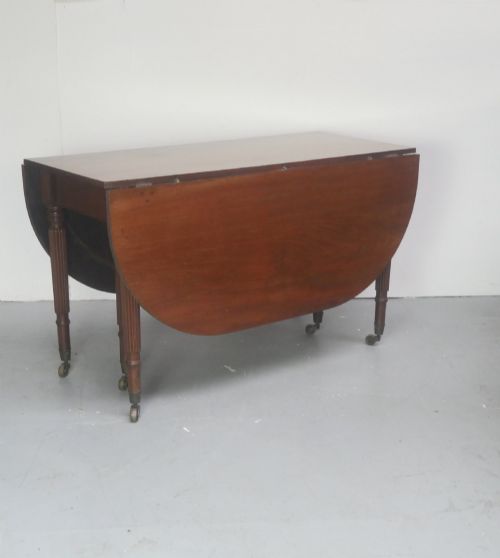
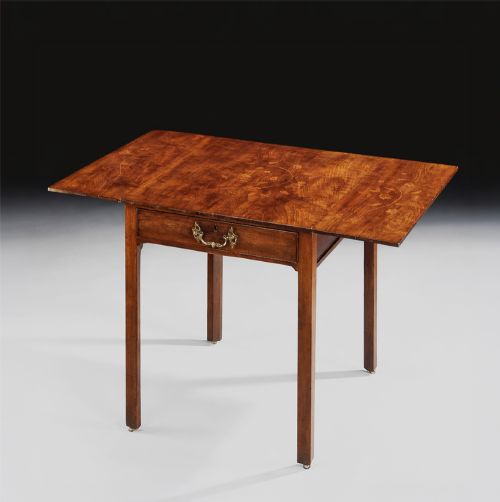
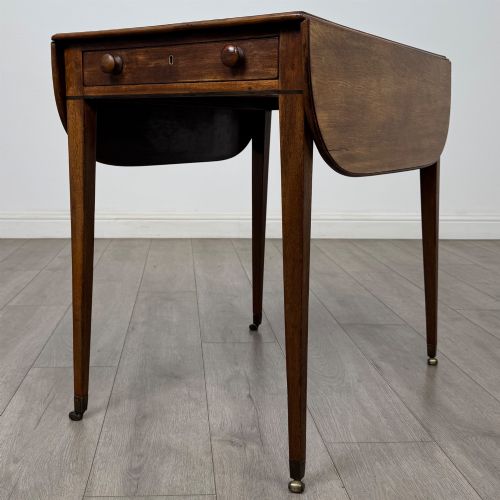
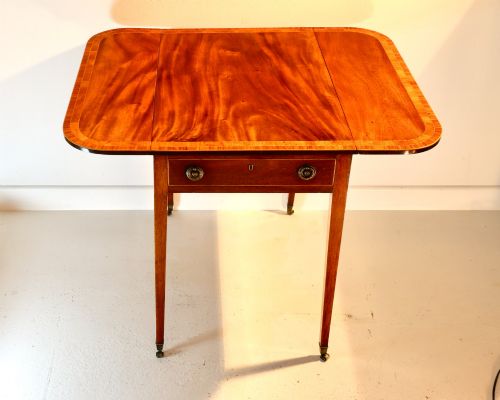
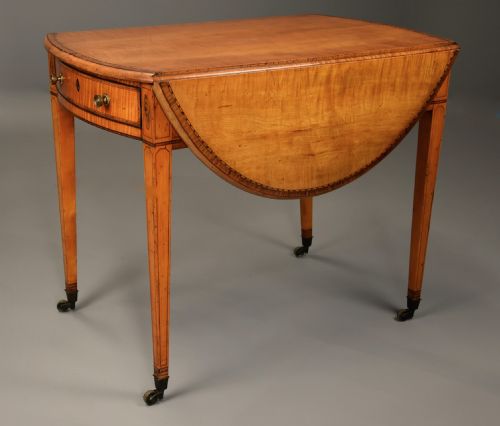
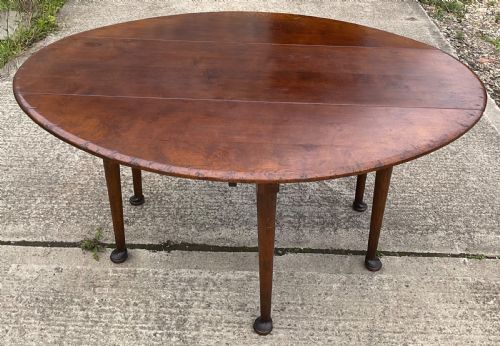
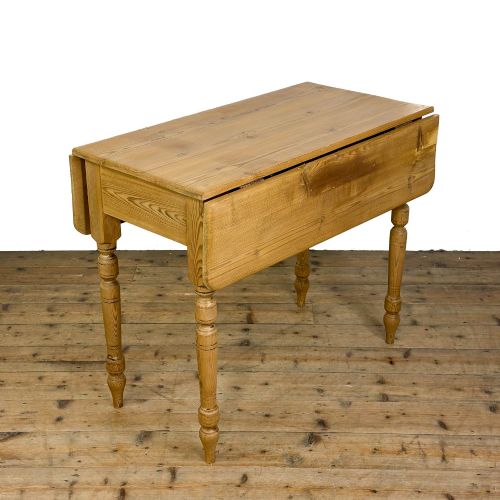
A drop leaf breakfast table provides a flexible dining surface using hinged flaps that drop down at the sides when not in use. These pieces appear frequently in mahogany, oak, walnut, and pine across Georgian, Regency, and Victorian periods.
The selection here includes compact Pembroke tables with drawers, large gateleg designs, and pedestal breakfast tables suited for daily dining. Most examples date from the eighteenth and nineteenth centuries, reflecting the period focus of the current listings.
How They Were Made
Cabinet makers utilised dense hardwoods like mahogany and oak, often incorporating satinwood or boxwood inlay for decorative contrast on tabletops. Brass fittings supported drawers and pivoting mechanisms while iron provided internal structural strength where needed.
Construction techniques relied on sturdy gateleg frames, pillar and pedestal supports, or scissor actions to bear the weight of the folding leaves. Surfaces received polished finishes that highlighted the natural grain of timbers such as fiddleback sycamore and plum pudding mahogany.
Drop Leaf Breakfast Table Retail Price Guide 2026
Typical asking prices for drop leaf breakfast table among the pieces listed under this phrase on Sellingantiques today, from the lower quarter to the upper quarter. They describe what is for sale here now, not the wider market.
Listings feature mahogany predominantly, alongside oak, walnut, and pine across Georgian, Regency, and Victorian periods.
What Varies in Quality
Construction integrity distinguishes pieces, visible in the precision of the hinge placement and the stability of the drop leaves when fully extended. Superior tables maintain rigid support structures without sagging at the joints over decades of use.
Material selection and decorative detailing dictate the refinement of a piece, from plain pine kitchen tables to finely inlaid satinwood and figured mahogany breakfast furniture. The choice of timber grain and the crispness of inlaid banding separate standard examples from finer workshops.
Morison of Ayr·H Y Walker of Lancaster
The Drop Leaf Breakfast Table Glossary
- Pembroke table
- A small rectangular table with two hinged drop leaves on opposite sides, typically featuring a single drawer.
- Gateleg table
- A dining table with hinged leaves supported by one or more swinging legs that resemble a gate.
- Sutherland table
- A narrow table with exceptionally slender drop leaves supported by a pivoting gate leg framework.
- Pad foot
- A rounded foot resting flat on the floor at the base of a cabriole leg, common on earlier tables.
- Plum pudding mahogany
- A highly figured mahogany timber exhibiting mottled grain patterns resembling a Christmas pudding.
Drop Leaf Breakfast Table: Frequently Asked Questions
How do drop leaf breakfast tables work?
These tables operate through hinged flaps on the sides that lift to expand the surface area. Wooden swing legs or folding brackets pull out from beneath to support the extended leaves.
When extra space is no longer required, the supports fold inward and the leaves drop vertically down against the base. This mechanism allows the table to sit compactly against a wall.
Where were breakfast tables placed originally?
Breakfast tables occupied parlours, morning rooms, and smaller dining spaces in period homes. Their compact folded footprint made them easy to move around depending on the daily routine.
In larger houses, servants brought them out specifically for morning meals or light gatherings before storing them away. By the Victorian era, they served as flexible everyday dining furniture in diverse domestic settings.
How do I identify a Georgian table?
Georgian tables feature characteristic timber choices like Cuban mahogany, often displaying deep natural patinas and substantial weight. Details frequently include pad feet, square tapered legs, or subtle inlay work in boxwood.
Construction during this period prioritised understated elegance and solid joinery without excessive ornamentation. Proportions generally remain balanced and functional for intimate dining.
Can I use a Pembroke table daily?
Pembroke tables function well for daily use if the drop leaf supports receive careful handling. The hinged joints and swing brackets are built for regular opening and closing during meals.
Placing the table away from direct heat sources helps protect the antique timber and finish. Regular maintenance keeps the folding mechanism operating smoothly over time.