
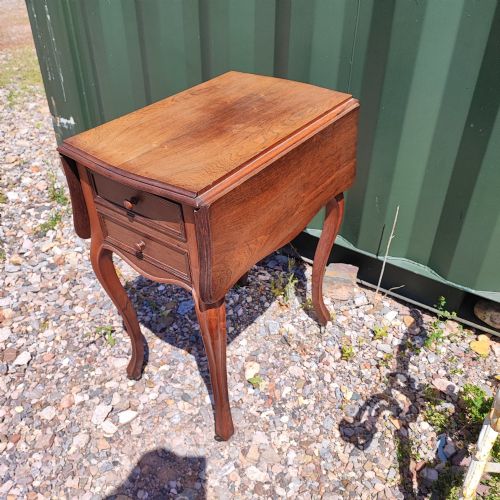
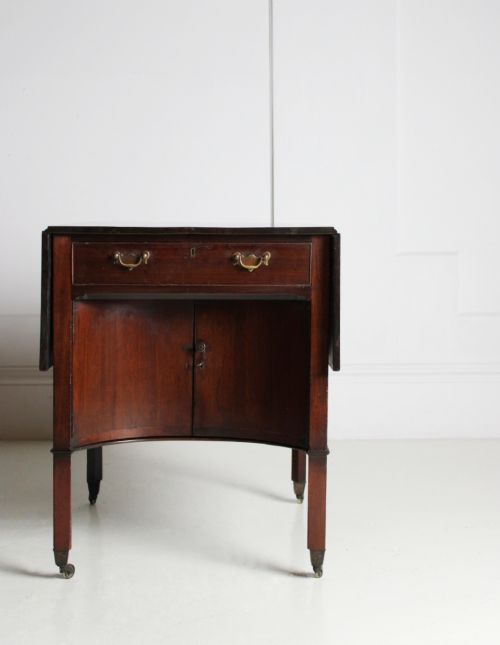
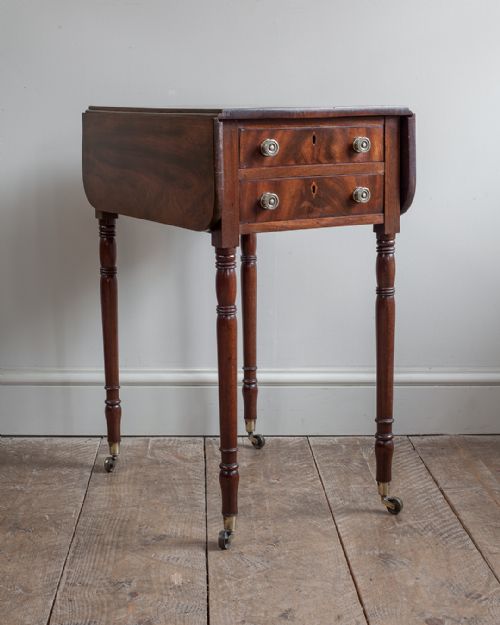
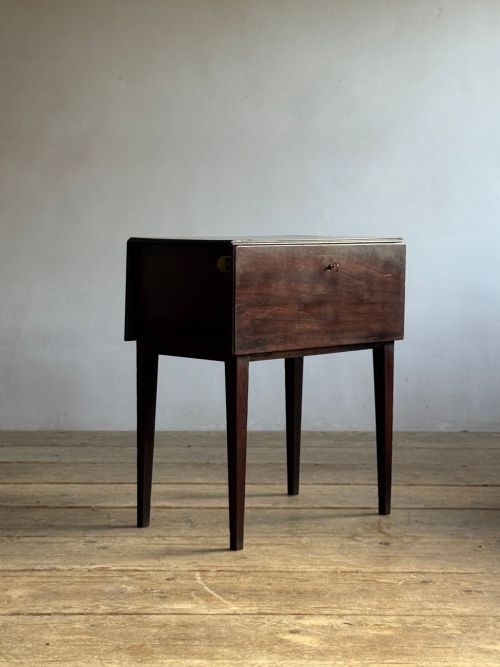
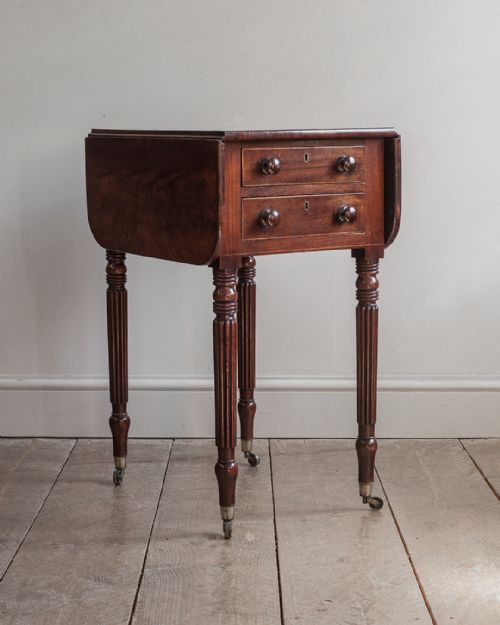


Drop Leaf Bedside Table
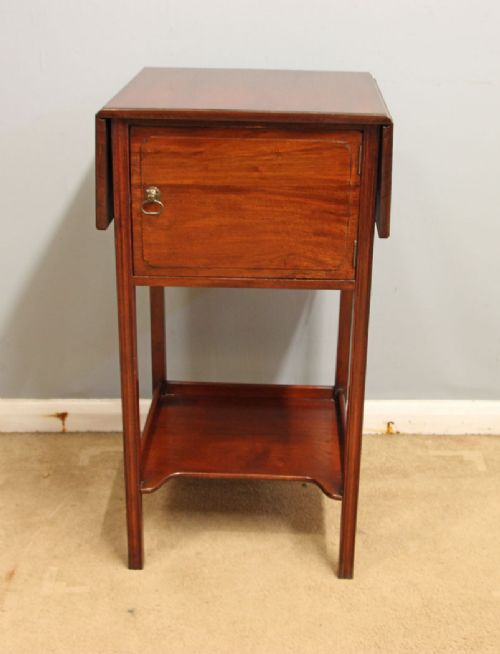
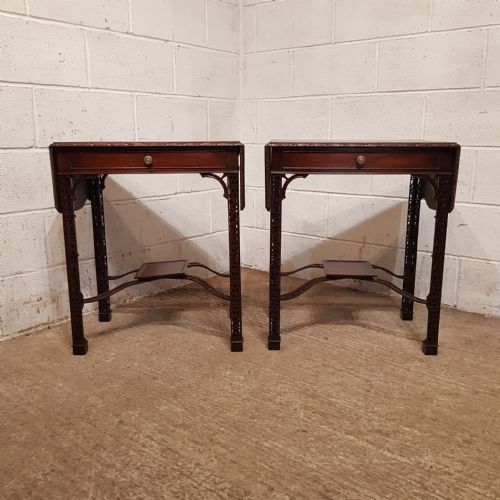
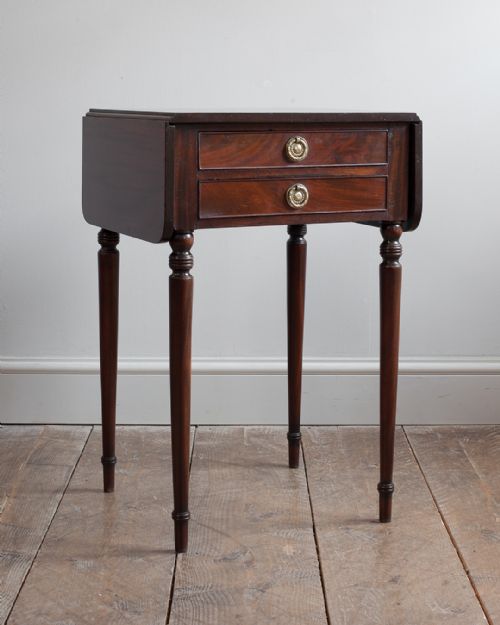
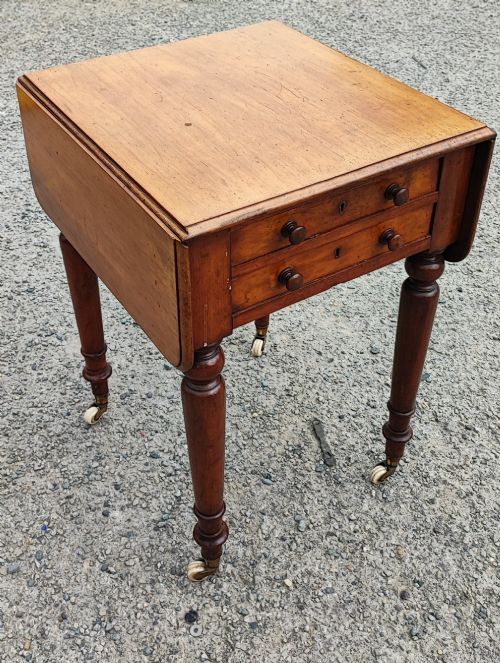
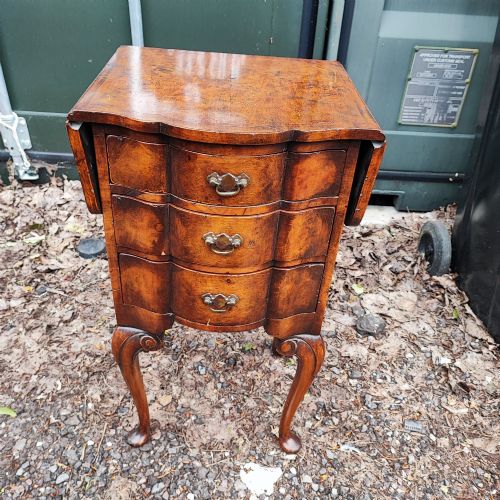
These drop leaf bedside tables bring neat folding flaps and compact proportions to the bedroom, offering practical surface space that tucks away cleanly when not in use.
Drop Leaf Bedside Table
A drop leaf bedside table provides a surface for a lamp and nighttime essentials while remaining adaptable to tighter spaces through its folding leaves. These tables appear across periods from the Georgian era through the Edwardian years and into the 1930s.
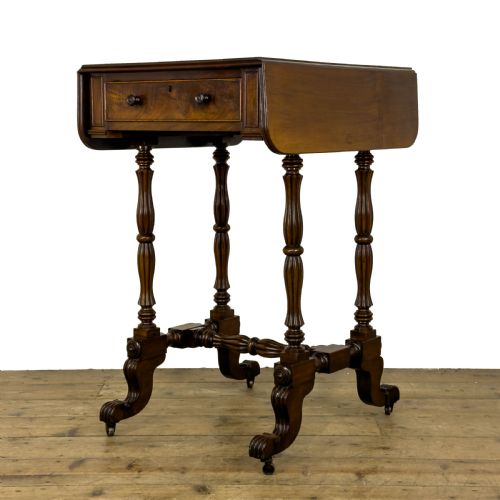
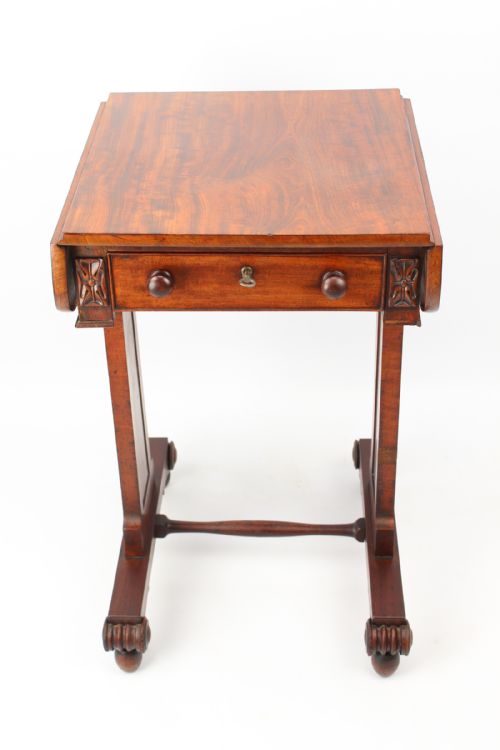
The version most frequently met on this page is constructed from mahogany, often taking the form of a compact pembroke or a small side table with drop flaps. Makers adapted these forms to function beside a bed by incorporating drawers or lower tiers.
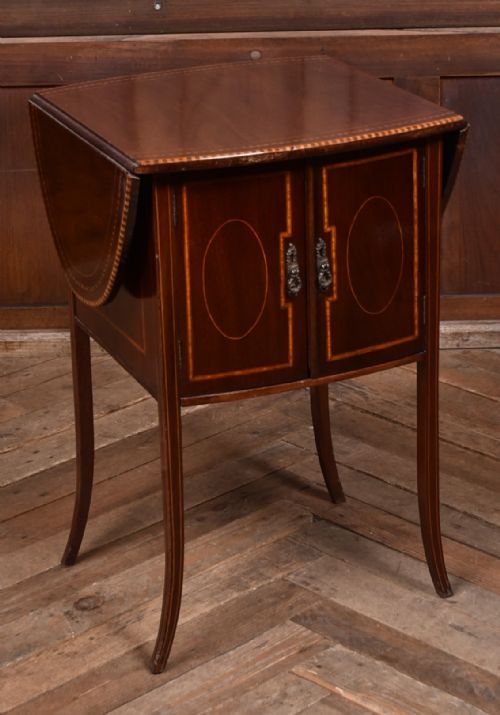
Beyond standard side tables, the listings include work tables, occasional tables, and bedside cabinets that share the characteristic folding leaves. These pieces bridge the gap between dedicated bedroom storage and versatile occasional furniture.
Materials and construction
Timber selection dictates the character of these pieces, with solid mahogany and walnut forming the structural backbone of most examples. Cabinetmakers also utilised decorative veneers such as rosewood, burr wood, and satinwood on prominent surfaces to create visual depth.
Hinged drop leaves require precise joinery to ensure the flaps drop smoothly and remain level when supported by swing legs or brackets. Brass fittings frequently appear on drawers and drop leaf mechanisms, providing durable functional points that contrast with the dark timber.
Several miniature pembroke tables appear in the record, built small enough to serve as salesman samples or children's toys.
Distinctions in craftsmanship
The fineness of timber selection separates standard utility pieces from more ambitious examples, particularly where figured mahogany or burl walnut veneers meet exact grain matching. Cabinetmakers who invested time in selecting timber for secondary parts like drawer linings demonstrate a higher tier of overall manufacture.
Structural integrity around the drop leaf hinges and support mechanism reveals the underlying joinery standards. A superior table maintains a flat, stable surface when extended, with joints that show minimal movement across seasonal changes in humidity.
Waring and Gillow·Williamson·Gillows
The Drop Leaf Bedside Table Glossary
- Drop leaf
- A table or cabinet featuring hinged flaps on one or both sides that fold down to save space or lift up to extend the surface area. These leaves are typically supported by pivoting wooden legs or swing brackets.
- Pembroke table
- A small occasional table characterised by two folding leaves on opposite sides and usually one or more drawers. The form originated in the eighteenth century and remained popular through the Victorian and Edwardian periods.
- Work table
- A compact table designed for needlework or small domestic tasks, frequently equipped with a fabric bag or drawer beneath the top. They share the drop leaf and occasional table proportions often found beside a bed.
- Bedside cabinet
- A closed piece of furniture with a door or drawers designed to conceal chamber pots or personal items next to the bed. Some examples incorporate drop flaps to expand their top surface during the morning routine.
- Satinwood
- A pale, hard timber with a natural golden lustre used extensively for inlay and decorative veneers during the Georgian and Edwardian eras. It provides a striking contrast when banded against darker woods like mahogany.
Drop Leaf Bedside Table: Frequently Asked Questions
How do I identify a Georgian piece?
Georgian pieces generally display restrained proportions, honest timber construction in solid mahogany, and classical leg forms such as tapering square or spade feet. Drawer interiors often feature hand-cut dovetails and oak or deal secondary woods.
Later revivals from the Edwardian period or the 1930s mimic these proportions but frequently rely on machine-cut joinery, lighter internal framing, or applied decorative veneers that lack the deep patina of eighteenth-century timber.
Are these tables sturdy enough for daily use?
These tables were built to endure heavy domestic service using dense hardwoods like mahogany and walnut, making them well-suited for everyday modern living. The structural integrity depends largely on the condition of the drop leaf hinges and the joints where the legs meet the apron.
When opening the leaves, ensure the support brackets or swing legs lock securely into position to prevent uneven weight distribution. Routine care involves keeping wooden surfaces polished and avoiding placement near direct heat sources that might dry out the old timber.
What is the difference between a work table and a bedside table?
A work table originally served domestic crafting needs, often featuring an internal compartment or suspended fabric bag beneath a drop leaf top. A bedside table is specifically proportioned for bedroom use, typically prioritising enclosed cabinet space or drawers over sewing compartments.
Despite their original distinct purposes, the compact dimensions and folding leaves of work tables made them natural candidates for bedroom placement in the nineteenth and early twentieth centuries.