
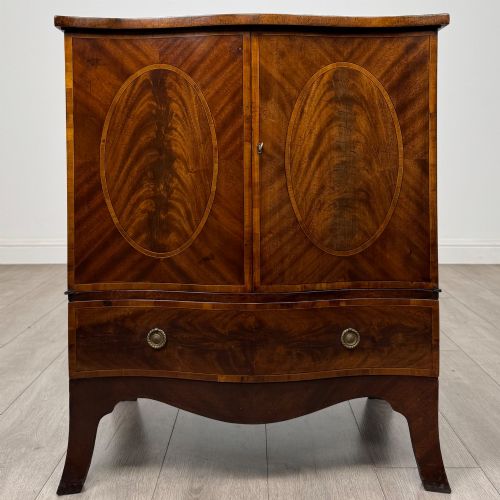

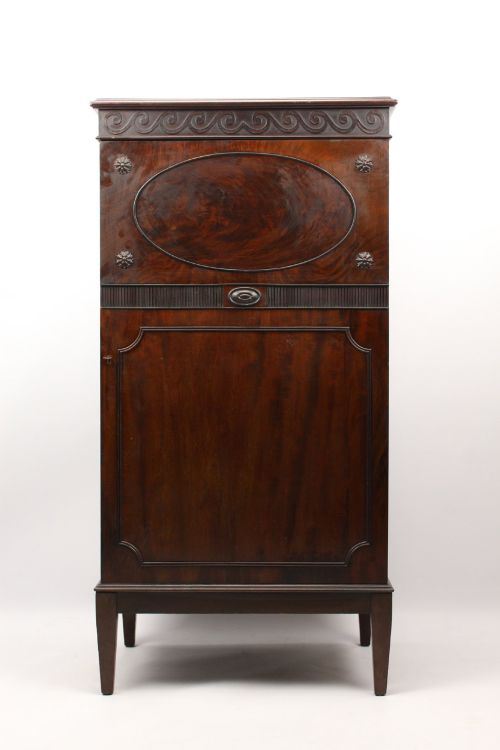
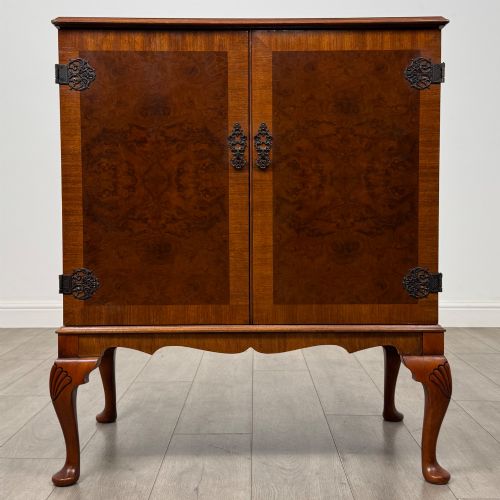
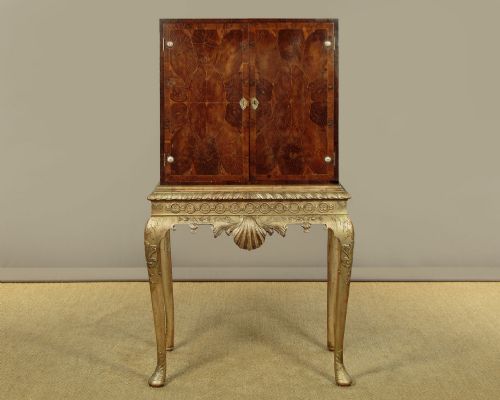
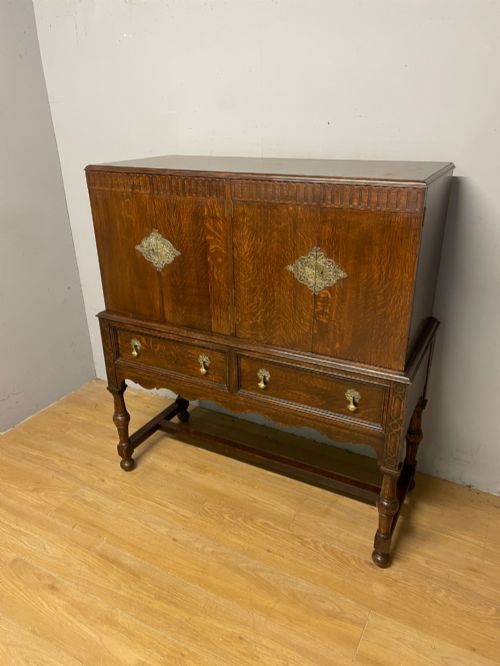
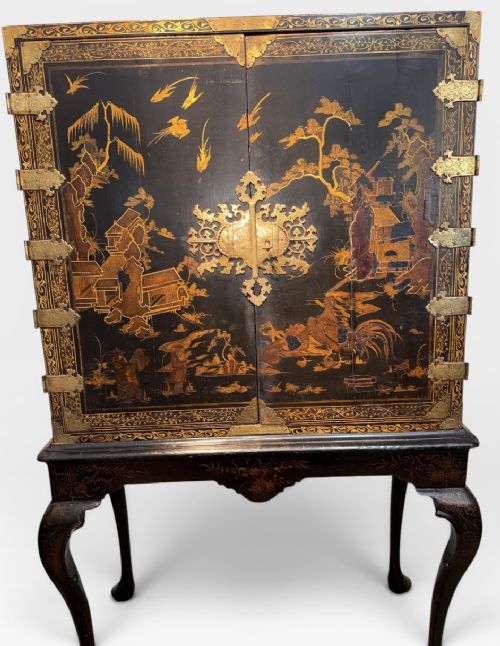
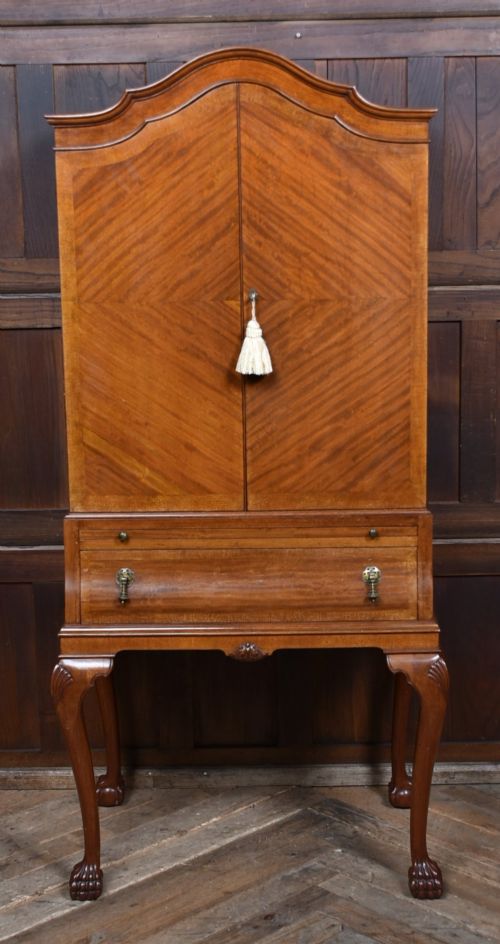
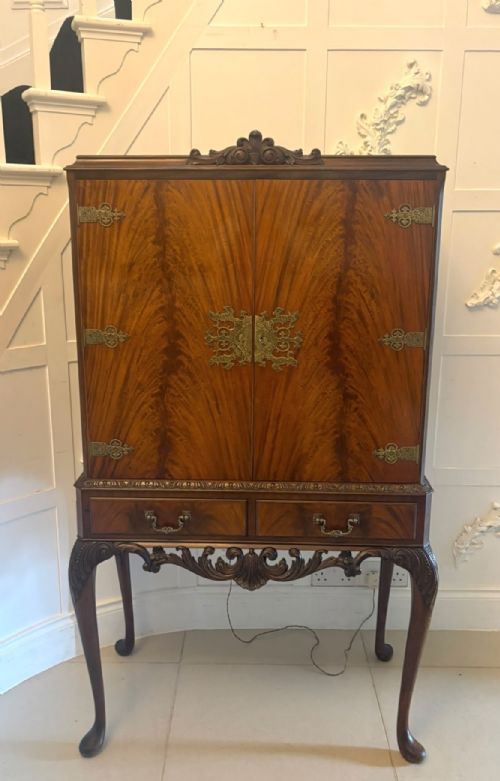
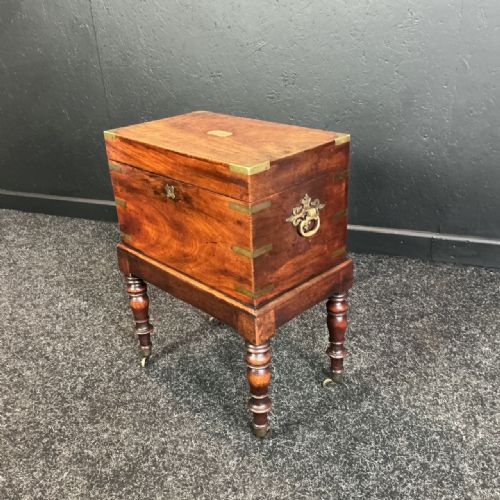
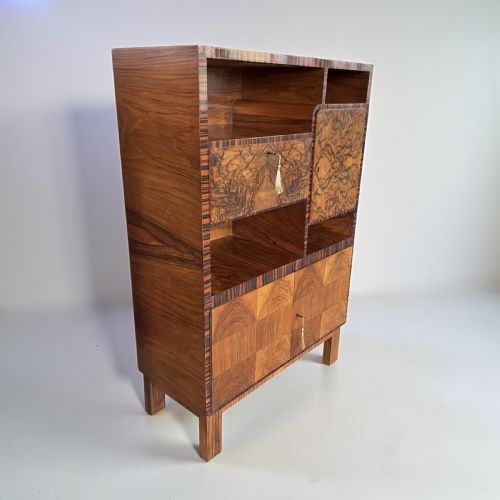

Drinks Cabinet on Stand
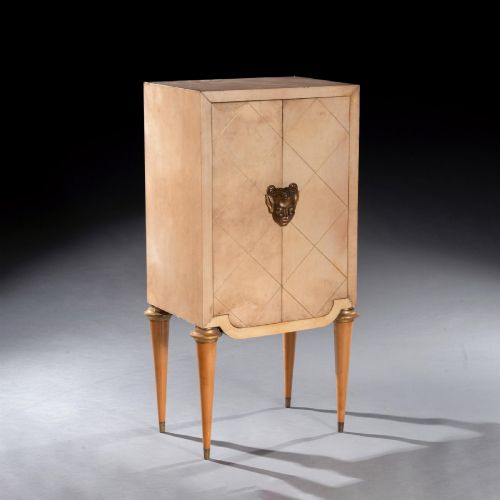
A drinks cabinet on stand holds bottles and glassware aloft, combining compact storage with decorative presence in a room.
Drinks Cabinet on Stand
A drinks cabinet on stand is a specialised form designed for entertaining, elevating storage onto legs or a dedicated base. When you search for a drinks cabinet on stand, you encounter pieces that range from early walnut and lacquer designs to twentieth-century cocktail cabinets.
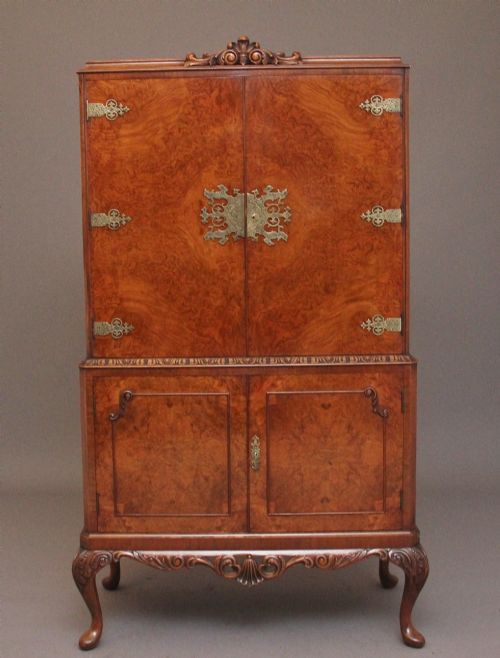
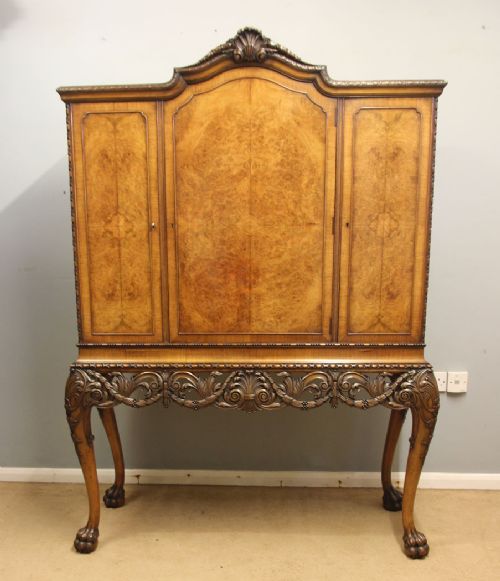
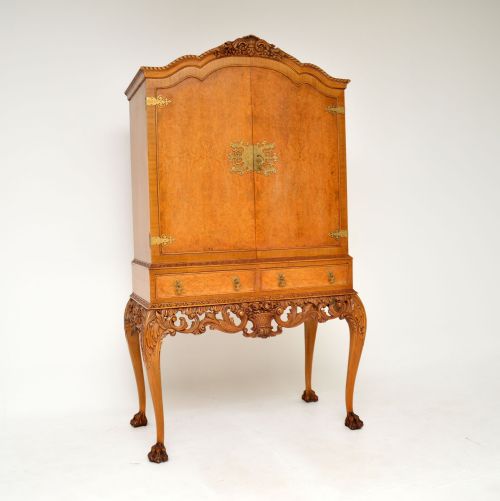
The selections span distinct periods, with Edwardian, 1920s, and 1930s examples appearing frequently alongside earlier Georgian and 18th-century forms. Walnut, burr walnut, and mahogany dominate the offerings, often taking the shape of dedicated cocktail cabinets or traditional cabinets on stand.
Stylistic revivals are common, notably Queen Anne Revival, Jacobean Revival, and Chinoiserie. These pieces merge functional bottle storage with decorative stands, providing an alternative to standard sideboards.
Materials and construction methods
Cabinet makers utilised dense hardwoods such as mahogany, oak, and walnut, frequently applying burr walnut veneers to create figured grain patterns across the doors and surfaces. Lacquer work also appears, particularly on Chinoiserie pieces finished with hand-painted details.
Structural support is provided by dedicated stands, ranging from simple timber legs to silver-gilt frames and carved oak bases. Brass mounts, hinges, and locks are standard functional additions, securing the fitted interiors designed to hold bottles and glasses.
Early twentieth-century makers ensured nobody drank the good scotch unsupervised by inventing the locking tantalus.
Distinguishing quality in craftsmanship
Quality rests in the selection of wood veneers and the precision of the cabinetwork. Pieces featuring matched burr walnut veneers or detailed hand-painted lacquer demand higher standards of joinery than plain timber constructions.
Internal fittings dictate utility and refinement, separating standard cupboards from specialised cocktail cabinets. Original brass hardware, integrated lighting, and intact internal compartments indicate superior workshop production.
Denby & Spinks·Maurice Jallot·Hille·Gillows·Waring & Gillow
The Drinks Cabinet on Stand Glossary
- Cellarette
- A lockable container or cabinet designed for holding bottles of wine and spirits near the dining table. They frequently appear on stands or as fitted pedestals.
- Burr walnut
- A wood veneer taken from the warted growth of a walnut tree, prized for its swirling grain patterns. Cabinet makers used it extensively on 1920s and 1930s cocktail cabinets.
- Tantalus
- A locking wooden frame holding decanters that exposes the bottles while preventing them from being removed without a key. They are commonly mounted in oak or mahogany.
- Chinoiserie
- European decorative style reflecting Chinese artistic traditions, characterised by lacquered surfaces and painted figures. It is frequently seen on cabinets mounted on stands.
- Oyster veneer
- Slices of small branch wood cut across the grain to produce circular or oval patterns resembling oysters. This technique appears on early walnut furniture.
Drinks Cabinet on Stand: Frequently Asked Questions
What is a drinks cabinet on stand?
A drinks cabinet on stand is a raised piece of furniture created specifically to store bottles, decanters, and glassware. The design lifts the main storage compartment off the floor on legs or a supportive frame.
These pieces emerged in various forms across centuries, evolving from early lacquered stands to mid-century cocktail cabinets. They offer compact storage while acting as a focal point in a dining room or drawing room.
How do I identify an Art Deco cocktail cabinet?
Art Deco cocktail cabinets date predominantly from the 1920s and 1930s, utilising materials like burr walnut, parchment inlay, and polished mahogany. Their geometry emphasises clean lines and symmetrical grain patterns.
Unlike earlier Georgian or Victorian cabinets, these twentieth-century pieces often feature specialised internal mirrors, glass shelves, and pull-out mixing trays designed for serving drinks.
What is the difference between a cellarette and a drinks cabinet?
A cellarette is a specific container or small cabinet built to hold wine bottles, often kept under a dining table or on its own low stand. They originate primarily in the 18th and 19th centuries.
A drinks cabinet on stand is a taller piece intended to house a broader range of glassware, decanters, and spirits at standing height, typically featuring opening doors rather than a top-opening lid.
Where should I place a cabinet on stand in my home?
A drinks cabinet on stand suits dining rooms, living rooms, or hallways where entertaining takes place. Their elevated profile makes them suitable for rooms with limited floor space.
Keep them away from direct sunlight and strong heat sources to protect wood veneers and original lacquer finishes from drying out or cracking.