
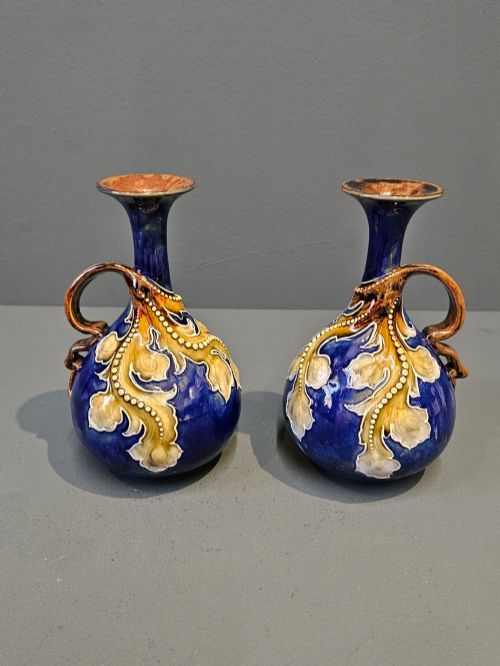
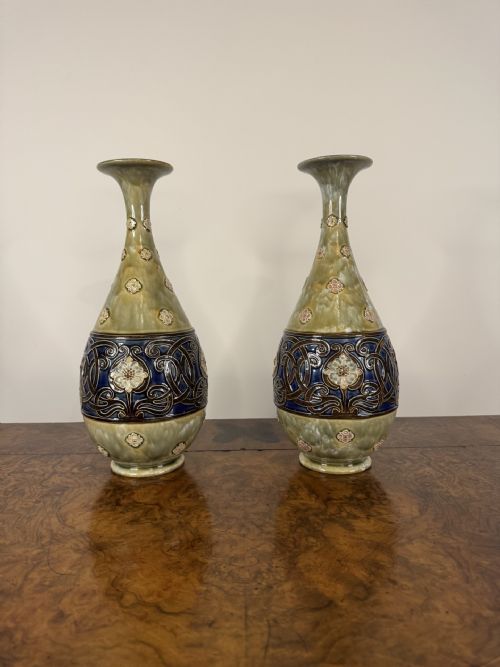


Doulton Stoneware Pair
These doulton stoneware pair items unite domestic utility with ambitious studio pottery design, offering matched symmetry in durable salt-glazed ceramic.
Doulton Stoneware Pair
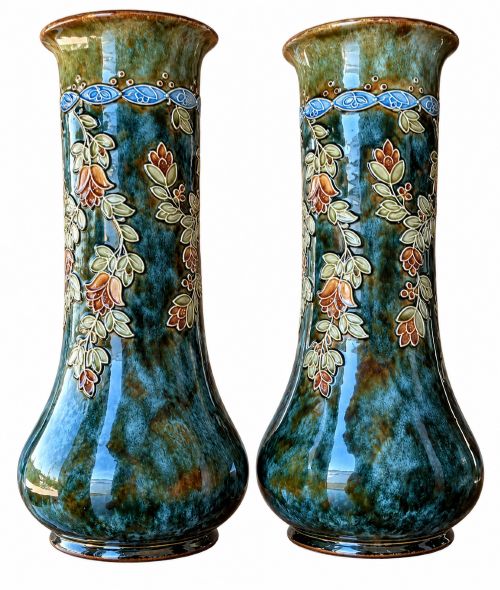
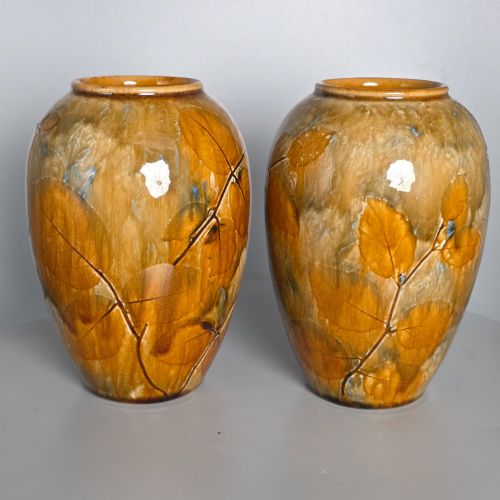
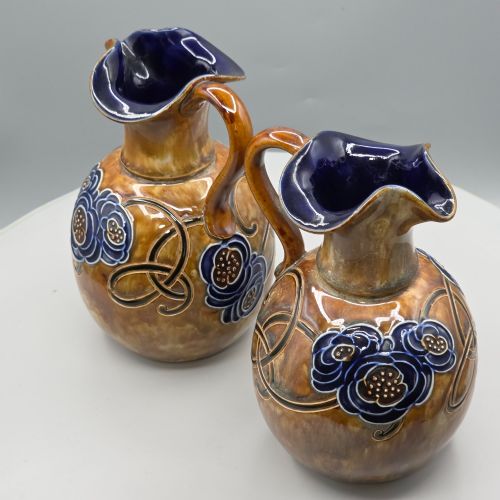
A doulton stoneware pair comprises matched vessels created for display, lighting, or table service during the Victorian and Edwardian eras. The selection centres heavily upon baluster vases, harvest jugs, and planters originating from the Lambeth studios. Buyers encounter these matching sets in various configurations, from autumnal leaf patterns to floral enamel decorations.
Production spans the late nineteenth century through to the mid-twentieth century, capturing shifts from Victorian historicism into Art Nouveau and Arts and Crafts movements. The groupings include domestic items such as tobacco jars and candlesticks alongside monumental shipping alcohol jars. Each matching pair demonstrates the studio's capacity to produce balanced compositions in heavy ceramic.
Materials and production methods
Makers shaped these pieces from dense stoneware bodies, finished with salt glazes or specialised ceramic coatings that yielded textured surfaces. Decoration frequently incorporated raised slip patterns, incised foliage, and applied enamel floral detailing. Certain vessels combined the ceramic body with contrasting materials like silver rims or brass elements.
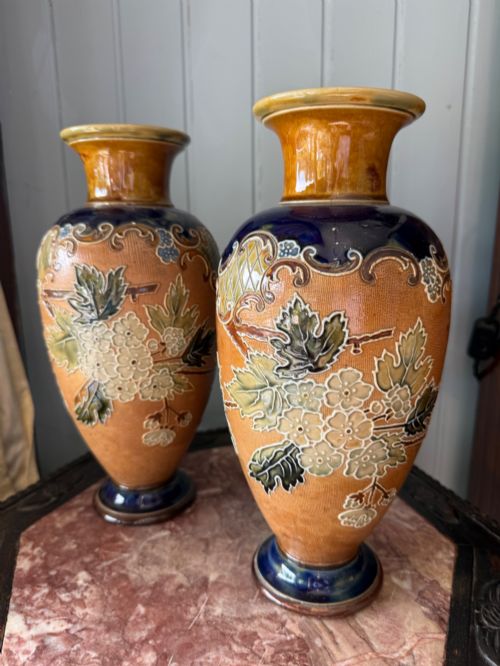
The decorative schemes relied heavily upon Slater's Patent techniques, which impressed lace or fabric textures directly into the damp clay before firing. Hand-painting by studio artists added coloured glazes and metallic highlights across the motifs. Kiln firing fixed these chemical finishes into durable, vitrified surfaces.
Listings demonstrate a strong concentration of pieces from the Victorian era through the Edwardian period, executed in glazed stoneware and ceramic.
Distinctions in quality and execution
Superior examples derive their standing from the involvement of named artists who painted or incised the pottery, elevating standard factory output to individual studio art. The crispness of the moulded or incised patterns and the richness of the enamel and glaze application determine the visual impact of a matched set. Symmetry and proportion within the pairing dictate whether the two vessels sit harmoniously together.
The complexity of the form, such as baluster shaping or specialised utilitarian adaptation into lamps and candlesticks, separates standard production from ambitious output. Pieces featuring patent texturing or combined media like silver rims demonstrate higher ambition in design. The depth and control of the colour palette across both objects define the overall success of the pair.
Louisa Wakely·Emily Edwards·Ethel Beard
The Doulton Stoneware Pair Glossary
- Stoneware
- A robust, vitrified ceramic fired at high temperatures until non-porous. It accepts dense salt glazes and intricate surface incisions without cracking.
- Baluster
- A vase or pillar shape that swells outward towards the lower portion before tapering to a narrow neck. This form provides stability and generous surface area for decoration.
- Slater's Patent
- A specific manufacturing method involving the pressing of lace, textiles, or botanical elements into damp clay to create textured background patterns. This technique was widely utilised by the Lambeth studio.
- Harvest jug
- A traditional bulbous drinking vessel often finished in brown salt glaze with moulded or incised rural motifs. They frequently incorporated metal rims for durability.
- Art Nouveau
- A decorative style characterised by fluid, organic lines, asymmetrical plant motifs, and stylised floral elements. It heavily influenced studio pottery designs around the turn of the twentieth century.
Doulton Stoneware Pair: Frequently Asked Questions
How do I identify a genuine doulton stoneware pair?
Authentic examples bear factory stamp marks specific to the Lambeth works, often accompanied by the incised monograms of individual studio artists. Matching pairs should exhibit consistent clay bodies and corresponding hand-finished decorative details across both vessels.
The weight, density of the stoneware, and application of the glaze provide further physical indicators of period manufacture. Comparing the stylistic motifs against documented design periods helps confirm the era of production.
What is the difference between standard and artist-signed pieces?
Standard factory pieces relied on mechanical moulding and routine glazing executed by anonymous workshop operatives. Artist-signed pieces feature the personal monogram or full signature of skilled decorators who independently planned and executed the surface designs.
Signed works frequently display superior brushwork, experimental colour palettes, and greater individuality in the incised patterns. This personal touch distinguishes collective factory output from recognised studio art.
How should I care for antique ceramic pairs?
Clean these glazed surfaces gently with a soft, dry cloth to remove dust without disturbing the enamel or metallic highlights. Avoid immersing altered pieces, such as those converted into lamps, in water to protect internal electrical components.
Keep the ceramics away from direct sunlight and dramatic temperature fluctuations to prevent stress on the glaze. Displaying them on stable, level surfaces protects the matched symmetry from accidental impact.
Why were many utilitarian items converted into lamps?
Domestic objects like tobacco jars and heavy storage vessels found renewed utility as decorative lighting during the twentieth century. This conversion adapted durable ceramic forms to changing household fashions without discarding the original craftsmanship.
Such adaptations retain the original body, glaze, and decoration while integrating modern functional hardware. Collectors view these conversions as evidence of the piece's continuous utility through successive decades.