
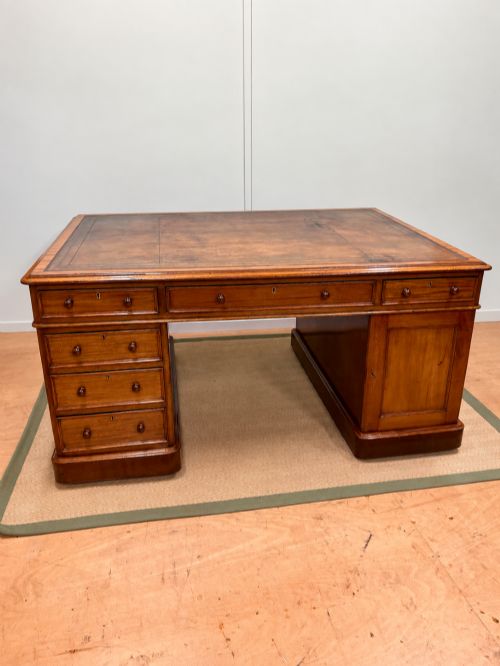
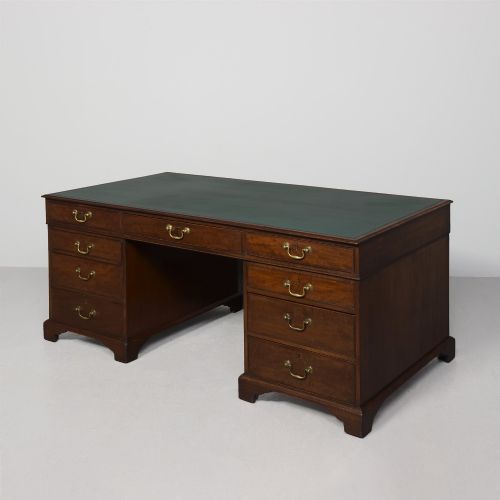
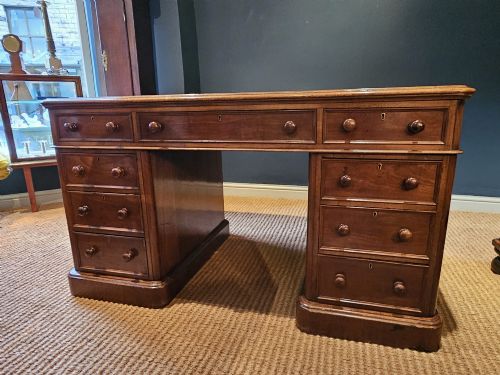
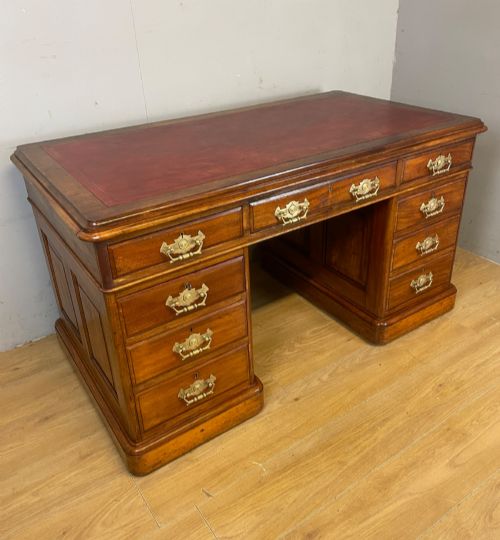

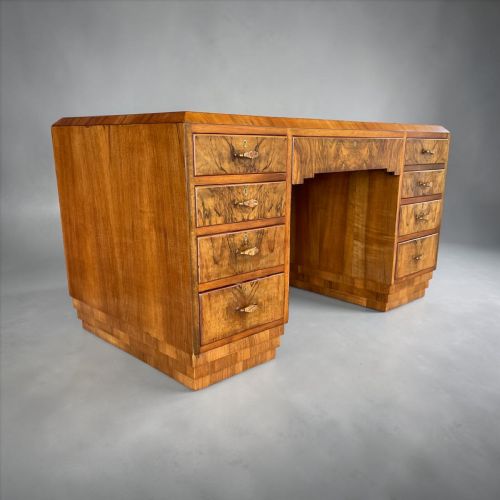

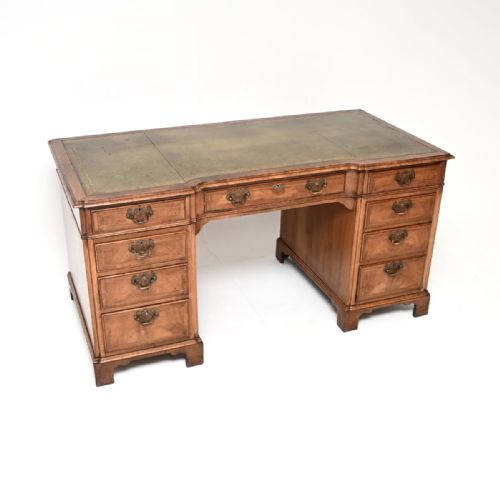
Double Pedestal Writing Desk
A double pedestal writing desk offers a commanding presence and two banks of drawers, making these substantial pieces the definitive choice for a serious study.
Double Pedestal Writing Desk
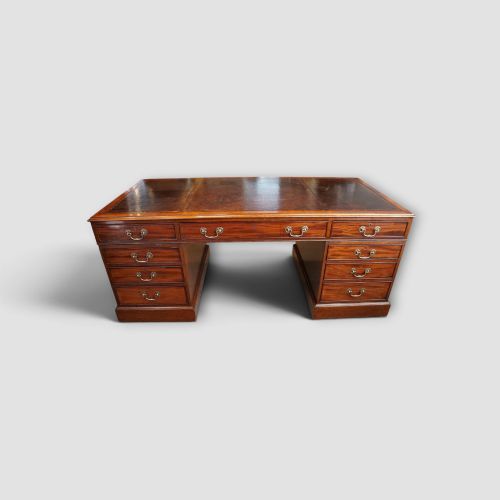
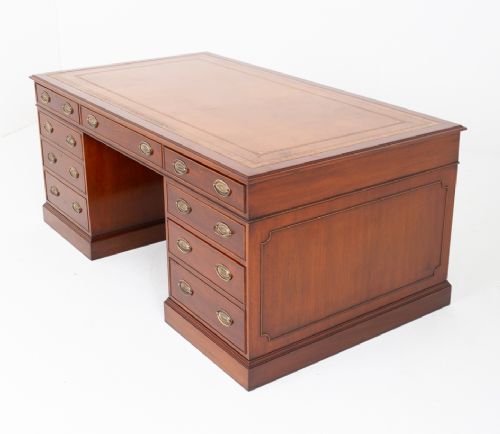
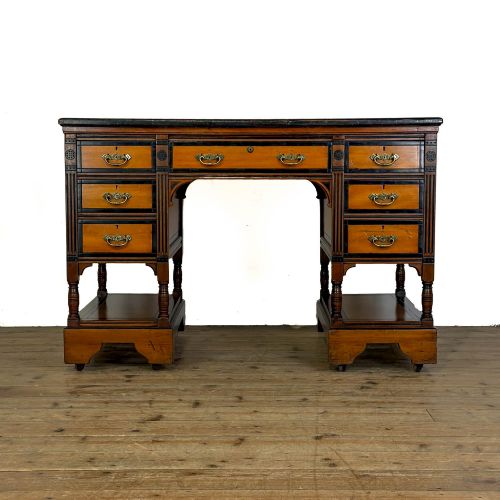
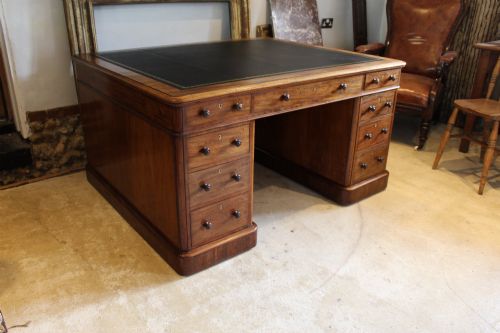
A double pedestal writing desk organises your workspace around two opposing pedestals supporting a substantial top, frequently configured as a partners desk for use from both sides. The versions you meet most often on this page emerge from the nineteenth century, spanning Victorian and Edwardian periods with frequent nods to Georgian design.
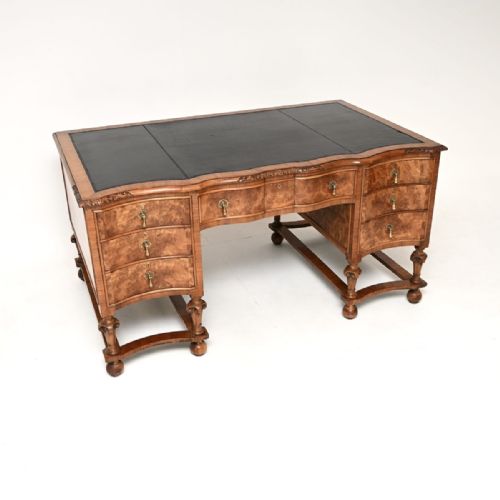
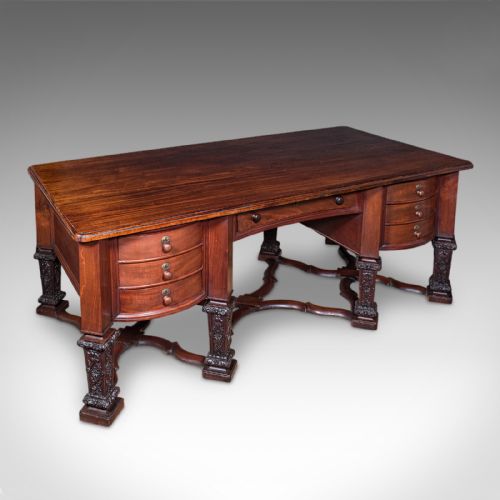
Builders constructed these forms primarily in mahogany, walnut, and oak, often incorporating inset leather writing surfaces and multiple functional drawers. Pieces range from straightforward office configurations to elaborate carved examples reflecting Aesthetic Movement, Chippendale Revival, or Louis XIV Revival influences.
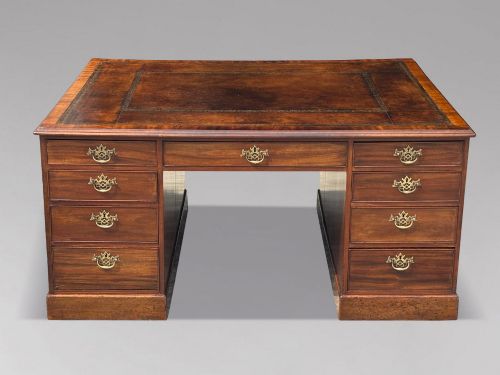
The layout typically positions banks of drawers beneath two distinct pedestals flanking a central kneehole, creating a balanced architectural silhouette. Whether rendered in flame mahogany, burr walnut, or plain oak, each desk serves as a primary architectural anchor for a room.
How they were made
Cabinet makers relied heavily on solid and veneered timbers such as mahogany, walnut, oak, and burr walnut over secondary woods like pine, sometimes employing ebonised wood or rosewood for distinct decorative effects. Surfaces frequently integrate tooled leather writing inserts framed by timber borders.
Construction techniques combine sturdy carcase joinery for the twin pedestals with precision drawer dovetailing and applied brass hardware. Carved details, tambour mechanisms, and panelled timber work demonstrate the varied joinery skills applied across different eras.
Period styles span Georgian, Regency, Victorian, Edwardian, and Art Deco eras.
What varies in quality
Quality rests in the selection of figured timbers, such as flame mahogany or burr walnut, and the crispness of applied mouldings and hand-carved details. Desks featuring finely tooled leather inserts and well-matched timber grains across multiple drawers command greater attention.
The integrity of the construction, visible in the weight of the timber and the smooth operation of numerous drawers, distinguishes standard utilitarian office furniture from important reception pieces.
Maple and Co·Cookes of Finsbury London·Charles Andrea Nosotti·T Wilson
The Double Pedestal Writing Desk Glossary
- Partners desk
- A large double pedestal writing desk designed with drawers and cupboards on both sides so two people can work facing each other. This form became popular in nineteenth-century offices and libraries.
- Pedestal desk
- A heavy freestanding desk supported by two banks of drawers or columns resting on the floor. The central space between the pedestals forms a kneehole.
- Burr walnut
- A prized timber veneer showing swirling, knotty grain patterns harvested from tree growths. It provides decorative figure to high-end Victorian and Edwardian furniture.
- Tambour
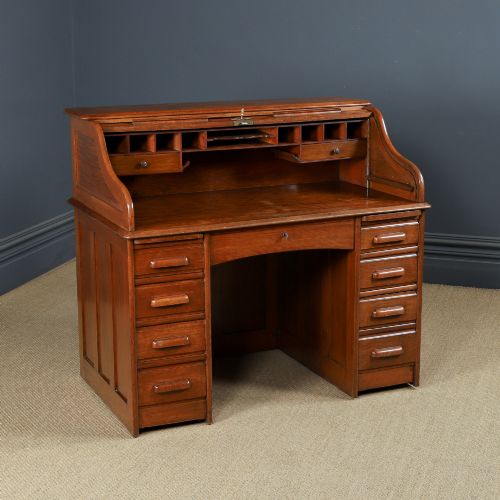
- A flexible shutter made of narrow strips of wood glued to canvas, allowing a roll top desk to open and close smoothly. It conceals pigeonholes and small drawers.
- Ebonised wood
- Timber treated with a dark stain or finish to imitate ebony. This technique appears frequently on nineteenth-century aesthetic furniture.
Double Pedestal Writing Desk: Frequently Asked Questions
What is a partners desk?
A partners desk is a large double pedestal writing desk built with drawers and storage on both long sides. This allows two people to sit opposite each other and work simultaneously.
Historically used in banks, government offices, and large libraries, these pieces provide symmetrical workspace and generous document storage within a single footprint.
How do I care for the leather top?
The leather writing surface benefits from gentle cleaning with a damp cloth and occasional treatment with specialist leather balms to prevent cracking. Avoid harsh chemical cleaners that can strip the gold tooling.
Keeping the leather conditioned maintains its supple texture and protects the material from drying out under normal room conditions.
Are these desks easy to move?
Because of their solid timber construction and dual pedestal design, these desks are heavy and usually dismantle into three main sections: the two drawer pedestals and the top. This modular construction assists with transport between rooms.
Enlisting professional handlers ensures the safe movement of heavy mahogany, oak, and walnut carcases without straining structural joints.
How do I date a pedestal desk?
Dating relies on observing timber choices, hardware styles, and construction methods such as dovetailing and secondary woods. Victorian and Edwardian examples often feature flame mahogany or burr walnut veneers, while eighteenth-century pieces display different proportions and cabinetmaking signatures.
Comparing drawer linings, locks, and revival style markers helps place a desk within the Georgian, Victorian, or Edwardian eras.