
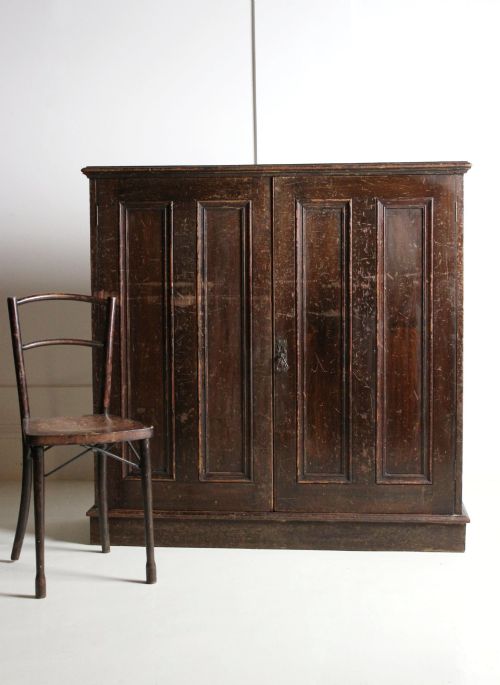
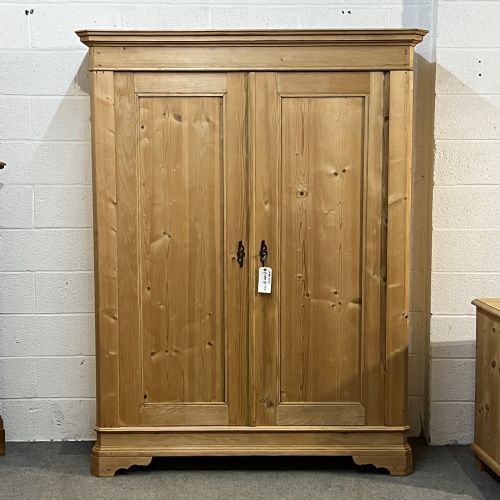
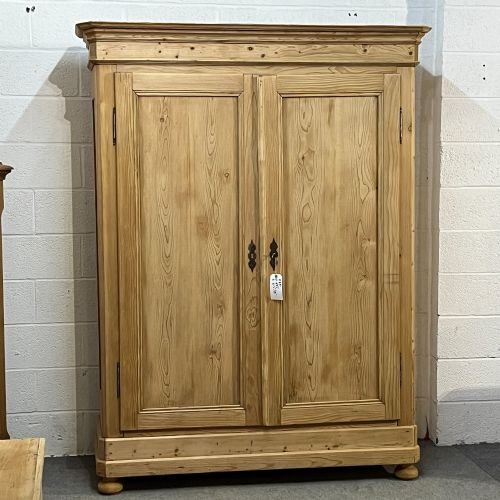
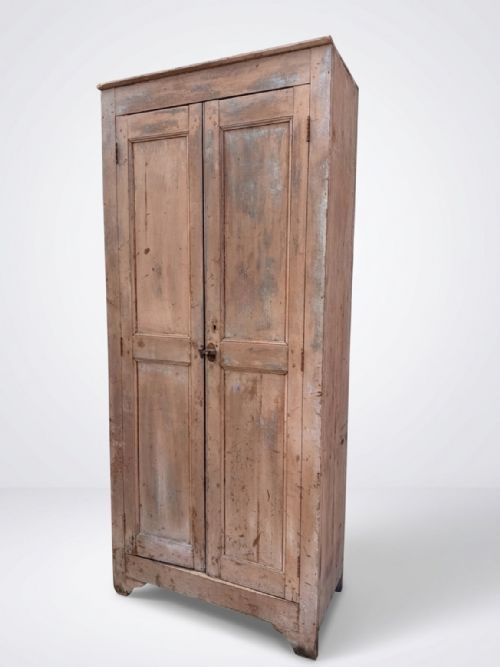
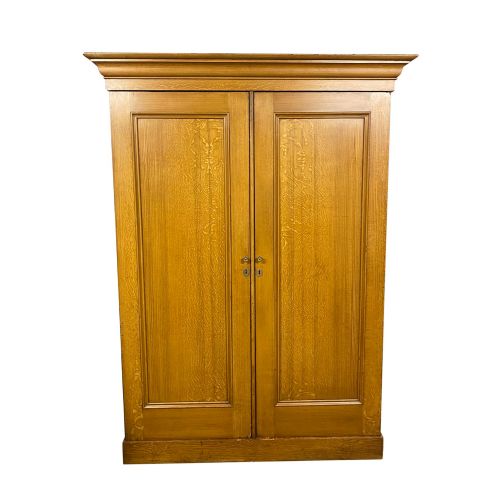
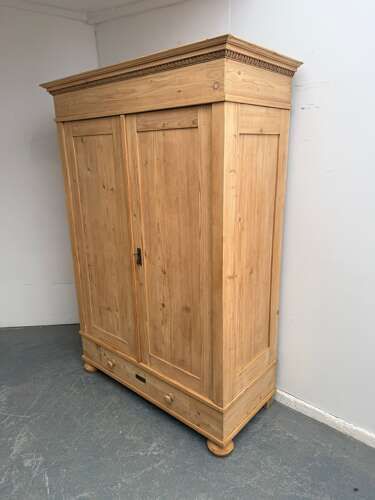
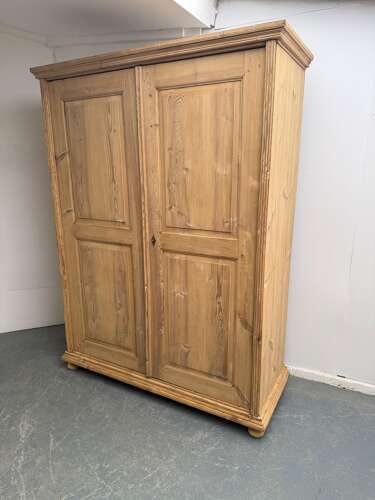
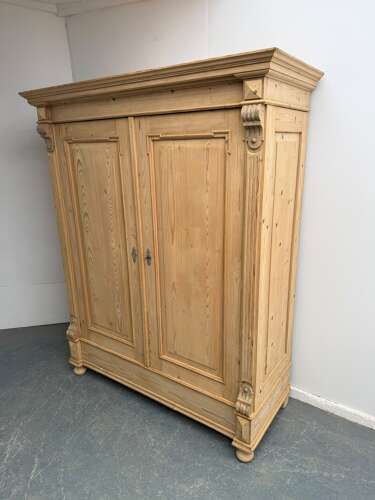
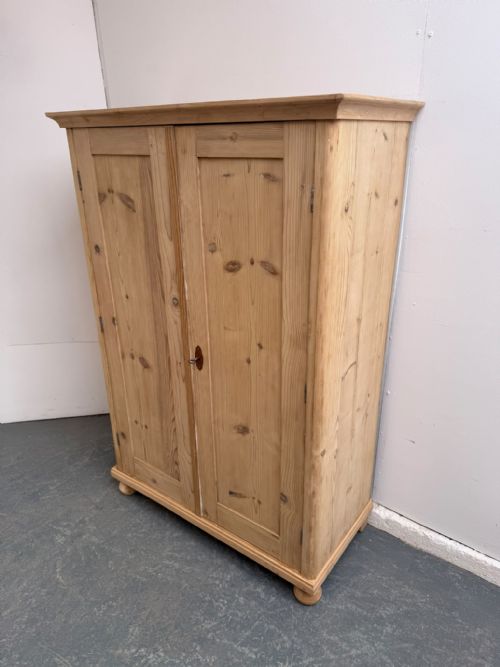
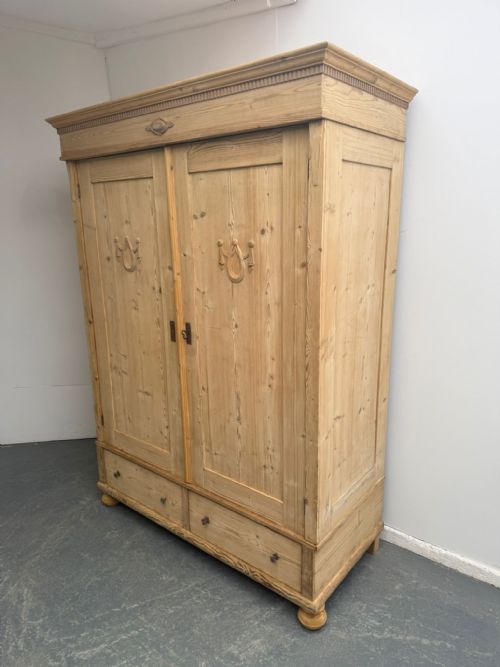
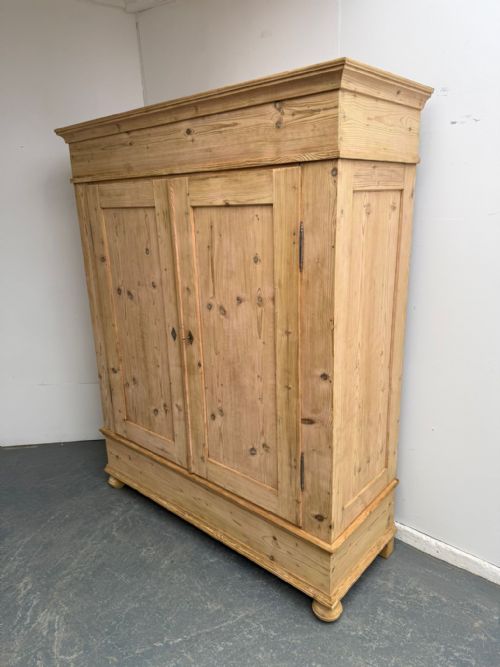

Double Door Pine Armoire
A double door pine armoire provides substantial storage while bringing warmth and character to a bedroom or hallway.
Double Door Pine Armoire
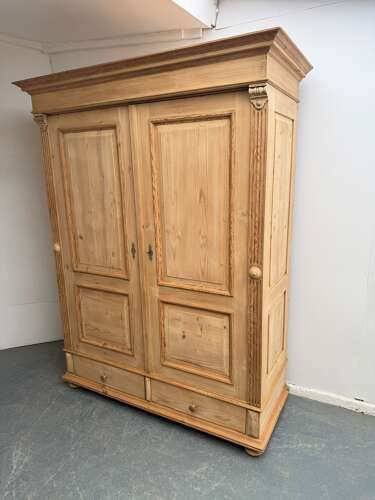
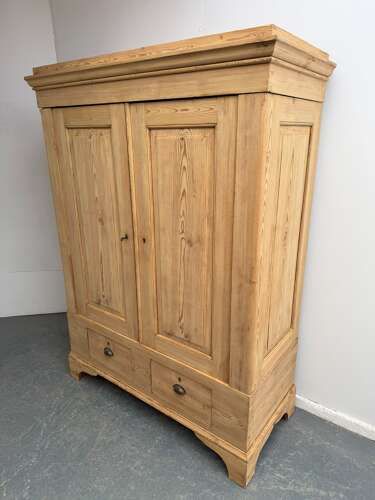
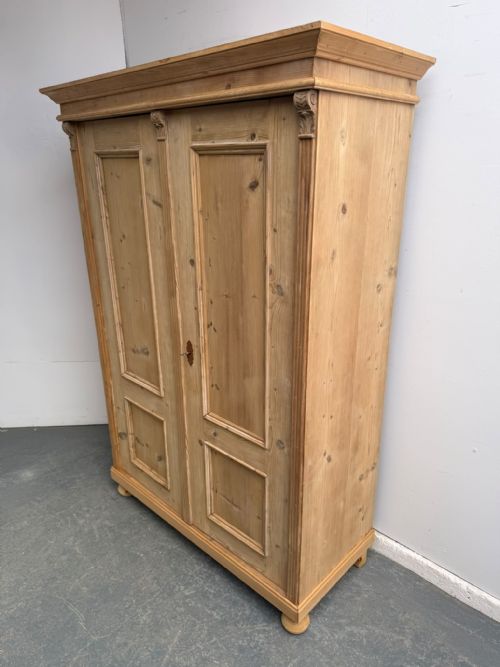
A double door pine armoire is a large storage piece designed for garments and household linens, often constructed with two full-length doors opening to internal hanging space or shelving. When you search for this phrase, you encounter substantial furniture items spanning the Georgian, Victorian, and 19th-century periods, alongside examples from 1890, 1900, and 1910.
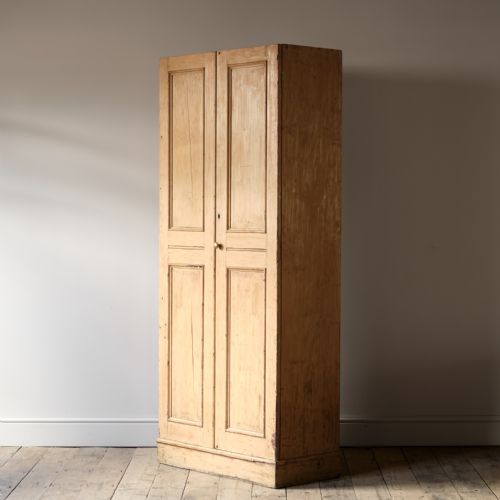
The pieces on this page originate from English, French, Dutch, and Scandinavian traditions, taking forms such as knockdown wardrobes, compactum wardrobes, linen presses, housekeepers cupboards, and chapel cupboards. French and English country examples predominate, ranging from tall, narrow formats to massive proportions.
Many items appear in waxed pine or original paint finishes, including scumble faux oak paintwork, white paint, and light grey paint. Some variations arrive ready to wax or paint, whilst others display carved details, columned facades, or arched profiles characteristic of Arts & Crafts and Art Nouveau styles.
How they were made
Makers utilised solid pine timbers for the primary carcases, doors, and internal shelving, selecting softwoods that accepted various surface treatments. Iron and brass hardware, including hinges and locking mechanisms, secured the double doors and internal compartments.
Construction methods often involved knockdown designs that allowed large wardrobes to be dismantled for transport and reassembled in situ. Surface finishes applied to the timber included protective wax coatings, scumble paint to imitate oak grain, and solid coats of paint in white or light grey.
Listings feature pine armoires and cupboards across Georgian, Victorian, and Arts & Crafts styles, utilising waxed, painted, and scumbled finishes.
What varies in quality
Quality in a double door pine armoire is determined by the crispness of architectural details such as moulded cornices, applied carvings, and columned supports. The integration of original hardware, intact paneling, and well-fitted doors separates superior examples from simpler utilitarian pieces.
The integrity of the finish also dictates value, with original scumble paintwork, period decorative schemes, or deep patination from traditional wax finishes holding particular distinction compared to later over-painting.
The Double Door Pine Armoire Glossary
- Knockdown wardrobe
- A large wardrobe designed with a modular or pegged construction that enables it to be taken apart into manageable sections for moving. This clever assembly method was particularly popular for large Victorian bedroom pieces.
- Scumble paint
- A decorative surface technique where a translucent top layer of glaze or paint is manipulated over a lighter base colour to simulate the grain of more expensive hardwoods like oak. It appears on 19th-century compactum wardrobes.
- Compactum
- A fitted wardrobe that combines hanging space with interior drawers, sliding trays, and smaller compartments. This form maximises storage capacity within a single large cabinet.
- Linen press
- A tall cupboard featuring upper shelving for folded textiles and lower drawer storage. These pieces frequently date from the Georgian and Victorian eras.
- Cornice
- The decorative moulded projection that crowns the top of the armoire. It defines the stylistic period, ranging from simple Georgian profiles to elaborate Victorian mouldings.
Double Door Pine Armoire: Frequently Asked Questions
What is a knockdown pine wardrobe?
A knockdown pine wardrobe is a large piece of bedroom furniture constructed so that the top, base, sides, and doors unbolt or unpeg from one another. This design allowed heavy furniture to be transported up staircases and through narrow doorways before being reassembled.
Such construction is commonly found in Victorian examples listed on this page, offering both practicality and traditional craftsmanship.
How do I care for a waxed pine armoire?
Caring for a waxed pine armoire involves regular dusting with a soft, dry cloth and the occasional application of traditional beeswax to nourish the timber. Avoid placing the cupboard in direct sunlight or near heat sources, which can cause the pine to dry out and split.
Maintaining a stable room temperature helps preserve the patina and prevents the wood from warping over time.
Are these armoires supplied ready to use?
Many listings describe armoires that are fully waxed and ready for immediate use in the home. Other pieces are sold in raw timber or with instructions that they are to wax or paint, allowing you to finish the surface to match your interior scheme.
Check individual listings to determine whether a piece arrives with its historic finish intact or requires preparatory work.
What is the difference between an armoire and a linen press?
An armoire is primarily designed as a wardrobe with vertical hanging space behind its double doors for garments. A linen press traditionally incorporates interior shelving or sliding trays intended specifically for storing folded household textiles and linens.
Both forms utilise pine construction, but their internal configurations serve different domestic storage requirements.
How can I tell a Georgian pine cupboard from a Victorian one?
Georgian pine cupboards often display simpler, lower proportions and restrained architectural lines, such as low cottage formats or fitted single-piece carcases. Victorian pieces frequently exhibit bolder moulded cornices, knockdown construction, and sometimes decorative scumble paintwork.
Examining the overall scale, proportions, and construction joints helps distinguish between these periods.