


French Pine Armoire
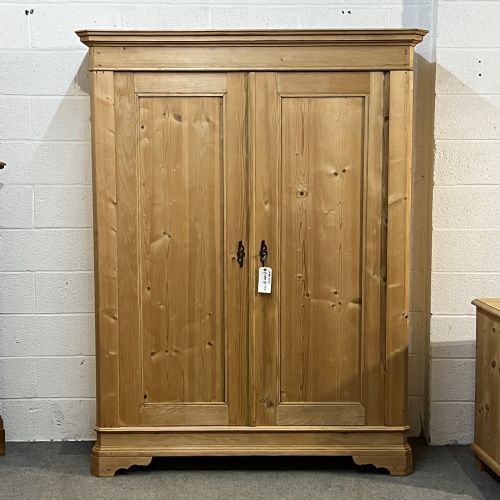
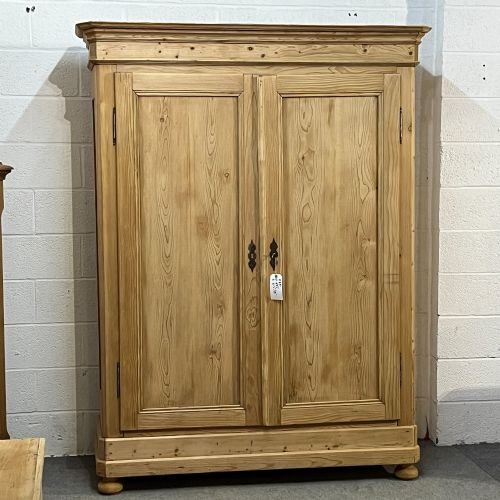
These french pine armoire pieces provide generous storage while bringing rustic charm to a bedroom or hallway.
French Pine Armoire
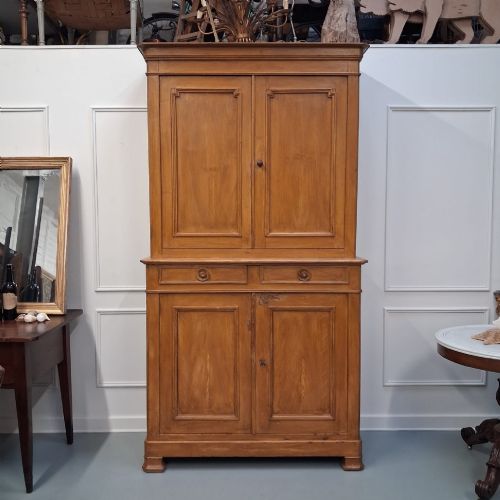
A french pine armoire serves as a substantial timber wardrobe or linen press originating from France, built to store garments and household textiles in domestic settings. The pieces seen here span the eighteenth, nineteenth and twentieth centuries, incorporating regional forms like the buffet deux corps and provincial cupboards.
Most examples you encounter date from the nineteenth century, including Victorian pieces alongside French country and provincial variants. Buyers select them for their height and depth, which accommodate modern hanging garments and folded linens inside domestic rooms.
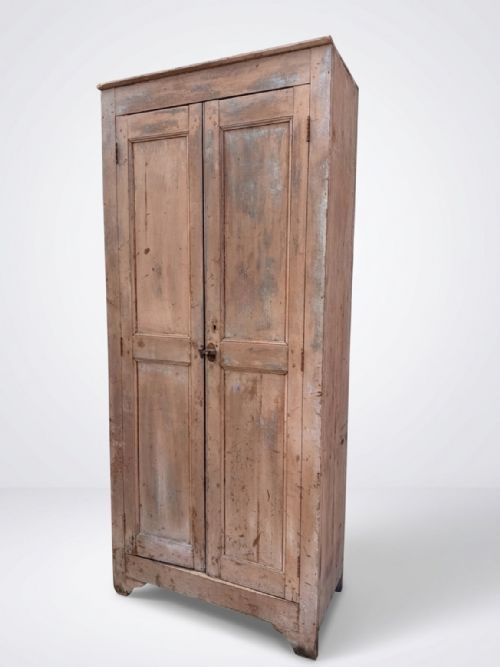
Beyond standard wardrobes, the selection includes housekeepers cupboards, library bookcases, and pantry cupboards constructed primarily in softwoods. These variants reflect rural and provincial European cabinet-making traditions where utility dictated the final form.
How they were made
Construction relies heavily on pine and pitch pine, frequently assembled with iron and brass hardware such as strap hinges, locks, and escutcheons. Many surfaces retain their original painted finishes, painted wood, or grey paint, while others show stripped timber surfaces.
Some examples utilise knockdown construction principles, allowing the main body to disassemble into manageable panels for transport up narrow staircases. Cabinetmakers shaped panels using traditional hand tools, joining uprights and doors with pegged mortise and tenon joints.
Miniature versions appear occasionally as doll's armoires, built with identical proportions to house miniature garments.
What varies in quality
Quality rests upon the integrity of the original timber and the survival of early surface treatments, such as original paint or patinated bare pine. Pieces retaining their original brass and iron fittings hold greater interest than those fitted with later replacements.
Proportion and scale separate simpler utilitarian boxes from finer architectural examples, particularly when cornices and panelled doors display balanced provincial design. The presence of knockdown framing engineered for seamless assembly also marks a higher degree of vernacular joinery skill.
The French Pine Armoire Glossary
- Buffet deux corps
- A tall two-part cupboard featuring a smaller upper cabinet set upon a deeper lower section. This form provides extensive storage for household provisions and crockery.
- Knockdown wardrobe
- A large piece designed to dismantle entirely into flat panels and separate cornices. This method enabled easy transport between rooms and houses before the advent of modern modular furniture.
- Pitch pine
- A resinous North American and European pine variety known for its dense grain and durability. Cabinetmakers valued it for structural strength and rich figuring.
- Housekeepers cupboard
- A large storage piece traditionally used in manor houses and farmhouses for keeping linens and dry goods. They often feature multiple internal shelves and deep lower compartments.
- Provincial
- Describing items made in the regions outside major capital cities, reflecting local tastes and available materials. These pieces prioritize sturdy construction and functional design over courtly ornament.
French Pine Armoire: Frequently Asked Questions
How do I fit a large armoire upstairs?
Many nineteenth-century examples employ knockdown construction designed to disassemble into separate panels, sides, and cornices.
Check the listing details to confirm whether your chosen piece separates into modular sections before attempting delivery.
What is the difference between an armoire and a linen cupboard?
An armoire generally provides vertical hanging space for garments behind full-length doors, often accompanied by internal hooks or rails.
A linen cupboard is traditionally shelved horizontally from top to bottom for stacking folded textiles and household bedding.
Can I paint a stripped pine armoire?
Stripped timber surfaces can accept new paint finishes, though preparation depends on whether any wax or oil remains in the grain.
Many buyers choose to preserve the raw wood or apply breathable milk paints to match contemporary interior schemes.
How do I date a nineteenth-century pine cupboard?
Dating relies upon examining construction markers such as hand-cut nails, pegged joints, and the profile of the mouldings.
Twentieth-century iterations often feature machine-sawn timber and modern screw fixings that contrast with older vernacular methods.