





Double Chair Back Sofa
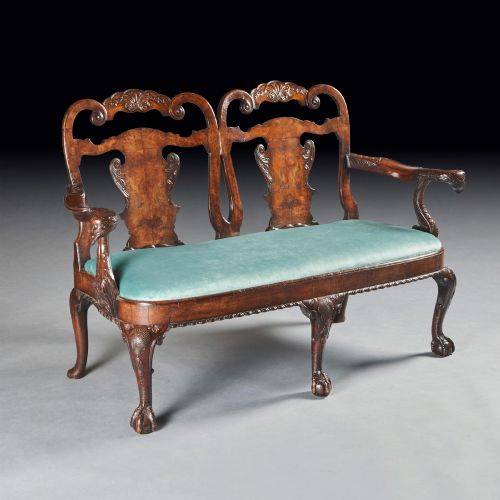
A double chair back sofa offers the refined look of two joined dining chairs united into a single gracious seating piece.
Double Chair Back Sofa
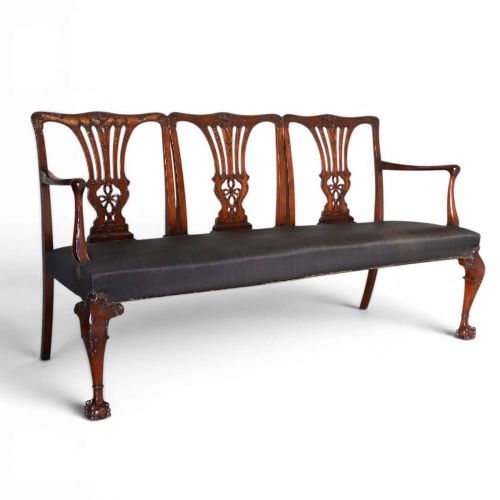
A double chair back sofa merges the distinct pierced splats and uprights of traditional seating design into a cohesive twin-backed settee framework. These pieces draw heavily on eighteenth-century aesthetics, frequently appearing in revival forms across the Victorian and Edwardian eras.
The most common versions encountered on this page feature mahogany frames with carved splats echoing Chippendale or George II proportions. Alongside these, walnut and oak examples emerge from the nineteenth and early twentieth centuries, occasionally displaying revival details such as Louis XVI or Hepplewhite influences.
Makers designed these settees for formal parlours and reception rooms where space was managed with architectural precision. They function as dual-purpose furnishings that provide the visual lightness of open chair backs combined with the seating capacity of a compact sofa.
How they were made
Cabinetmakers constructed the structural frames primarily from dense hardwoods like mahogany and walnut, ensuring the twin backrests could support daily use without flexing. Joinery relied on traditional mortise and tenon methods to secure the uprights to the seat rails.
Carvers shaped the top rails and splats by hand, rendering motifs such as interlaced ribbons or scrolling foliage directly into the solid timber. Upholstered drop-in or sprung seats were then finished in fabrics including damask, velvet, and brocade.
Double Chair Back Sofa Retail Price Guide 2026
Typical asking prices for double chair back sofa among the pieces listed under this phrase on Sellingantiques today, from the lower quarter to the upper quarter. They describe what is for sale here now, not the wider market.
Listings span from the eighteenth century through to the Edwardian era, with Victorian and George II revival styles dominating the timber frames.
What varies in quality
Quality reveals itself in the crispness of the timber carving and the architectural balance of the twin backrests. Finer examples display deeply undercut details on the splats and harmonious proportions between the frame and the seat.
The choice of primary timber and the integrity of the secondary woods underneath dictate the structural longevity of the settee. Pieces that retain their original showwood finishes and retain tight, uncompromised joinery stand apart from those with softened details.
The Double Chair Back Sofa Glossary
- Splat
- The vertical wooden strip down the middle of a chair or settee back. It is often shaped, pierced, or carved to define the stylistic period.
- Showwood
- The exposed polished timber frame of a settee that remains visible around the upholstered elements. This highlights the grain and carving quality.
- Drop-in seat
- A removable upholstered frame that fits down into the wooden seat rails of a chair-form settee. It allows for straightforward reupholstery without dismantling the main structure.
- Top rail
- The uppermost horizontal member of a double chair back sofa. It frequently incorporates curved shaping or carved cresting.
- Revival
- A later design movement that reinterprets historical furniture styles from previous centuries. This page includes numerous George II and Chippendale revival pieces.
Double Chair Back Sofa: Frequently Asked Questions
What is a double chair back sofa?
A double chair back sofa is a settee whose backrest is constructed to resemble two separate chair backs joined side by side. These pieces often feature pierced wooden splats and open upper rails reminiscent of dining chairs.
Craftsmen produced them extensively during the nineteenth and early twentieth centuries as revival interpretations of earlier Georgian designs. They provide compact seating while maintaining a visually light profile within a room.
How do I date a double chair back sofa?
Dating these settees involves examining the secondary timbers, the style of the carving, and the construction methods used in the frame. Revival pieces from the Victorian and Edwardian periods often mix eighteenth-century stylistic cues with nineteenth-century joinery techniques.
Checking for hand-cut joints versus later machine-tooled elements helps narrow down the production era. The specific revival style noted in the title also points toward the decade of manufacture.
Where were double chair back sofas placed?
These settees were traditionally positioned in reception rooms, halls, or parlours where formal seating was required without blocking light or views. Their shallow depth made them suitable for placement against walls or beneath windows.
Unlike deep lounging sofas, they were intended for upright seating during conversation or reading. Their open back designs allowed light to pass through them in smaller domestic spaces.
What woods are typically used?
Mahogany is the predominant timber found in these settees, prized for its strength and deep colour. Walnut and oak also appear, particularly in pieces influenced by earlier Georgian or continental revival styles.
Secondary woods used for interior frames and seat rails often include denser hardwoods that ensured structural stability. The choice of timber frequently aligns with the specific revival period the maker sought to emulate.