




Walnut Chair Back Sofa
A walnut chair back sofa brings together the joinery of individual seating and the scale of a settee, offering formal proportion and rich timber grain.
Walnut Chair Back Sofa
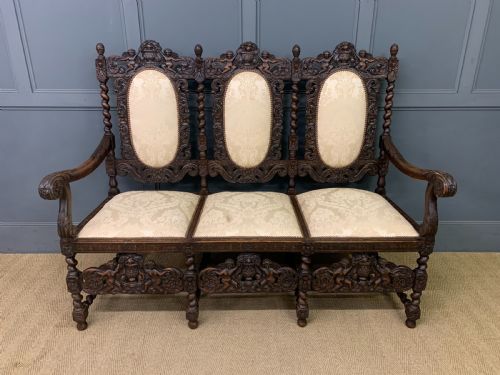
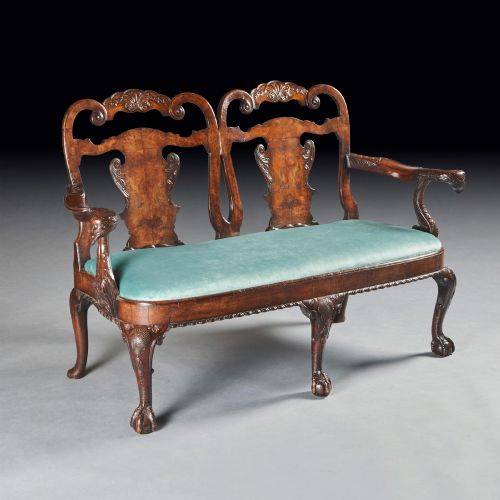
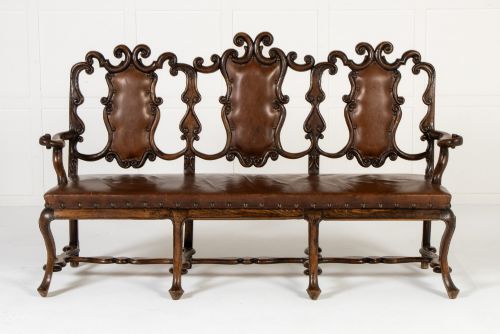
When searching for a walnut chair back sofa, you encounter seating that ranges from eighteenth-century Dutch Rococo examples to nineteenth-century revival pieces modelled on earlier designs. These settees connect multiple chair backs into a single long frame, often reflecting George II or Carolean styles.
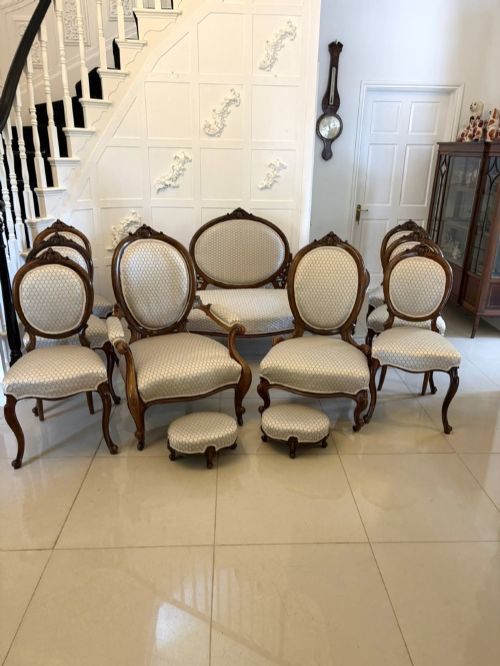
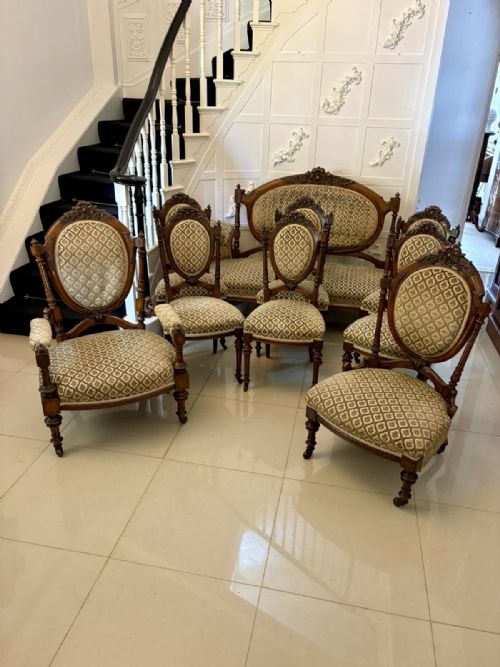
The versions most commonly met on this page date from the Victorian era and the early twentieth century, spanning revival styles such as Queen Anne, Louis XVI, and Baroque. Forms include twin chair back settees, salon suites, and larger drawing-room arrangements built from walnut timber.
How they were made
These pieces are constructed primarily from walnut and burr walnut, sometimes supported by secondary hardwoods, utilising traditional joinery for the interconnected back frames. Carved details define the crest rails and splats on revival pieces, while brass elements occasionally appear on castors or hardware.
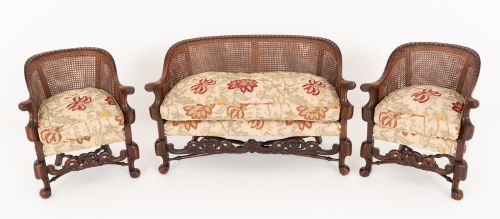
Upholstered components incorporate fabric, velvet, leather, or cotton, often secured over sprung bases in later nineteenth and twentieth-century examples. Caning is also utilised on specific revival forms like the Louis XVI style settee.
Walnut Chair Back Sofa Retail Price Guide 2026
Typical asking prices for walnut chair back sofa among the pieces listed under this phrase on Sellingantiques today, from the lower quarter to the upper quarter. They describe what is for sale here now, not the wider market.
Listings feature walnut chair back sofas spanning the eighteenth, nineteenth, and twentieth centuries, alongside broader salon suites incorporating velvet, leather, and caning.
What varies in quality
The distinction between standard and superior pieces rests on the crispness of the timber carving and the selection of figured walnut or burr veneer. Master joiners achieved fluid lines in the chair backs and harmonious proportions across the multi-seat span, whereas lesser examples show heavier, less refined joinery.
The integrity of the structural frame and the quality of the original or period upholstery materials further separate ordinary iterations from exhibition-grade seating suites.
Epstein·Howard and Sons
The Walnut Chair Back Sofa Glossary
- Chair back sofa
- A settee whose back is constructed as a series of connected individual chair frames, often featuring distinct splats and crest rails. This design mirrors the dining or parlour chairs of the period.
- Carolean style
- A decorative aesthetic reviving the English restoration period of the seventeenth century, characterised by rich walnut framing and elaborate scrolling foliage. It appears frequently in nineteenth-century revival seating.
- Burr walnut
- A veneer sliced from the knotty growths of walnut trees, prized for its swirling grain patterns and luxurious appearance on cabinet fronts and sofa frames. It adds considerable visual depth to the timber surface.
- Salon suite
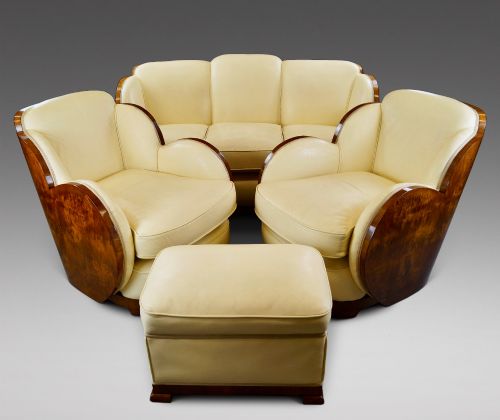
- A matched set of seating comprising a sofa or settee alongside coordinating armchairs and side chairs, designed for formal entertaining rooms. These groupings share identical wood framing and upholstery schemes.
Walnut Chair Back Sofa: Frequently Asked Questions
How do I date a walnut settee?
Dating relies on examining the timber grain, carving style, and construction methods used within the frame. Revival pieces often borrow motifs from earlier George II or Carolean eras while retaining nineteenth or twentieth-century joinery techniques.
Upholstery webbing, internal padding materials, and secondary hardwoods also provide clear physical indicators of whether a piece dates to the Victorian period or the early twentieth century.
Where were these settees placed?
These pieces served as formal seating in nineteenth-century drawing rooms, parlours, and large reception spaces. They were frequently paired with matching armchairs and side chairs as part of a complete salon suite.
Their decorative back designs ensured they looked impressive even when positioned away from walls in the centre of a grand room.
How do I care for antique walnut furniture?
Maintain walnut frames by keeping them away from direct sunlight and excessive temperature fluctuations that can dry out the timber or split the veneer. Regular dusting with a soft, dry cloth preserves the natural lustre of the polished wood surface.
Upholstered sections require gentle vacuuming with a low-suction attachment, avoiding harsh chemical cleaners on both the fabric and the surrounding woodwork.