


Double Albert Necklace
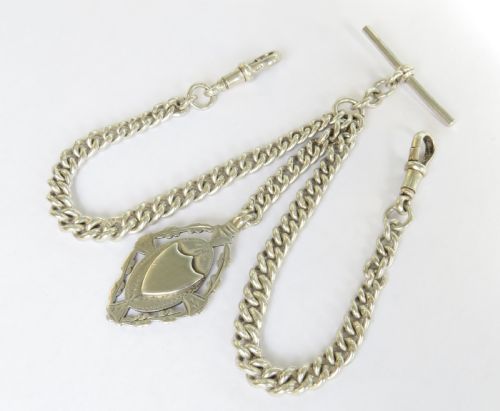
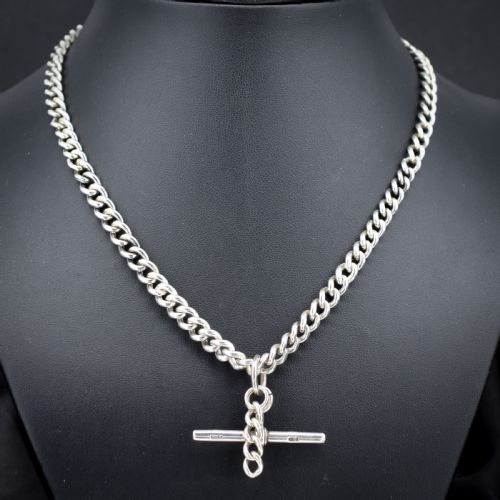
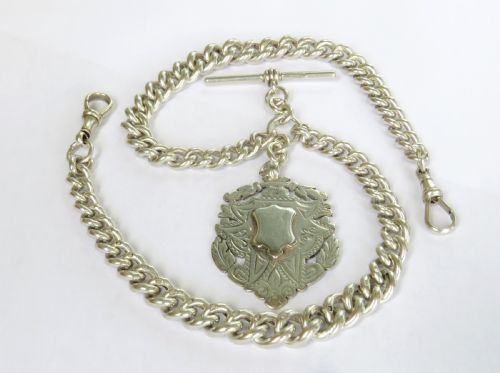
A double albert necklace brings robust pocket watch chains into contemporary wear as substantial neckpieces defined by twin strands, dog clips and T-bars.
Double Albert Necklace
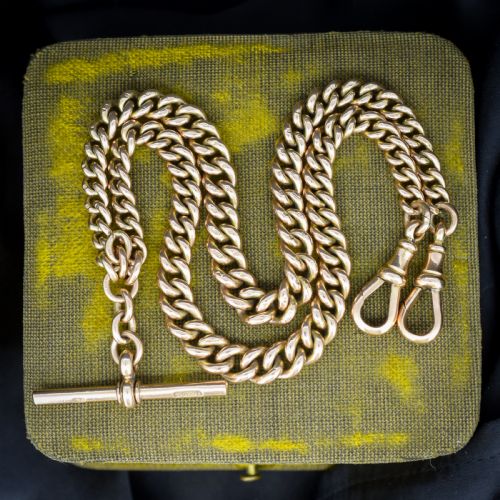
A double albert necklace originates from nineteenth and early twentieth-century pocket watch chains designed to span a waistcoat with two parallel strands secured by a central T-bar.
The pieces available here span the Victorian, Edwardian and Art Deco periods, alongside 1920 and 1930 examples, repurposed from utilitarian timekeeping accessories into striking neckwear.
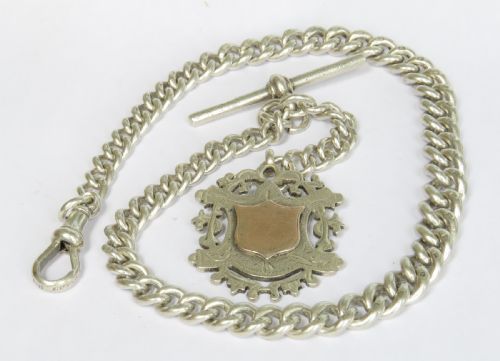
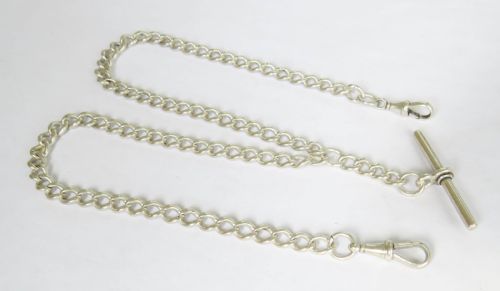
Most examples found on this page consist of sterling silver or various shades of gold, including yellow, rose, white, and rolled gold, shaped into curb or trombone links.
Materials and Construction
Craftsmen built these chains using solid sterling silver, 9ct gold, and rolled gold, forming individual links by hand or machine before assembling them into uniform or graduated strands.
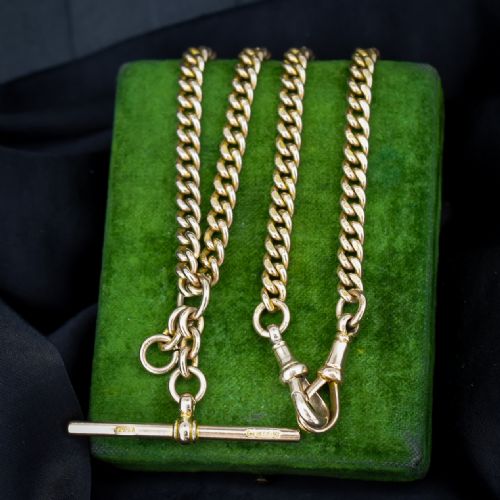
Each assembly integrates functional hardware such as swivel dog clips at either end for securing watch fobs or pendants, and a central T-bar designed originally to anchor through a buttonhole.
Object forms include standard watch chains, fobs, and converted necklaces utilising both uniform and graduated curb links.
Distinctions in Quality
Quality rests upon the heft and solidity of the metal, distinguishing heavy, substantive gold and silver examples from lighter hollow or rolled alternatives.
The integrity of the links, the crispness of hallmarks stamped on individual components, and the spring tension within the dog clips separate superior pieces from standard specimens.
The Double Albert Necklace Glossary
- Dog clip
- A spring-loaded swivel clasp resembling a small snap hook, used to attach pocket watches, fobs, or pendants to the ends of the chain.
- T-bar
- A short transverse bar attached to the centre of the chain, originally designed to slip through a waistcoat buttonhole to secure the watch.
- Curb link
- A chain design composed of flat, interlocking links that lie uniformly flat against the skin when worn as a necklace.
- Graduated link
- A construction style where the links increase in size progressively from the ends towards the centre of the chain.
- Rolled gold
- A material formed by bonding a thin layer of gold to a base metal core, offering the appearance of solid gold at a different weight.
Double Albert Necklace: Frequently Asked Questions
What is a double albert necklace?
A double albert necklace is a converted pocket watch chain featuring two parallel strands that loop from a central T-bar, finished with dog clips at the ends.
Originally worn across a waistcoat by gentlemen, these chains now function as substantial choker or collar necklaces.
How do you wear a double albert necklace?
These pieces can be worn with the twin strands hanging forward and the T-bar acting as a decorative pendant centrepiece against the collarbone.
Alternatively, the clips and T-bar can be arranged at the back of the neck to display the continuous patterned link chain at the front.
Are these necklaces made of solid gold?
The materials vary across the pieces, encompassing solid sterling silver, solid 9ct gold in yellow, rose, or white tones, alongside rolled gold alternatives.
Hallmarks stamped on the links or T-bars often provide definitive proof of the specific metal purity and assay office origin.
How can I tell the period of the chain?
Dating relies heavily upon accompanying hallmarks, maker's marks, and stylistic clues inherent to Victorian, Edwardian, or Art Deco design periods.
Heavier curb links and specific rose gold hues typically point towards Victorian and Edwardian origins, while later 1930s pieces reflect sleeker manufacturing methods.