




Domed Travelling Trunk
A domed travelling trunk provides robust storage with historic character, offering an authentic piece of luggage history for the modern home.
Domed Travelling Trunk
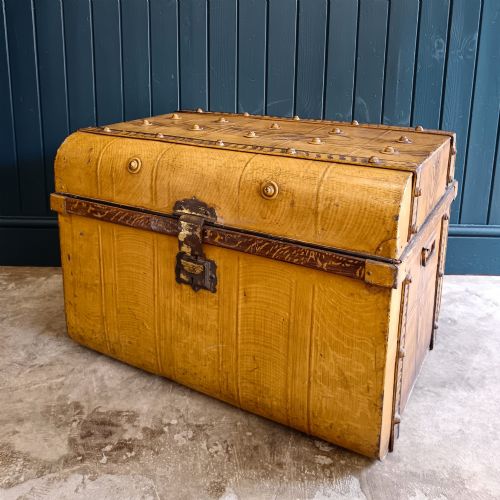
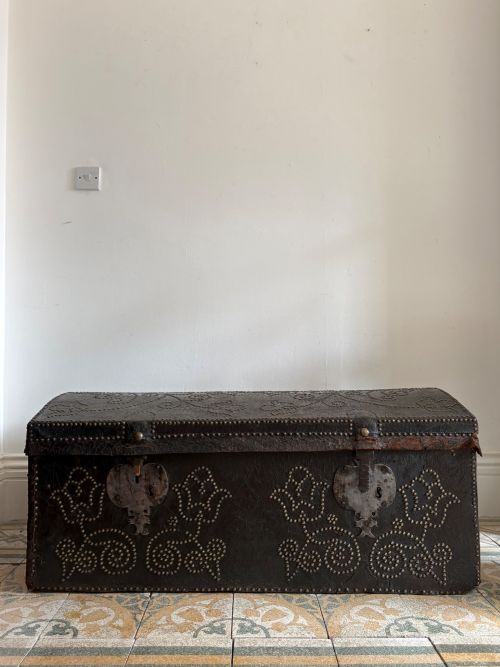
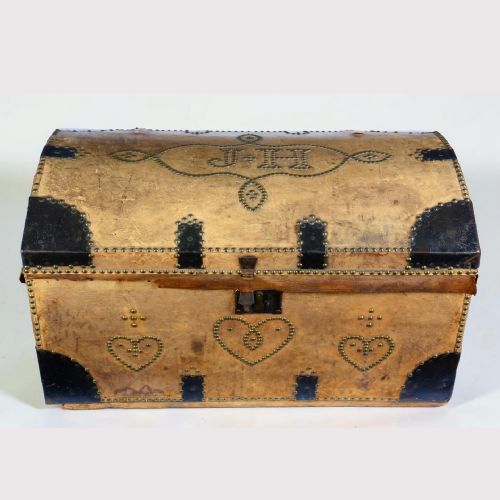
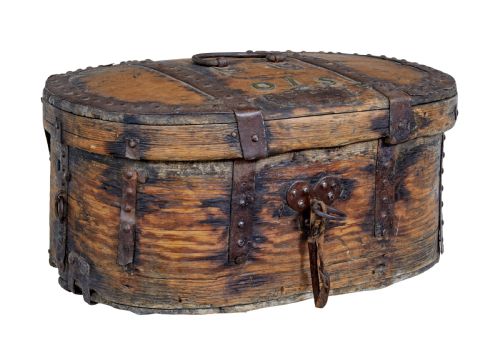
When you search for a domed travelling trunk, you encounter sturdy luggage designed to withstand the rigours of historical journeys. The pieces on this page span several centuries, featuring notable examples from the Georgian and Victorian eras alongside earlier styles. You will find forms ranging from large metal steamer trunks to leather-clad chests.
The defining characteristic across these items is the curved lid, which originally served to shed water during transit. These trunks appear in various formats, including campaign cases, carriage trunks, and round coffers. The selection reflects global origins, incorporating English, Dutch, French, Spanish, and Scandinavian examples.
Victorian and nineteenth-century iterations dominate the current range, often constructed with reinforced corners and carrying handles for mobility. Buyers seeking storage with a distinct narrative will find that these trunks double as statement coffee tables or decorative storage units.
Materials and construction
Traditional makers built the core structures of these trunks using durable timbers such as oak and pine, often overlaying them with protective hides, leather, or canvas. Iron and steel bands frequently reinforce the framework, providing structural integrity for heavy transit. Brass studwork and decorative hardware secure the exterior coverings while adding geometric detail.
Early methods relied on heavy iron bindings and hand-beaten metalwork to protect vulnerable edges from the impacts of travel. Leather was painstakingly attached to the wooden carcase, sometimes utilising thousands of individual brass studs to hold the hide in place. Canvas and painted metal finishes appeared in later nineteenth-century examples to offer lighter or more weather-resistant exteriors.
Listings feature trunks constructed from oak, pine, iron, brass, leather, hide, and canvas across the seventeenth, eighteenth, and nineteenth centuries.
Determinants of quality
The distinction between standard utility luggage and exceptional pieces rests upon the integrity of the original materials and the sophistication of the hardware. Trunks retaining their original leather hides, working locks, and heavy-duty iron or brass mountings command greater attention. Finer examples often exhibit superior cabinetry work within the wooden carcase beneath the outer coverings.
Signatures of quality also include original maker's details, such as stamped brass plates or specialised shipping line stencils like those from the Cunard line. The precision of the decorative studwork and the survival of secondary elements, such as working carry handles and interior linings, separate ordinary storage boxes from collector-grade artefacts.
Arthur Wannop·Chapple & Sons
The Domed Travelling Trunk Glossary
- Dome top
- A rounded lid profile designed to shed rainwater during travel. This shape also allowed for slightly increased interior packing volume.
- Campaign case
- Portable furniture and luggage constructed for military officers on the move. These pieces usually feature robust brass corners and recessed carrying handles.
- Studwork
- Decorative or functional metal pins driven into the leather or wood exterior. They frequently form intricate geometric patterns across early trunks.
- Coffer
- A heavy chest traditionally used for storing valuables or documents. Many early examples feature reinforced iron bindings for security.
- Steamer trunk
- A lower-profile luggage piece designed to fit beneath a ship cabin berth. These emerged during the late nineteenth century alongside modern ocean travel.
Domed Travelling Trunk: Frequently Asked Questions
What were domed travelling trunks used for?
These trunks served as heavy-duty luggage for travellers journeying by coach, ship, or rail before the advent of modern suitcases. Their domed lids allowed users to pack bulky garments while helping moisture run off during outdoor transport.
Today, they transition easily into domestic spaces as functional coffee tables, end tables, or deep storage chests for blankets and household items.
How do I date a domed trunk?
Dating relies on observing the combination of materials, construction techniques, and hardware styles. Earlier pieces from the seventeenth and eighteenth centuries often feature heavy oak frames, hand-forged iron bindings, and extensive leather studwork.
Nineteenth-century examples frequently incorporate mass-produced brass fittings, canvas coverings, or stenciled shipping labels from specific transit lines. Maker's marks and stamps can also narrow down the manufacturing decade.
Are these trunks suitable for daily use?
Most of these pieces are structurally robust due to their original design for heavy travel. Oak and iron-bound chests easily handle the weight of daily storage demands.
Care should be taken with delicate leather or historic fabric surfaces, utilising coasters or protective pads if placing items on top of the trunk.
How do I care for leather on antique trunks?
Historic leather requires gentle maintenance to prevent drying and cracking over time. Dusting with a soft, dry cloth is the primary method for routine upkeep.
Consult a professional restorer before applying any conditioning treatments, as historic hides react differently to modern cleaning products depending on their original tanning process.