
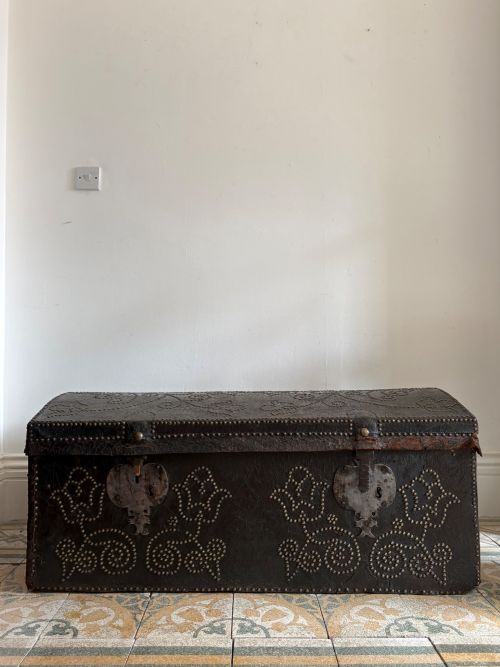
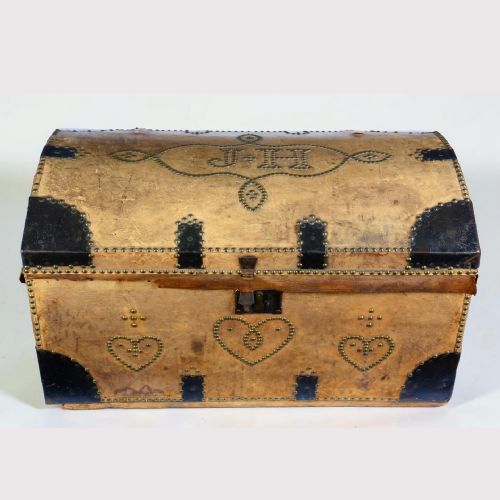


Studded Dome Trunk
A studded dome trunk brings robust storage and tactile historic character into a room through centuries-old metalwork and hide.
Studded Dome Trunk
A studded dome trunk encompasses substantial storage vessels shaped with curved or domed lids, often referred to in the record as coffers, chests, and boxes. These pieces emerge from periods spanning the seventeenth century through the Victorian era, showing origins in Dutch, Spanish, French, Scandinavian, and English workshops.
The most typical forms found here utilise leather, hide, or painted wood bodies secured with heavy iron or brass studwork. Buyers encounter large travel trunks alongside smaller caskets and chests mounted on stands, reflecting diverse domestic and journey uses.
Materials and Construction
Construction relies on sturdy timber carcasses built from pine, oak, or general wood, which are then clad in leather, hide, or painted finishes. Iron and brass studs are driven through these outer layers in dense decorative patterns that also serve to secure the material to the frame.
Makers integrated forged carry handles, hinges, and intricate brass studwork to reinforce the joints and edges of the dome top. These structural elements double as ornamentation, defining the distinct silhouette of the trunk.
The listings combine sturdy wood carcasses like pine and oak with tactile outer layers of leather, painted finishes, and metalwork.
Quality and Character
Quality rests upon the preservation of the original leather or hide cladding and the completeness of the brass or iron studwork. Pieces retaining their early forged handles and fitted interior elements display superior craftsmanship.
The sophistication of the stylistic revival details or regional folk art painting marks the distinction between standard utility boxes and finer decorative examples.
Arthur Wannop·Chapple and Sons
The Studded Dome Trunk Glossary
- Dome top
- A curved lid construction designed to shed water during travel and provide extra internal storage capacity. This profile distinguishes these trunks from flat-lidded chests.
- Studwork
- The application of brass or iron nails driven closely together in decorative and functional patterns across the exterior. It secures the leather cladding to the wooden carcass while creating visual rhythm.
- Coffer
- A heavy wooden chest traditionally used for storing valuables and documents. Many examples feature the characteristic domed lid and reinforced metal bands.
- Campaign case
- A portable trunk built for travel by officers and nobility, often fitted with robust carry handles and initials. These pieces are engineered for mobility and durability.
Studded Dome Trunk: Frequently Asked Questions
How were studded dome trunks used?
These trunks served primarily for transporting and storing personal belongings, documents, and valuables during travel across Europe.
In domestic settings, they functioned as secure storage chests that also contributed a heavy decorative presence to the room.
Where do most studded dome trunks originate?
The pieces originate from various European regions, with specific examples recorded from England, Spain, France, the Netherlands, and Scandinavia.
Makers incorporated local materials, such as pine or native oak, alongside imported hides and ironwork.
How do I care for leather clad trunks?
Leather surfaces require stable humidity and protection from direct sunlight to prevent the historic hide from drying and cracking.
Gentle dusting maintains the material without disturbing the original brass or iron studwork.
How are different periods identified?
Periods are identified through construction techniques, timber choices, and stylistic cues such as Baroque revival motifs or regional folk art painting.
Hardware styles, including forged iron hinges and specific brass stud patterns, further help narrow down the date of manufacture.