

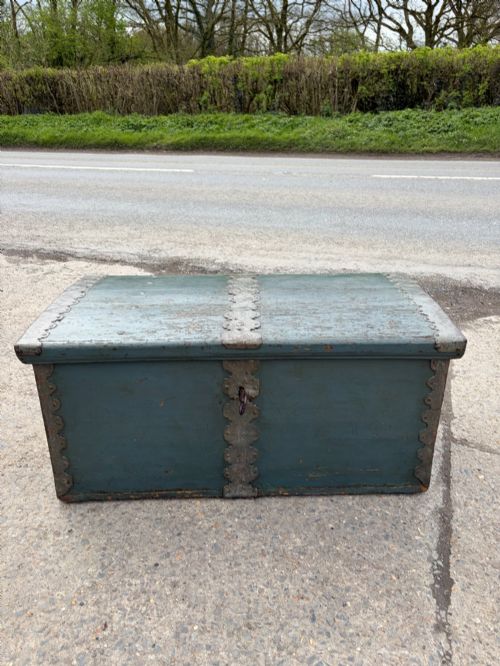


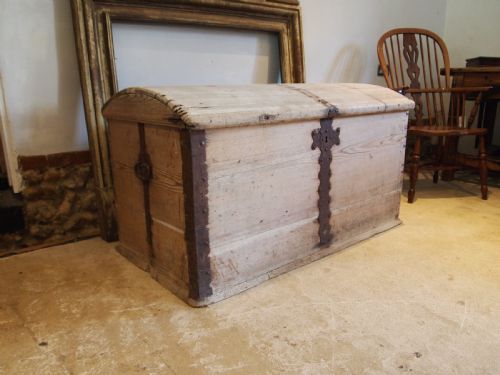


Domed Top Wooden Coffer
A domed top wooden coffer offers practical storage shaped by centuries of regional design and utilitarian craftsmanship.
Domed Top Wooden Coffer
A domed top wooden coffer is a storage piece defined by its curved lid, designed historically to shed water and accommodate bulky contents. Buyers searching this phrase encounter examples ranging from small tea caddies and jewellery boxes to large blanket chests and travel trunks. The selection leans heavily towards nineteenth-century painted pine pieces from Scandinavian origins, alongside English and continental examples in oak, walnut, and canvas.
Forms vary from robust domestic marriage chests to travelling trunks and small strong boxes. Many pieces carry regional characteristics, such as Swedish folk art painting or Baroque revival detailing. The curved profile distinguishes these storage pieces from flat-lidded chests and provides additional interior clearance.
Origins stretch across the eighteenth and nineteenth centuries, capturing Georgian craftsmanship and later Victorian utility. Whether configured as a compact desk box or a spacious floor-standing trunk, each piece serves as a tactile record of historic storage needs.
Materials and construction
Construction relies primarily on sturdy timbers such as pine, oak, and walnut, chosen for structural resilience. Makers shaped curved lids using steam or laminated segments fixed to internal frames. Iron, wrought iron, and brass reinforcement strips, hinges, and lock plates protected corners and edges during transport.
Surface treatments vary widely from natural polished finishes to applied layers of paint and hand-applied Scandinavian folk art motifs. Canvas coverings and leather bindings appear on travel-focused trunks from the later nineteenth century, adding weather resistance. Internal compartments often feature secondary woods and simple joinery suited to daily use.
Listings feature eighteenth and nineteenth-century forms, encompassing Georgian periods, Victorian travel trunks, and Scandinavian painted pine coffers.
Assessing quality
Quality rests in the integrity of the curved lid construction and the survival of original surface finishes, whether paint, polish, or canvas. Pieces retain greater character when ironwork, hinges, and locks remain intact and contemporaneous with the timber body. Proportion and balance in the dome profile separate carefully made domestic furniture from utilitarian shipping containers.
Subtle details such as hand-painted folk motifs, fine inlay work, or original keys elevate specific examples above standard storage boxes. The relationship between the primary wood and metal hardware dictates the visual weight and longevity of each piece.
The Domed Top Wooden Coffer Glossary
- Coffer
- A heavy wooden chest traditionally used for storing valuables, documents, or textiles. These pieces often feature reinforced lids and sturdy iron hinges.
- Dome top
- A curved lid profile engineered to shed moisture and increase internal capacity without widening the footprint. This shape appears across various scales from small caddies to large trunks.
- Marriage chest
- A celebratory storage piece commissioned or gifted for a wedding, frequently inscribed or painted with specific regional motifs. These chests held household linens and dowry items.
- Folk art
- Traditional decorative painting and ornamentation executed by regional artisans rather than academic workshops. Scandinavian examples frequently display stylized floral and geometric patterns.
- Strong box
- A compact, heavily reinforced metal-bound chest designed to secure money, deeds, or precious items. They typically feature robust internal locking mechanisms.
Domed Top Wooden Coffer: Frequently Asked Questions
What were domed top coffers used for?
These pieces served multiple domestic and travel functions depending on their scale. Smaller boxes held tea, jewellery, and documents, while larger chests stored blankets, clothing, and household linens.
The curved lid allowed users to pack bulky textiles higher than a flat lid permitted, while also helping water run off during transit.
How do I date a wooden coffer?
Dating relies on observing construction methods, timber choices, and hardware styles across the piece. Eighteenth-century examples often feature heavy oak frames and hand-wrought iron hinges, whereas nineteenth-century trunks frequently utilise pine, canvas, or applied decorative paint.
Secondary woods, lock mechanisms, and stylistic clues like Baroque revival carving or folk art painting provide further chronological markers.
Are painted pine chests authentic?
Many nineteenth-century Scandinavian and continental chests feature hand-painted surfaces that are original to the piece. These decorative finishes served to brighten domestic interiors and mark important occasions like marriages.
Examining the wear patterns and integration of the paint layer with the underlying pine helps confirm the period of the decoration.
How do I clean and care for an antique coffer?
Maintenance requires gentle dusting with a dry cloth and avoiding harsh chemical polishes that can damage historic wood or painted surfaces. Keeping pieces away from direct heat sources and dramatic humidity fluctuations preserves the timber and metal hardware.
Natural beeswax can be applied sparingly to unpainted wood surfaces to nourish the grain over time.