



Vintage Dome Top Box
A vintage dome top box brings tactile history into a room, offering curved wooden or metal lids that once protected valuables on long journeys.
Vintage Dome Top Box
Smaller examples include tea caddies and stationery boxes in walnut, burr walnut, and rosewood, while larger iterations take the form of pine chests, strong boxes, and steamer trunks. These pieces served practical domestic and travel functions, storing personal papers, dry goods, or clothing.
Victorian and nineteenth-century examples dominate the offerings, often displaying the robust construction typical of period luggage and utility containers. Alongside these sit rustic country pieces and painted folk art coffers from Scandinavia.
How they were made
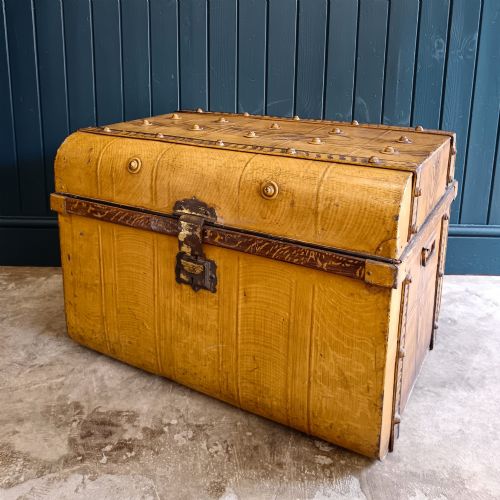
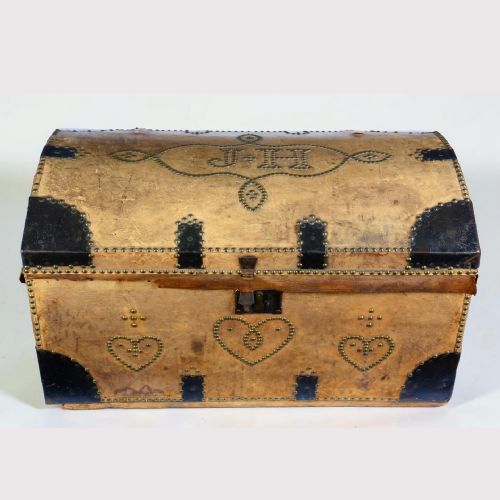
Maker construction relies heavily on solid timbers such as pine, oak, and walnut, frequently augmented by protective outer layers of leather, canvas, hide, or painted tin. Structural integrity is reinforced with iron and brass hardware, including decorative studwork, corner brackets, and metal banding.
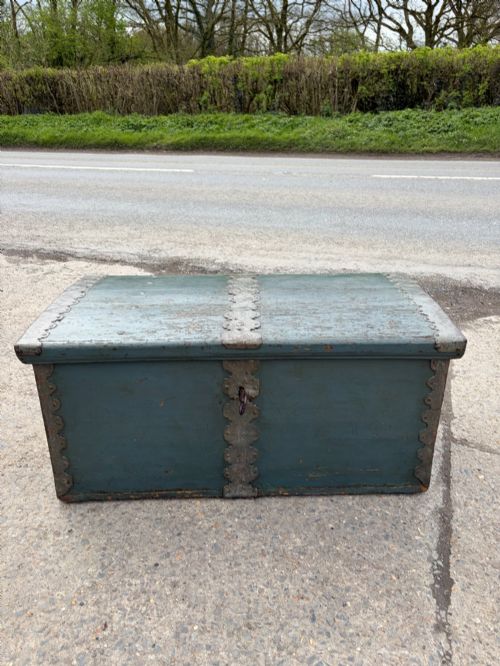
Surfaces receive varied finishes, from polished natural grain and faux-wood painted effects to elaborate hand-painted folk motifs on pine and oak. Lids are curved to shed moisture and create internal headroom, joined to box bodies with sturdy hinges and occasionally secured with locks and keys.
Some trunks crossed oceans with Cunard labels still stuck firmly to their leather sides.
What varies in quality
Quality reveals itself in the choice of cabinet timbers, such as figured burr walnut versus utilitarian pine, and the fineness of decorative detailing like brass studwork patterns. The preservation of original surface finishes - whether hand-applied paint, aged leather, or polished grain - strongly dictates the character of each piece.
Structural refinement separates standard travel containers from finer desktop or parlour boxes, visible in the precision of dovetail joints, internal compartments, and original hardware. Pieces retaining functioning locks with period keys command particular attention from collectors.
Arthur Wannop·Cunard Line
The Vintage Dome Top Box Glossary
- Dome top
- A curved lid design that provides extra internal capacity and sheds water during travel. This characteristic shape defines both small tea caddies and large blanket chests.
- Studwork
- Decorative or reinforcing metal pins driven into leather or wood surfaces in geometric patterns. This technique frequently appears on nineteenth-century Spanish and Victorian trunks.
- Tea caddy
- A small lidded container built to store loose tea leaves securely. These boxes often feature internal divisions and fine timber veneers.
- Coffer
- A heavy chest traditionally used for storing valuables or documents. Historic examples often feature robust oak or pine construction with metal bindings.
- Folk art
- Traditional decorative painting and craftsmanship rooted in regional culture. Scandinavian pieces in this style display distinctive hand-painted motifs.
Vintage Dome Top Box: Frequently Asked Questions
What were dome top boxes used for?
These containers served varied domestic and travel purposes depending on their scale. Small boxes held tea, stationery, or personal valuables, while larger trunks transported clothing and equipment.
The curved lid allowed for extra storage height and helped deflect moisture during transit, making them practical luggage for nineteenth-century travellers.
How do I care for a painted wooden box?
Keep wooden and painted surfaces away from direct sunlight and dramatic humidity shifts to protect the aged finish and prevent timber splitting. Dust gently with a dry, soft cloth rather than using liquid polishes.
Wax can be applied sparingly to unpainted hardwoods to nourish the grain, but painted folk art surfaces require minimal intervention to preserve their original pigment.
Are these boxes waterproof for travel today?
Historic trunks and boxes were built for nineteenth-century transport methods rather than modern weather exposure. Their seals and materials have aged over decades or centuries.
Using them as active travel luggage risks damaging delicate leather, canvas, or painted finishes, so they are best suited for static home storage.
How can I tell an eighteenth-century chest from a Victorian one?
Earlier pieces from the eighteenth century typically exhibit hand-sawn timbers, traditional coffer construction, and heavy iron or brass hardware forged by hand. Oak and hide are common in these older domestic pieces.
Victorian examples often incorporate industrial manufacturing methods, such as machine-cut dovetails, pine framing covered in stamped leather, and standardised brass studwork.